Intermediate concepts in AI & ML, page 2
Hypothesis Testing: A Courtroom for Your Data
Hypothesis testing is a courtroom trial for a claim. You assume 'no effect' (the null hypothesis) and see if your data is strong enough to reject it. The footgun is misreading the p-value: it only measures evidence against the null, not for your alternative.
Data Schema Evolution: Changing Your Data's Blueprint
Schema evolution is like updating a building's blueprint while it's occupied. You must change your data's structure without breaking apps or losing data. It's key for adding features that need new DB columns.

Matrices: The Language of Linear Transformations
A matrix is a grid of numbers representing a linear transformation, like stretching or rotating space. It's used in graphics to move 3D models and in machine learning to hold data. The footgun: don't just see numbers; see the transformation it encodes.

Gaussian Blur: Smoothing Images with Weighted Averages
Gaussian blur smooths an image by replacing each pixel with a weighted average of its neighbors, where closer pixels matter more. It's used to reduce noise before edge detection or for UI effects. The footgun is over-blurring, which erases important features.

Great Expectations: Unit Tests for Your Data
Great Expectations brings unit testing to your data, letting you assert what a dataset should look like. It validates data within a pipeline, preventing bad data from corrupting models or reports.
Eigenvectors and Eigenvalues: The Unchanging Directions of a Transformation
Eigenvectors are the special vectors a transformation only stretches, not rotates; the eigenvalue is the stretch factor. They're the backbone of PCA for dimensionality reduction and Google's PageRank.
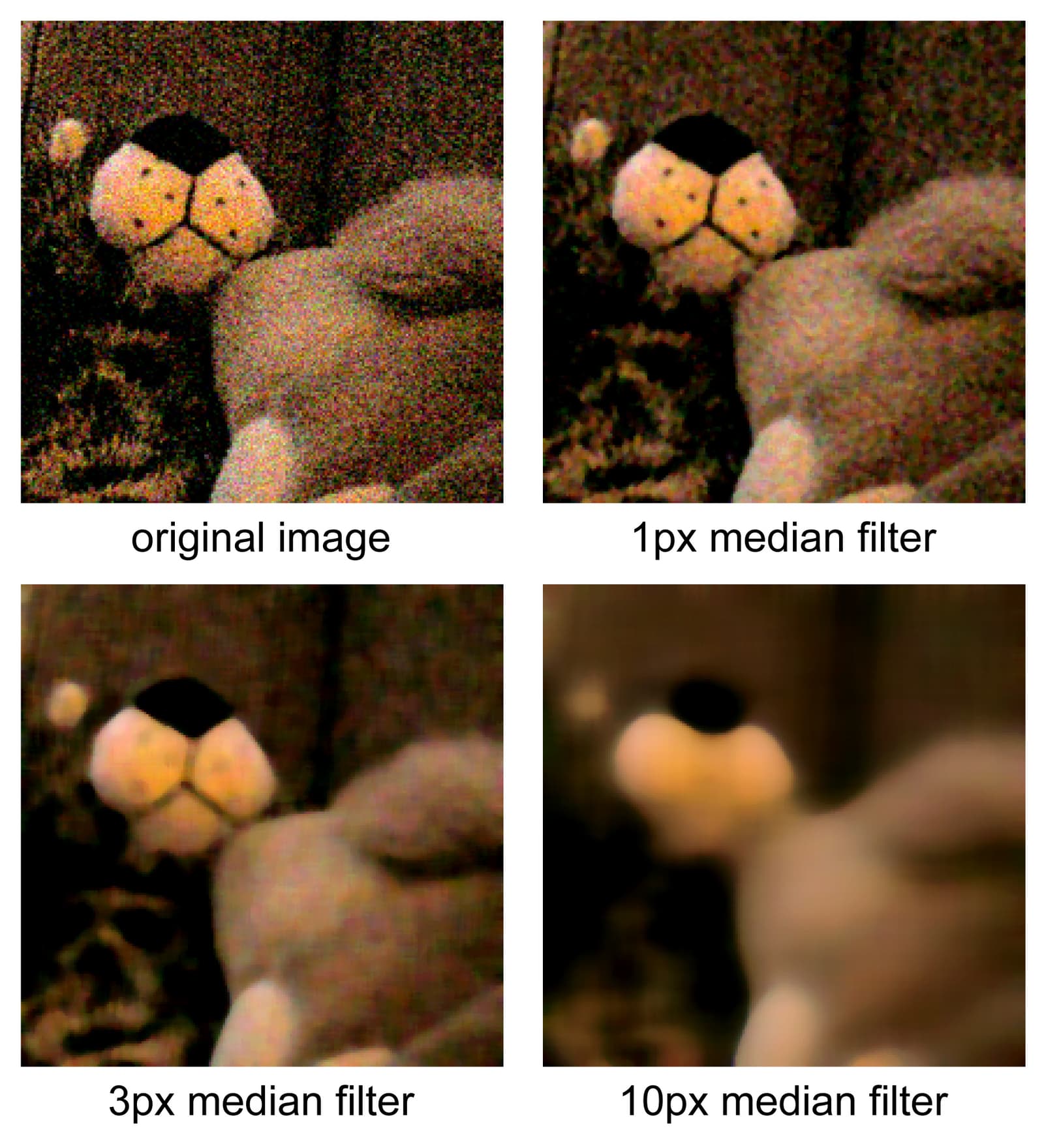
Median Filter: Smoothing Images Without Blurring Edges
A median filter cleans image noise by replacing each pixel with the median value of its neighbors, ignoring outliers. It's used to remove "salt-and-pepper" noise before object detection.

DVC: Git for Data and ML Models
DVC extends Git to version large data files and models without bloating your repo. It stores small pointer files in Git that reference large files in cloud storage.
Mixed-Precision Training: Faster Training with Less Memory
Mixed-precision training is like using rough estimates (FP16) for most math and a calculator (FP32) for critical steps. This speeds up deep learning on GPUs by cutting memory use, but naively switching can cause training to fail as small gradients vanish.
Gradient Descent: Finding the Bottom of the Hill
Think of finding the lowest point on a foggy hill by taking steps in the steepest downward direction. It's how machine learning models learn, by iteratively minimizing a cost function. The footgun is the step size: too large overshoots, too small is too slow.
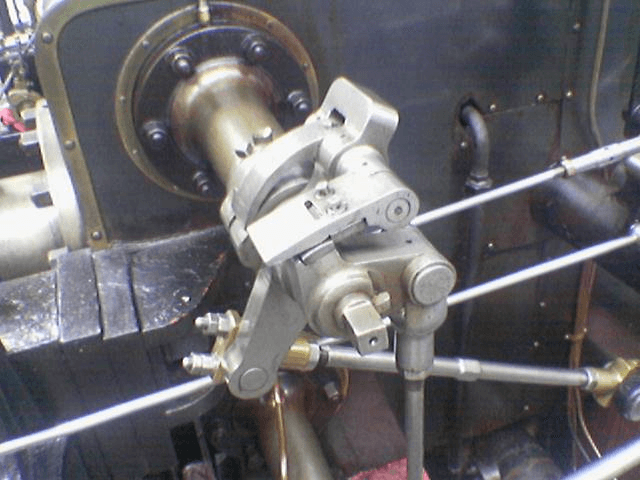
The Sobel Operator: Fast, Cheap Edge Detection
The Sobel operator finds image edges by measuring how fast pixel brightness changes horizontally and vertically. It's a fast, cheap first pass for edge detection in computer vision. The footgun is treating it as precise; it's a crude approximation.
Data Augmentation: Getting More from Your Data
Data augmentation creates 'new' training data by making small, realistic changes to your existing data. It's used to fight overfitting in ML models when a dataset is small, teaching the model to generalize rather than memorize.
AdamW: Decoupling Weight Decay for Better Generalization
AdamW fixes a flaw in the Adam optimizer by decoupling weight decay from the gradient update, improving model generalization. It's a go-to for training large networks like Transformers. The footgun is thinking it's the same as Adam with L2 regularization.
Chain Rule: Unpacking Nested Rates of Change
The chain rule is like Russian nesting dolls for rates of change. To find the derivative of a nested function, you multiply the derivatives of the 'outer' and 'inner' functions. It's the engine behind backpropagation in neural networks.
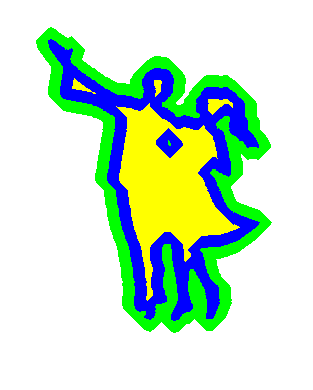
Morphological Transformations: Shaping Images with Kernels
Think of it as sanding or stamping an image with a small shape (kernel) to modify object boundaries. It's used for noise removal or separating touching objects. The footgun: transformations alter object size, so you often need a second operation to compensate.

Learning Rate Scheduling: A Gearbox for Model Training
Think of a learning rate schedule as a training 'gearbox,' starting fast and slowing for precision. It's used when fine-tuning large models to adapt them without breaking them.
Feature Hashing: The Hashing Trick for ML
Feature hashing turns features into vector indices without a lookup table, trading perfect accuracy for speed and memory. It's used for high-cardinality data like user IDs or in online systems.
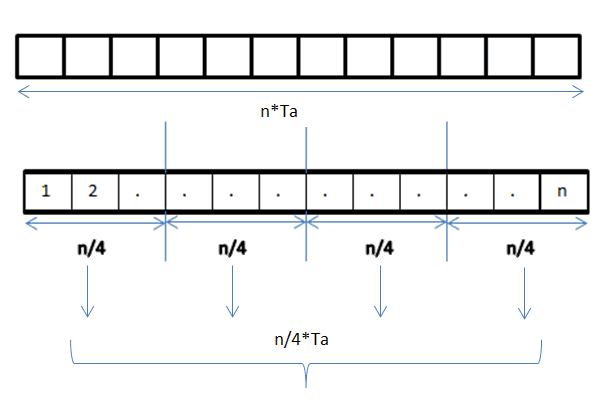
Data Parallelism: One Task, Many Data Chunks
Data parallelism splits a huge dataset across multiple processors, each running the same task on its own chunk. It's how large models are trained on massive datasets, with each GPU handling a different batch of data.

Online vs. Offline Feature Serving: Two Speeds for ML Data
Offline serving provides large batches of historical data for model training; online serving provides low-latency features for live predictions. This dual system in a feature store prevents training-serving skew, ensuring model consistency from lab to…

Feature Backfilling: Populating Historical Data for ML
Feature backfilling computes a new feature's values for historical data. It's how you generate a complete training dataset after defining a new signal, like a user's 7-day purchase history. The footgun is using future data, causing data leakage.
We are hiring for this. Every open role lists the topics its interview covers, so you can prepare for the real thing rather than guessing.
See open roles