Intermediate concepts in AI & ML, page 7
U-Net: Segmentation with Less Data
U-Net retrofits fully convolutional networks to segment images precisely with fewer training examples. It runs a 512 by 512 frame in under a second on a 2015 GPU, fitting latency-sensitive pipelines.
Text-to-Speech (TTS): Turning Text into Spoken Audio
Text-to-Speech (TTS) systems are digital voice actors, converting written language into artificial human speech. They are the core of any system that needs to speak text aloud.

Dilated Convolution: A Wider View Without More Parameters
Dilated convolution gives a filter a wider view by skipping pixels, like reading every Nth word to get the gist. This helps models in semantic segmentation see broader context without the resolution loss of pooling.

Dice Loss: Measuring Overlap for Image Segmentation
Dice Loss measures pixel overlap between predicted and true segmentation masks, like a Venn diagram for images. It excels in medical imaging with imbalanced classes, like finding a small tumor. The footgun: it can be unstable with very small objects.
Cross-Validation: Don't Test on Your Training Data
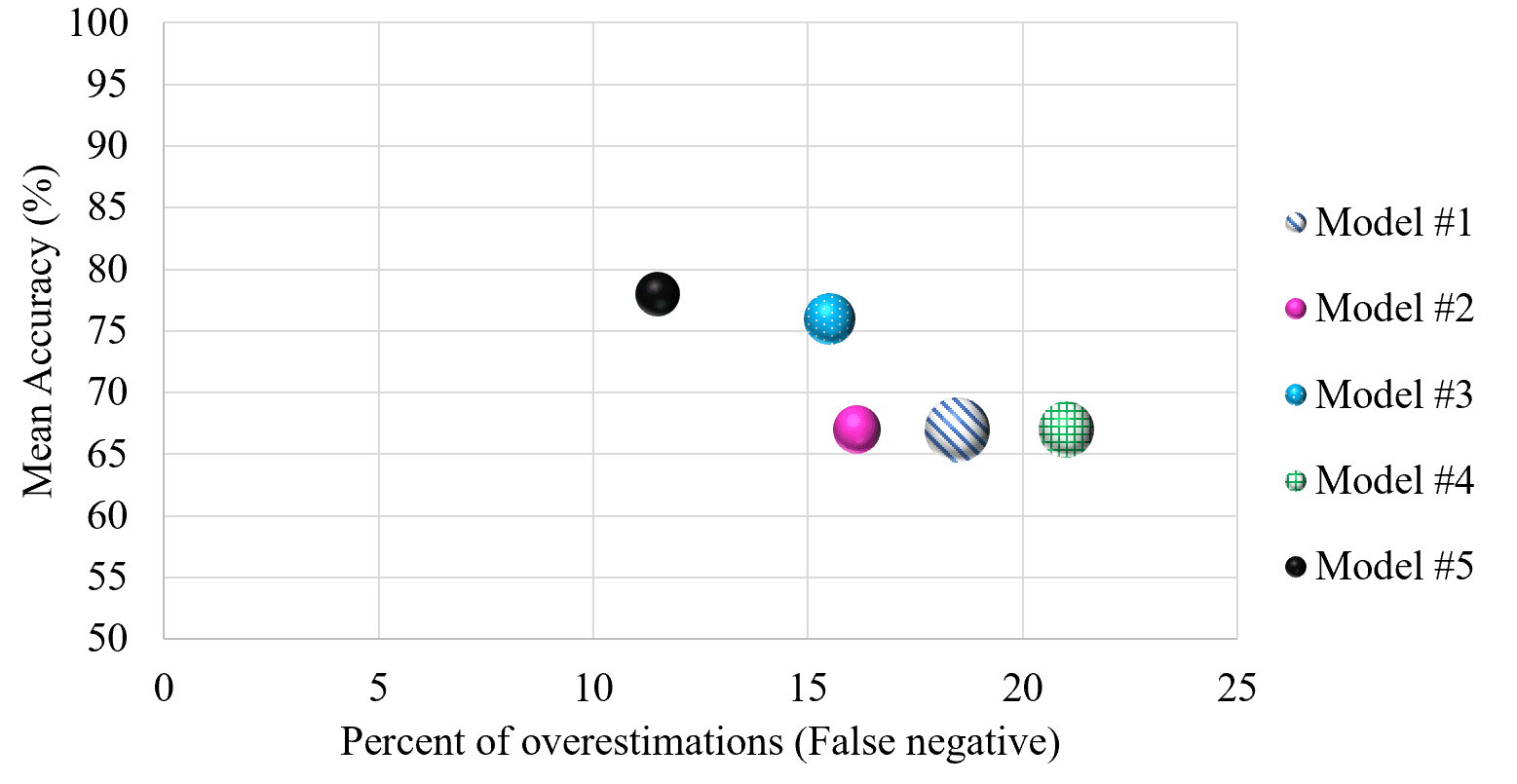
Cross-validation stops a model from 'cheating' by testing it on unseen data. It repeatedly splits your dataset into training and testing portions to simulate real-world performance.

Inference Batching: Grouping Requests for Throughput
Think of inference batching as a carpool for your ML model. Instead of sending each request in its own car, you wait a few microseconds to fill a bus, dramatically improving GPU efficiency.
Support Vector Machine: Finding the Widest Street
A Support Vector Machine (SVM) finds the widest possible "street" to separate data classes. It's used for classification tasks like text analysis. The footgun is forgetting the "kernel trick," which lets SVMs solve non-linear problems, not just draw lines.

Autoscaling ML Inference Endpoints
Autoscaling matches your ML model's compute to real-time demand, like an elastic container for your inference service. It handles spiky traffic for online endpoints, scaling up for peaks and down to save costs.
Naive Bayes: Fast Classification by Assuming Independence
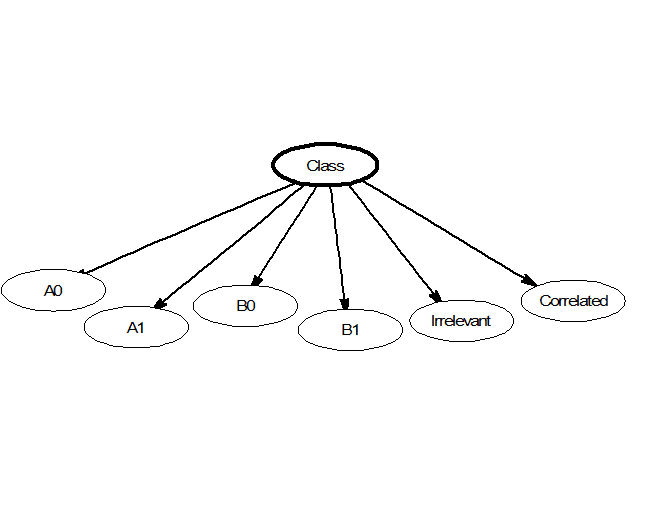
Naive Bayes classifies data by assuming its features are unrelated, like judging a fruit's type by color and shape independently. This makes it fast for tasks like spam filtering or real-time predictions. Its core 'naive' assumption is almost always wrong.
BentoML: Packaging Models for Production APIs
BentoML is a standardized shipping container for your ML models, packaging them into production-ready API endpoints. Use it to deploy LLMs or RAG systems without managing complex infrastructure. Its focus is purely on inference, not model training.
Hierarchical Clustering: Building a Family Tree for Data
Hierarchical clustering builds a family tree of your data, not just a single set of groups. It's used when you don't know the number of clusters beforehand, like in biology or market segmentation. The main footgun: early merges are final and can't be undone.
Inception Score: Judging AI Art for Quality and Variety
Inception Score judges an AI image generator on quality and variety, using a classifier to check if images are distinct and the overall set is diverse. Its main footgun is that it only measures what another AI can classify, not what a human finds appealing.
HellaSwag: A Benchmark Designed to Fool LLMs
HellaSwag is a commonsense benchmark designed to fool language models. It asks an AI to pick the most logical sentence ending, but the wrong answers are specifically generated to trick machines, not humans. It's used to test for true contextual understanding.
Lucas-Kanade Method: Tracking Pixel Patches, Not Points
The Lucas-Kanade method tracks motion by assuming a small patch of pixels moves as a single unit. This overcomes the ambiguity of tracking one pixel. It's fundamental to video stabilization and feature tracking.
Horn-Schunck: Assuming Smooth Motion to See Clearly
The Horn-Schunck method estimates video motion by assuming neighboring pixels move similarly. This global 'smoothness' constraint solves the aperture problem, where local views give ambiguous motion data.

Kalman Filters: Predicting Through Noise
A Kalman filter predicts an object's next position, then corrects that prediction with noisy real-world measurements. It's used in video tracking to smooth an object's path between frames or in robotics to fuse imperfect sensor data.
ML Monitoring Dashboards: Your Model's Health Chart
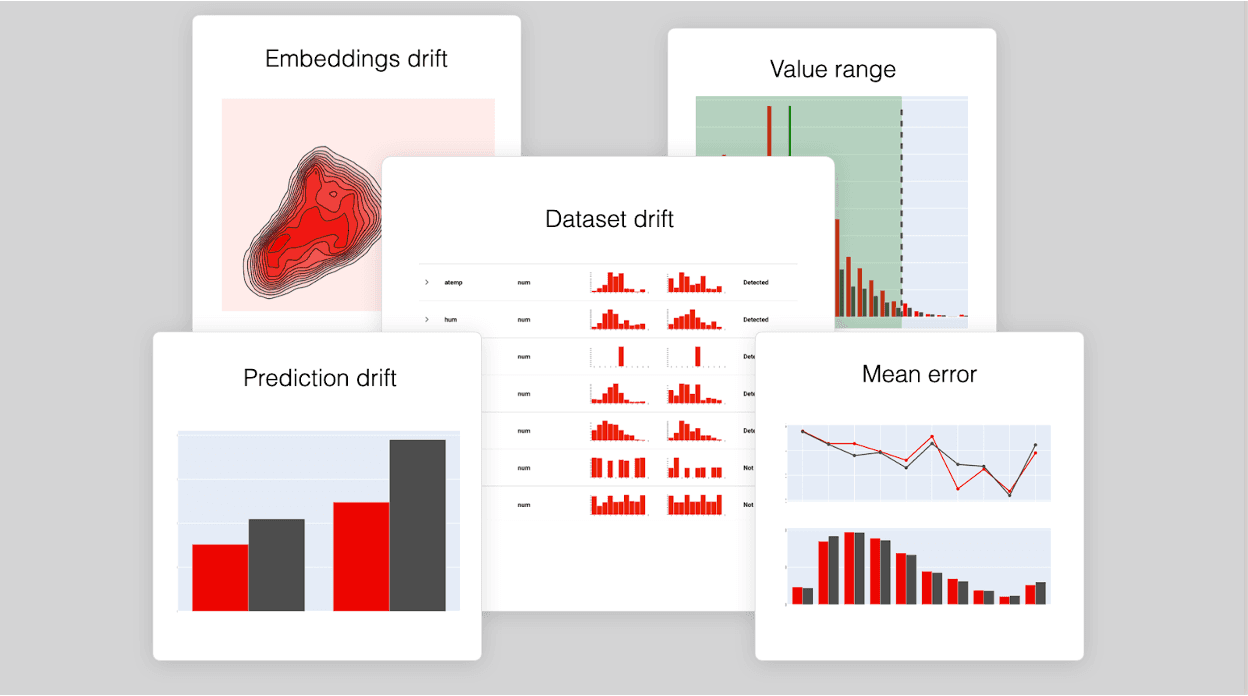
An ML monitoring dashboard is a health chart for your production model, showing how its performance decays. It tracks silent failures like data drift or concept drift, where user behavior changes and makes your model obsolete.
Mean Shift: A Mode-Seeking Algorithm
Mean shift is a technique for finding the peaks, or modes, of a density function. It's a non-parametric method used for cluster analysis in domains like computer vision and image processing to locate the densest areas in a feature space.
Population Stability Index (PSI): Quantifying Data Drift
The Population Stability Index (PSI) gives you a single number to quantify data drift between training and live data. It's used in MLOps to monitor model health, especially in finance. The footgun is ignoring a high PSI, which signals silent prediction decay.

LLM Red Teaming: Adversarial Security Testing
LLM Red Teaming is a simulated attack where you proactively try to break your own AI to find security flaws. It's used to test for vulnerabilities like prompt injection or data leakage, which traditional security tools miss.
We are hiring for this. Every open role lists the topics its interview covers, so you can prepare for the real thing rather than guessing.
See open roles