Concepts in AI & ML, page 10
Parameter Servers for Distributed ML Training
A parameter server splits the work in distributed training: central servers hold the model's parameters, while worker nodes pull parameters, compute gradients on data subsets, and push updates back. This enables training models too large for one machine.
Convolutional Layers: Finding Features Anywhere
A convolutional layer is like a flashlight sliding over an image, looking for a specific pattern like an edge or corner. It's the core of computer vision, letting networks find features anywhere.
Horovod: Scale ML Training Across Many GPUs
Horovod scales a single-GPU training script to hundreds of GPUs with minimal code changes, slashing training time. It's used when models are too big for one machine.
QLoRA: Finetune Huge LLMs on a Single GPU
QLoRA lets you finetune massive LLMs on one GPU by freezing the model in a 4-bit state and only training tiny adapter layers. Use it to adapt a 65B model with limited hardware. The footgun: performance hinges on high-quality data, not just the technique.
Feature Maps: What a Neural Network 'Sees'
A feature map is the output of a filter in a neural network, highlighting where a specific pattern (like an edge or curve) appears. In CNNs, each layer generates dozens of these maps. The footgun is thinking one map sees an object, not just a.
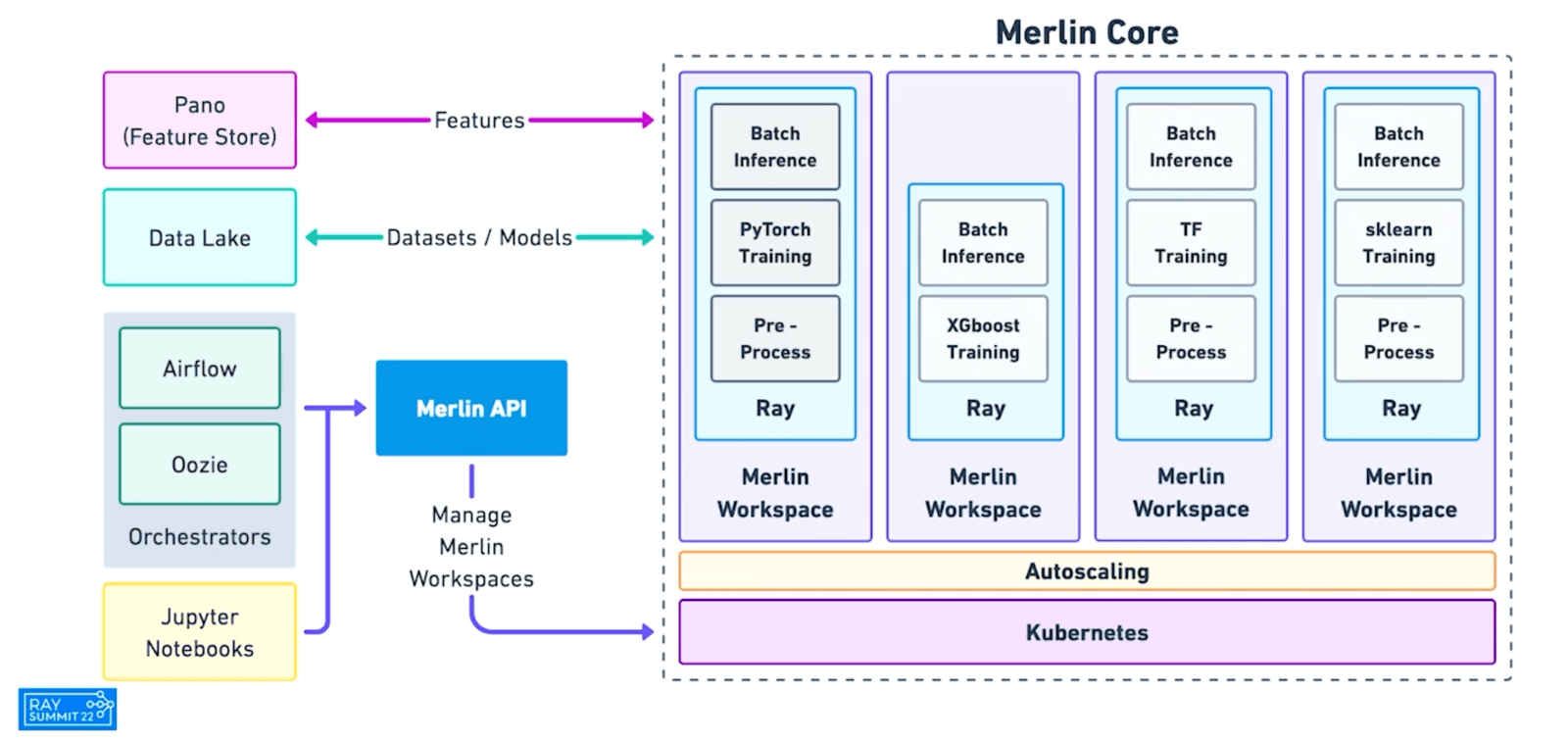
Ray AI Runtime (AIR): A Unified ML Toolkit
Ray AIR is a unified toolbox for the ML lifecycle, bundling libraries for data, training, tuning, and serving. It's for scaling end-to-end ML workflows on one distributed platform.
Embedding Models: The 'Retrieval' in RAG
An embedding model acts like a librarian for your data, converting text into numerical vectors so similar concepts are grouped together. In RAG, it finds relevant documents to feed an LLM, but using the wrong model type will yield poor retrieval results.
Pooling Layers: Summarizing What Matters in an Image
A pooling layer is like squinting at an image; you lose fine detail but see the main shapes. It summarizes features in a region, reducing computation and making the model robust to small shifts.
Kubeflow: MLOps on Kubernetes
Kubeflow brings the declarative, container-based world of Kubernetes to the entire ML lifecycle. It provides tools for building portable and scalable ML workflows, from development to production serving.
Dense Passage Retrieval (DPR): Semantic Search for QA
DPR finds answers by meaning, not just keywords. It converts questions and documents into vectors and finds the closest matches, forming the core of Retrieval-Augmented Generation (RAG).
Binning: Grouping Continuous Data into Buckets
Binning is like rounding, but for ranges. It groups continuous data into discrete 'buckets' to reduce noise. This turns messy user ages (21, 22.5) into clean categories (20-29) for analysis. The footgun: poor bin sizes can hide or create false trends.

ReLU: The 'On/Off' Switch for Neural Networks
ReLU acts as a simple on/off switch for neurons: positive inputs pass through, negative ones become zero. It's the default activation in deep learning, especially for vision tasks, as it's fast and helps gradients flow. The footgun: neurons can "die".
Slurm: The Job Scheduler for Supercomputers
Slurm is the reservation system for a shared supercomputer, queuing up jobs and assigning them to available nodes. It's the backbone of high-performance computing clusters in science and ML.

Hybrid Search: Combining Keyword and Vector Search
Hybrid search combines keyword precision with vector search's conceptual understanding in one query. It excels at retrieving relevant documents for RAG by finding both exact matches (like names) and similar ideas.

Regular Expressions for Data Cleaning
Regex is a mini-language for describing text patterns, letting you find and fix messy data at scale. It's used to standardize phone numbers or extract zip codes from addresses. The footgun: complex regex is often unreadable and a maintenance nightmare.
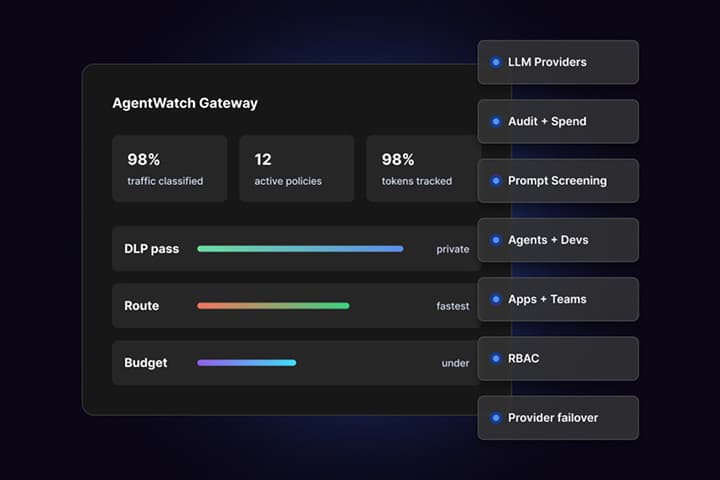
Elastic Training: Training Models on Unreliable Hardware
Elastic Training lets ML training jobs survive worker nodes being added or removed mid-run. It's like a construction crew that adapts to a changing number of workers, making it ideal for training large models on cheap but unreliable cloud spot instances.
Context Stuffing: Giving LLMs Short-Term Memory
Context stuffing adds external documents to an LLM's prompt, giving it temporary, task-specific knowledge. Use it for one-off questions on specific docs, but beware: it fails when documents exceed the model's context window limit, causing truncated data.

Label Encoding: Turning Categories into Numbers
Label Encoding turns text categories into numbers, like assigning bib numbers to runners. It's essential for algorithms that need numerical input, but its biggest footgun is creating a fake order (e.g., 2 > 1) that can mislead linear models and neural…
Cross-Entropy Loss: How Wrong Is Your Model's Guess?
Cross-entropy loss measures the penalty when a model's predicted probabilities diverge from the true labels. It's the standard loss for classification tasks, like telling a cat from a dog.
LLMs Get 'Lost in the Middle' of Long Contexts
LLMs struggle to find information buried in the middle of long prompts. Performance is highest when key facts are at the beginning or end of the context. This impacts multi-document QA and RAG.
We are hiring for this. Every open role lists the topics its interview covers, so you can prepare for the real thing rather than guessing.
See open roles