Interview questions in AI & ML, page 10
Securing tool-using LLM agents
Name indirect prompt injection, data exfiltration, and unsafe tool execution, then defend with sandboxing, least-privilege scoped tools, input/output filtering, and human-in-the-loop on risky actions.
Focal Loss and class imbalance in detectors
Focal loss multiplies cross-entropy by a (1-p)^gamma factor that down-weights easy, well-classified examples so the vast easy background does not swamp the loss.
Design multi-tenant GPU cluster scheduling and preemption policies
Tests ability to design fair GPU scheduling preventing starvation and noisy-neighbor issues. Answer: Kueue for fair-share, namespace quotas with MIG, priority classes with backoff.

Describe the difference between ETL and ELT and when to choose each
Tests transform timing and compute location. ETL cleans data before loading via external engines; ELT loads raw data first, then transforms in the warehouse. Pick ETL when pre-load cleansing is needed, ELT when warehouse compute is cheaper.
Designing an agent that resolves ambiguity
Detect ambiguity, gather evidence with the contact API, resolve relative time deterministically, ask the user only when genuinely uncertain, then confirm before the irreversible booking.
Deploying real-time detection on edge devices
Pick an efficient one-stage detector, train with augmentation, then quantize, prune, and compile to a hardware-accelerated runtime, measuring latency and accuracy tradeoffs.
Key differences between traditional and ML CI/CD pipelines?
Contrast code deploys with data versioning, model registries, and retraining; note holdout eval.
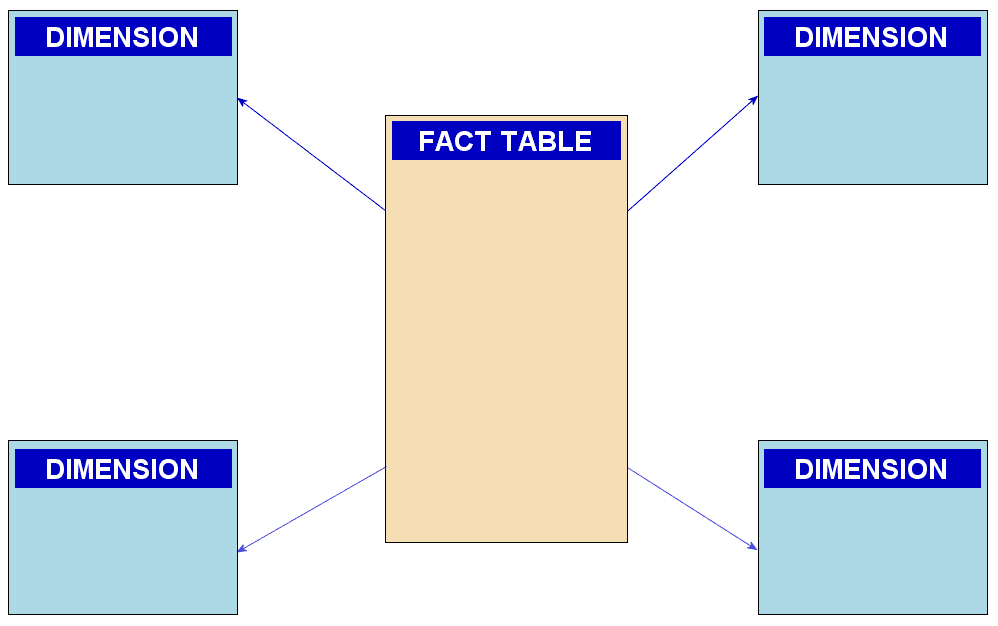
Star schema vs snowflake schema: differences and trade-offs
Tests dimensional modeling: star schemas flatten dimensions for fast joins and simple queries, while snowflakes normalize them to cut redundancy at the cost of extra joins. Red flag: praising snowflake storage savings without admitting query overhead.
Detector head losses: regression versus classification
The head splits into a classification branch using cross-entropy over classes and a regression branch using a robust Smooth L1 or IoU loss on box offsets, combined as a weighted sum.
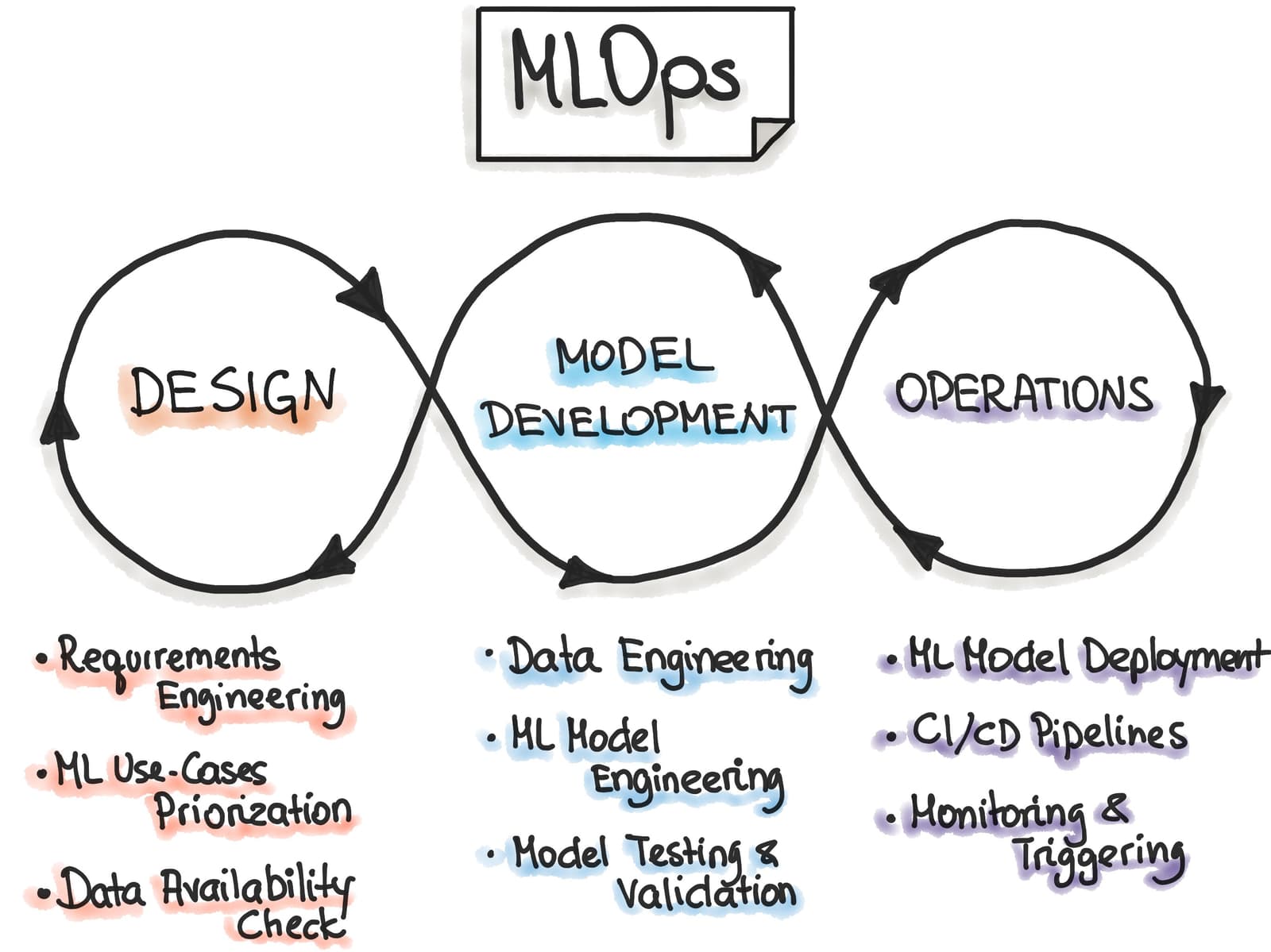
What automated tests belong in CI before deploying a classification model?
Name data schema checks, performance regression vs baseline, bias audits, and artifact integrity.
Explain GAN architecture, generator and discriminator roles, and objective function
Tests adversarial training as a minimax game. Strong answers: generator maps noise z to fakes; discriminator classifies real versus fake; both optimize V(D,G)=E[log D(x)]+E[log(1-D(G(z)))].

What is data pipeline idempotency and how do you design for it?
This tests resilient pipeline design under failure. A strong answer defines idempotency as identical output on repeated runs, highlights safe retries and partial failure recovery, and proposes idempotency keys with atomic writes for daily API loads.
Semantic versus instance segmentation
Semantic segmentation labels each pixel by class but merges objects of the same class; instance segmentation also separates individual objects.
What is a model registry's purpose in CI/CD4ML and its CI/CD interaction?
Tests if you see the model registry as the bridge between experiments and production, not just storage. A strong answer explains how CI publishes validated artifacts and CD consumes versioned models. Red flag: calling it a passive file dump without versioning.
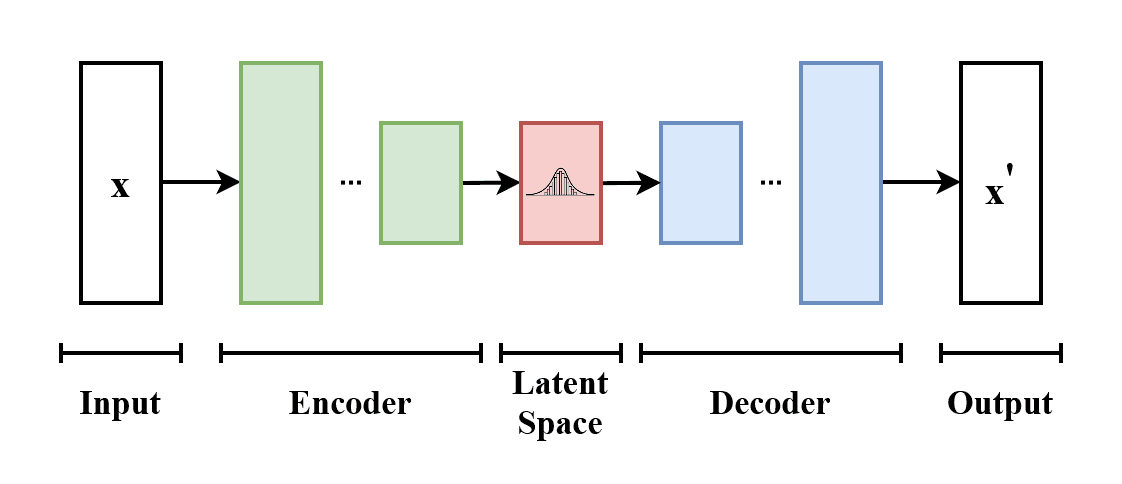
Key latent space difference between Autoencoder and VAE, and generative use
This tests deterministic versus probabilistic latent representations. Standard autoencoders encode fixed points; VAEs encode distributions. Sampling the regularized latent distribution generates new data. Red flag: calling VAEs mere noise adders.
How would you partition a massive user events table?
Tests whether you map query patterns to storage layout to cut bytes scanned. Strong answers pick time-based partitioning for range pruning, cluster by high-cardinality filters, and justify against WHERE clauses.
U-Net architecture and its skip connections
U-Net has a contracting encoder, an expanding decoder, and skip connections that concatenate matching-resolution encoder features into the decoder to recover spatial detail lost in downsampling.
What events trigger automatic model retraining beyond code changes?
This tests whether you treat ML pipelines as event-driven systems, not just software CI/CD. A strong answer lists data drift, scheduled cron jobs, production metric degradation, schema changes, and upstream data pipeline completion.
Explain Denoising Diffusion models and forward/reverse processes.
This tests if you see diffusion as iterative latent generation, not GANs. Forward: add Gaussian noise over T steps until data is pure noise. Reverse: a network iteratively denoises random noise into data.

When is streaming better than batch, and what are its infrastructure challenges?
Tests if you separate low-latency decisions from analytics and know ops pain. Good answer: fraud detection vs batch; cite exactly-once, state recovery, backpressure, schema drift. Red flag: calling streaming faster batch while ignoring backpressure or state.
We are hiring for this. Every open role lists the topics its interview covers, so you can prepare for the real thing rather than guessing.
See open roles