More in AI & ML — page 34
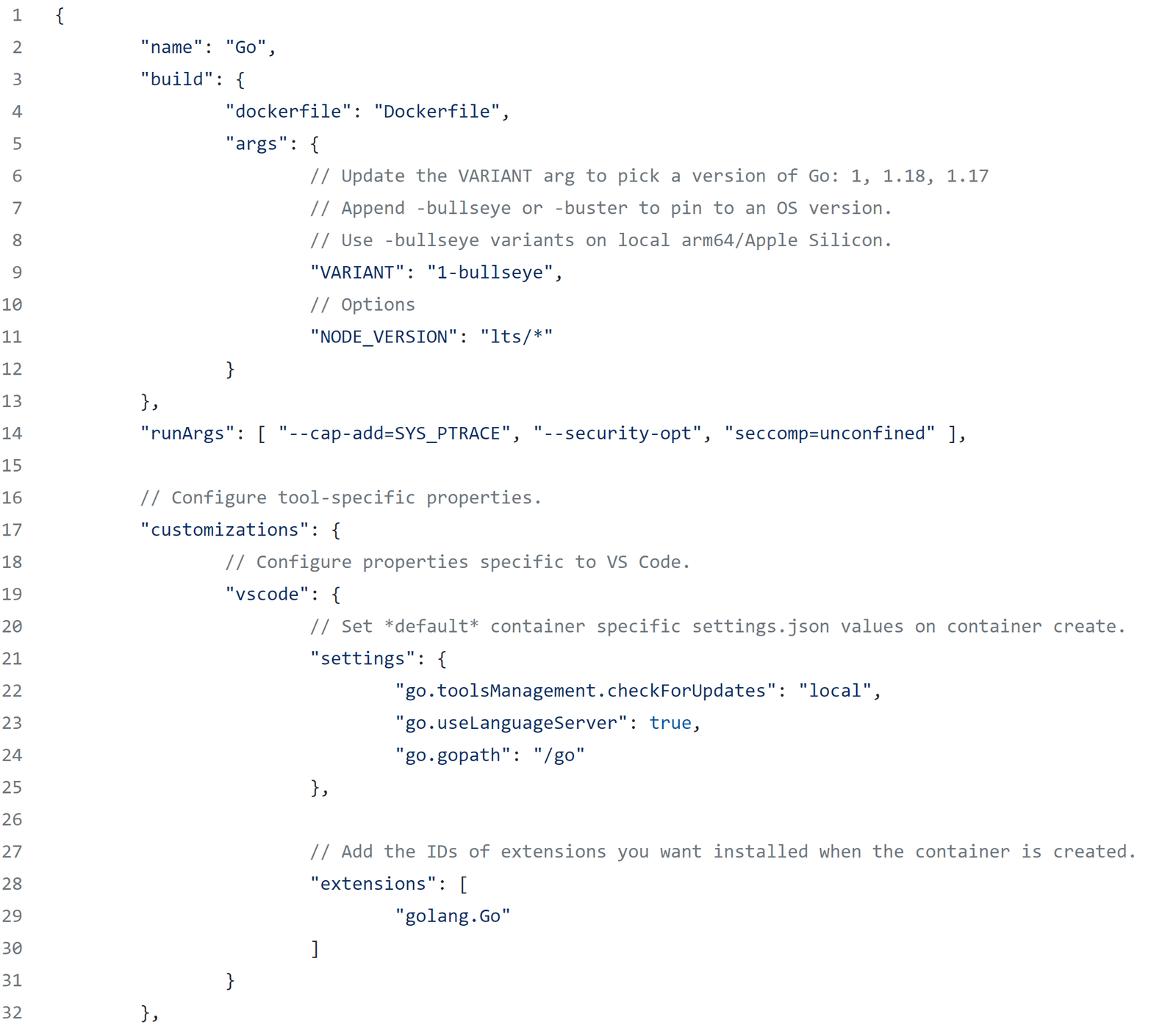
Dev Containers: Your Dev Environment as Code
A dev container packages your entire development environment—tools, libraries, and settings—into a single, portable container. Use it to standardize team environments, simplify onboarding, and ensure consistency between local dev and CI.
Docker Bind Mounts: A Portal to Your Host Filesystem
A bind mount is a portal from your host machine's filesystem directly into a container, where changes on either side are reflected instantly. Use it for live code development, but never for production data, as it creates a major security risk.
Conda Environments: Isolate Your Project Dependencies
Think of a Conda environment as a separate workshop for each project, with its own tools (packages) and Python version. This prevents dependency conflicts when Project A needs a different library version than Project B.
Python Virtual Environments: Isolate Project Dependencies
A Python virtual environment is a self-contained directory with its own Python interpreter and packages, preventing dependency conflicts between projects. The biggest mistake is checking the environment folder into source control; it's disposable and meant to…
PMML: The 'Save File' for Machine Learning Models
PMML is like a universal "save file" for ML models, using XML to describe everything needed for prediction: features, preprocessing, and model structure. It enables training in Python and deploying in Java. The footgun: verbose files and partial tool support.
Model Lineage: The Git History for Your AI
Think of model lineage as the `git log` for your AI, tracking every input from data to code that created it. It's essential for reproducing models, debugging failures, and satisfying regulatory audits.
Hydra: Composable Configuration for Complex Apps
Hydra treats configuration like LEGOs. Instead of one monolithic file, you compose small, reusable config pieces for each run. It's ideal for ML experiments where you override settings from the command line.
Model Signature: The API Contract for Your ML Model
A model signature is an API contract for your ML model, defining the exact shape and types of its inputs, outputs, and parameters. It's used by platforms like MLflow to validate requests and enable safe deployments. Forgetting it will block model registration.
MLflow Tracking: A Lab Notebook for Your ML Experiments
Think of MLflow Tracking as a lab notebook for your models. It logs parameters, metrics, and artifacts for every training run, letting you compare results and find the best model. The main footgun is forgetting to set a remote server, trapping logs locally.
TensorBoard: The Dashboard for Your ML Model
TensorBoard is the dashboard for your ML model, showing what's happening inside during training. It tracks key metrics like loss and accuracy, visualizes the model's structure, and helps you debug performance. The main footgun is not logging the right data.
Entity Embeddings: Smart Maps for Categorical Data
Entity embeddings turn categorical data like user IDs into dense vectors, creating a "map" where similar items are neighbors. This is used in neural networks to handle high-cardinality features efficiently, avoiding the memory bloat of one-hot encoding.

Feature Governance: Taming Your ML Inputs
Feature governance treats ML inputs like code, enforcing consistency from training to production. It's a central system of record for what data your models see. This prevents training-serving skew.
Point-in-Time Correctness: Avoiding Data Leakage in ML
A point-in-time correct join is a time-traveling lookup for ML features, grabbing the most recent values known *at the time of an event*. It's vital when building training data from feature tables that update at different rates to prevent data leakage.
Feature Definition Language: Define ML Features as Code
A feature definition language is like infrastructure-as-code for ML features. It lets you define a feature's source and schema once, then use it for both offline training and online serving, ensuring consistency.

Recursive Feature Elimination: Survival of the Fittest Features
RFE runs a tournament for your features, repeatedly training a model and dropping the weakest ones. It's used to simplify models by selecting a core subset of impactful features. The main footgun: RFE's output is only as good as the model used for ranking.

Feature Backfilling: Populating Historical Data for ML
Feature backfilling computes a new feature's values for historical data. It's how you generate a complete training dataset after defining a new signal, like a user's 7-day purchase history. The footgun is using future data, causing data leakage.

Online vs. Offline Feature Serving: Two Speeds for ML Data
Offline serving provides large batches of historical data for model training; online serving provides low-latency features for live predictions. This dual system in a feature store prevents training-serving skew, ensuring model consistency from lab to…
Feature Hashing: The Hashing Trick for ML
Feature hashing turns features into vector indices without a lookup table, trading perfect accuracy for speed and memory. It's used for high-cardinality data like user IDs or in online systems.
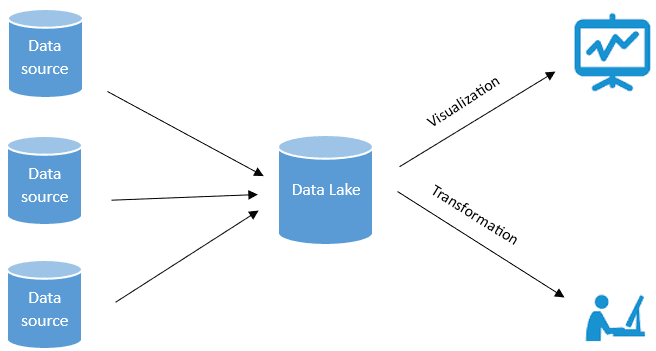
Data Lake: A Single Repository for Raw Data
A data lake is a central repository that stores vast amounts of raw data in its native format. It acts as a single source for analytics and machine learning, but without proper management it can become a useless "data swamp".
Data Augmentation: Getting More from Your Data
Data augmentation creates 'new' training data by making small, realistic changes to your existing data. It's used to fight overfitting in ML models when a dataset is small, teaching the model to generalize rather than memorize.