Intermediate everything in CI/CD & Automation, page 6
Flux HelmRelease: Declarative Helm Charts in Git
A Flux HelmRelease is like putting your helm install command into a YAML file and checking it into Git. It lets you declaratively manage Helm charts for any application via GitOps.
Argo Rollouts: Beyond Kubernetes Rolling Updates
Argo Rollouts replaces Kubernetes' basic RollingUpdate with safer, controlled strategies like canary and blue-green. It gradually shifts traffic to new versions while monitoring metrics, automating rollbacks if KPIs degrade.
App of Apps Pattern: Manage Application Fleets, Not Individuals
The App of Apps pattern uses a single parent Argo CD application to declaratively manage a fleet of child applications. This is ideal for bootstrapping entire environments from one Git repo.
The GitOps Reconciliation Loop
Think of it as a thermostat for your infrastructure. A GitOps agent continuously compares your live system's state against the desired state in Git. If it detects drift, it automatically corrects it.
Flux CD: Git as the Source of Truth for Kubernetes
Flux CD makes Git your cluster's source of truth. It automatically syncs Kubernetes manifests from a repo to your cluster, ensuring the live state matches your config. This is for continuous delivery, not CI.
Pipeline Analytics: Measuring Your CI/CD Health
Pipeline analytics is a fitness tracker for your CI/CD, revealing if builds are getting slower or less reliable. Use it to spot bottlenecks, track failure rates, and compare branches. The footgun is ignoring the P95 duration, which hides worst-case outliers.

DORA Metrics: Vital Signs for Your CI/CD Pipeline
DORA metrics are four vital signs for your software delivery process, balancing speed and stability. They benchmark DevOps performance from commit to production. The main footgun is optimizing for speed while ignoring stability, leading to frequent outages.
Synthetic Monitoring: Probing Your App Like a Robot User
Synthetic monitoring is like having a robot user click through your app's critical paths 24/7 to catch issues before real users do. It tests key flows like login or checkout, providing a consistent baseline for performance.
Real User Monitoring (RUM): See Your App Through Users' Eyes
Real User Monitoring (RUM) is like a flight recorder for your app, capturing real user clicks, load times, and errors. It's used to measure actual performance and diagnose slowdowns, revealing issues that lab testing misses.
Service Level Objective (SLO): A Measurable Promise
An SLO is a precise, measurable promise about your service's performance, like "99.9% of requests will succeed." It's the internal engineering target that backs up a customer-facing SLA. The footgun is setting a 100% SLO, which leaves no room for failure.
Distributed Tracing: Following a Request Across Microservices
Distributed tracing is like a passport for a request, stamped at every service it visits. It's essential for debugging microservices where one click can trigger many calls. The footgun is trying to debug without it, piecing together isolated logs.
The Vulnerability Management Lifecycle: A Continuous Loop
Think of vulnerability management not as a one-off task, but a continuous cycle of finding, prioritizing, fixing, and verifying security weaknesses. This process is crucial for securing any system by systematically reducing its attack surface.
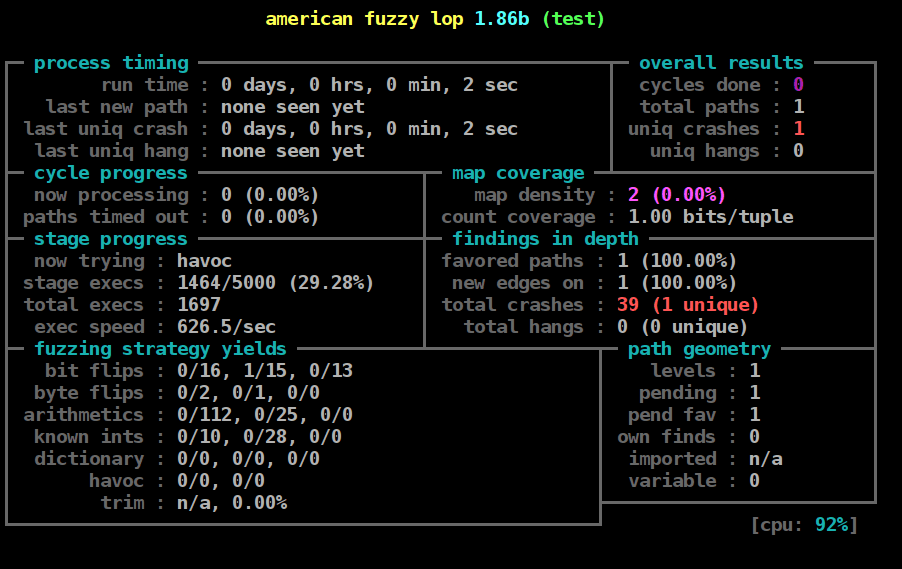
Fuzz Testing: Finding Bugs with Random, Invalid Inputs
Fuzz testing is automated chaos engineering for your inputs. It feeds your program semi-random, invalid data to uncover crashes and security flaws, especially in code that parses files or network protocols.

Deployment Rings: De-risking Rollouts with Progressive Exposure
Deployment rings are like blast shields for software updates, containing a bad release's impact to a small group. They're used in CI/CD to roll out changes progressively, from internal teams to all users.

Shadow Deployment: Rehearsing a Release with Live Traffic
Shadow deployment is like a stunt double for your service: it receives a copy of live production traffic to test a new version without impacting users. Use it to validate performance and find bugs under real load.
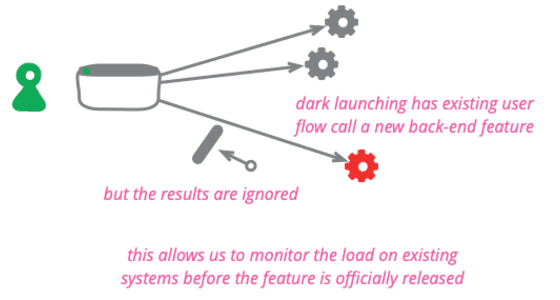
Dark Launch: Test New Code Invisibly in Production
A dark launch tests new backend code on real production traffic without any user ever seeing it. Use it to measure the performance impact of a new recommendation engine or data service before the UI is built.
Traffic Shaping for Safer Deployments
In deployments, traffic shaping isn't about network speed, but controlling user exposure. You route a precise percentage of users to a new code version, slowly 'opening the valve' from 1% to 100% to de-risk the release. This is the engine of a canary deploy.
Kubernetes Health Checks: Liveness, Readiness, and Startup Probes
Kubernetes health checks ask your app: "Are you alive?" (liveness), "Ready for traffic?" (readiness), and "Done starting?" (startup). This lets it automate restarts and traffic routing for zero-downtime deployments.
Kubernetes Ingress: The Cluster's Front Door
Kubernetes Ingress is the smart receptionist for your cluster. It routes external HTTP/S requests to internal services based on hostnames or paths, letting you expose multiple apps under one IP.
Helm: The Package Manager for Kubernetes
Helm is the package manager for Kubernetes. It uses a packaging format called Charts to define, install, and upgrade applications, making it the standard way to manage software on a K8s cluster. It is a Cloud Native Computing Foundation (CNCF) project.
We are hiring for this. Every open role lists the topics its interview covers, so you can prepare for the real thing rather than guessing.
See open roles