Advanced everything in Computer Vision, page 2
Deploying real-time detection on edge devices
Pick an efficient one-stage detector, train with augmentation, then quantize, prune, and compile to a hardware-accelerated runtime, measuring latency and accuracy tradeoffs.
Focal Loss and class imbalance in detectors
Focal loss multiplies cross-entropy by a (1-p)^gamma factor that down-weights easy, well-classified examples so the vast easy background does not swamp the loss.
Translation equivariance versus invariance in CNNs
Convolution is equivariant, shifting input shifts feature maps; invariance comes only from pooling and global aggregation. Strict invariance is partial and broken by strided sampling.
Depthwise separable convolution cost savings
Separable conv splits standard conv into per-channel spatial filtering plus a 1x1 pointwise mix, cutting cost by roughly 1/N plus 1/k².
Adapting a classification CNN for segmentation
Replace the dense head with conv layers, upsample via transposed convolutions, and fuse encoder skip connections to recover spatial detail lost to downsampling.
Stereo rectification math and its artifacts
Rectification warps both images by homographies so epipolar lines become horizontal and aligned.
Feature choice for real-time mobile SLAM
Pick ORB for fast FAST keypoints and cheap binary descriptors matched by Hamming distance; accept reduced robustness versus SIFT for real-time, low-power operation.
CNN features for image retrieval
Pass the image through a pretrained CNN and read activations from a late layer as a descriptor; deeper layers encode semantics, earlier layers encode texture.
Image rotation: forward versus inverse mapping
Forward mapping sends source pixels to non-integer destinations, leaving holes and overlaps; inverse mapping iterates over output pixels, finds the source location, and interpolates.
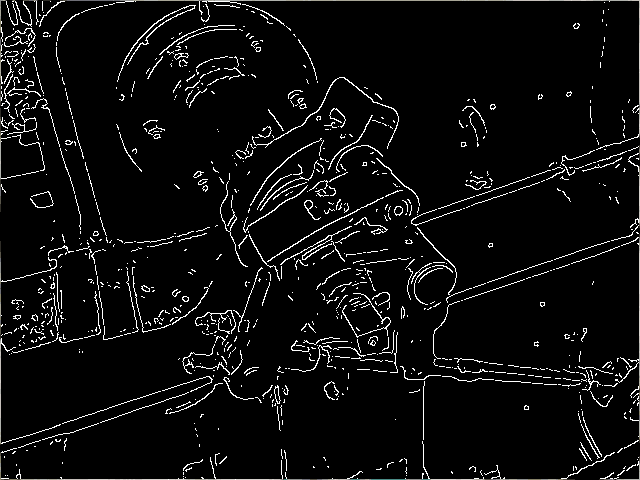
Walk me through Canny edge detection and why it beats Sobel thresholding
Tests multi-scale edge detection and noise robustness versus raw gradient thresholding. Strong answer lists Gaussian blur, Sobel gradients, non-maximum suppression, double thresholding, hysteresis. Red flag: calling it blurred Sobel without hysteresis or NMS.

How does filter separability optimize Gaussian blur and its complexity?
This tests if you know a 2D Gaussian separates into two 1D convolutions. A strong answer gives complexity as O(N^2 K^2) dropping to O(N^2 K) for an N-by-N image and K-by-K kernel. A red flag is claiming all kernels are separable or omitting dimensions.

Describe the BRDF, its advantage over Lambertian, and critical CV tasks
Tests 4D view-dependent reflectance. Strong answers define BRDF as dL_r/dE_i (sr^-1) over four angles; note Lambertian is isotropic; cite photometric stereo and shape-from-shading where specularity breaks the model. Red flag: calling it albedo.
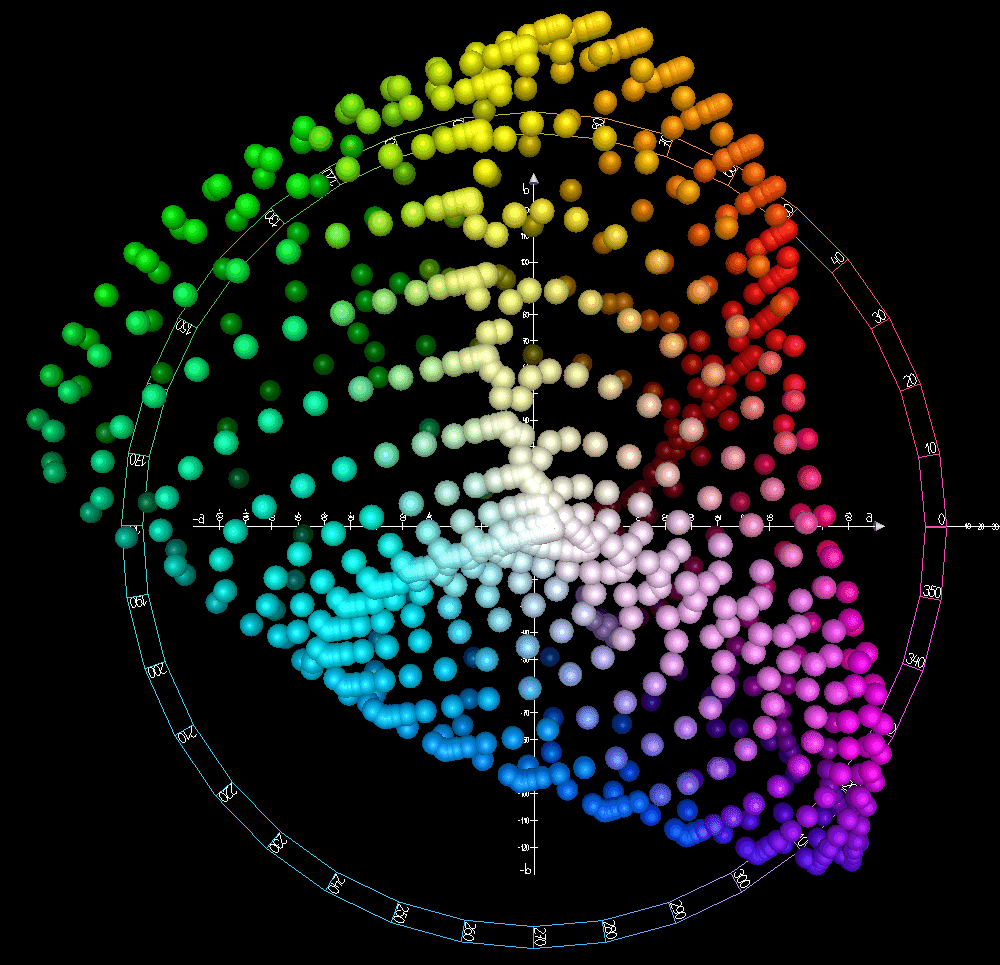
Why is RGB Euclidean distance a poor measure of perceptual color difference?
This tests perceptual uniformity. A good answer explains that RGB distance does not match human vision, then describes CIELAB as a space where deltas approximate perceived differences, making segmentation align with human vision.
Mask R-CNN: Region-Based Detection
Mask R-CNN belongs to the R-CNN family core: selective search over CNN feature maps yields bounding boxes with object categories. Reusing convolutional features for localization, not just classification, is the win.
SSD: Real-Time Detection Without Region Proposals
SSD scores default boxes across multiple scales in one forward pass. It runs real-time robotics and mobile vision where two-stage detectors lag. The footgun is ignoring shallow feature maps, which destroys small object accuracy as early layers carry fine…
FLANN Matcher for Feature Correspondence
OpenCV's FLANN matcher pairs query and train descriptors to find cross-image feature correspondences as an alternative to Brute-Force. Engineers often assume FLANN shares Brute-Force's normType and crossCheck parameters, causing silent configuration errors…
FPGA in Computer Vision
An FPGA is reconfigurable silicon wired into a custom digital circuit rather than programmed as instructions, letting a vision pipeline like demosaicing and feature extraction run in dedicated hardware with low latency and high throughput per watt.

TensorRT: From Trained Model to Production Speed
TensorRT is a compiler that turns a trained model into a specialized, high-speed engine for a specific NVIDIA GPU. It's used to deploy models in production where low latency is critical.
Knowledge Distillation: Shrinking Models, Not Performance
Knowledge Distillation trains a small "student" model on the nuanced outputs of a large "teacher" model. This is how huge, accurate models are shrunk to run on phones. The footgun is assuming performance is identical; there's always a trade-off.
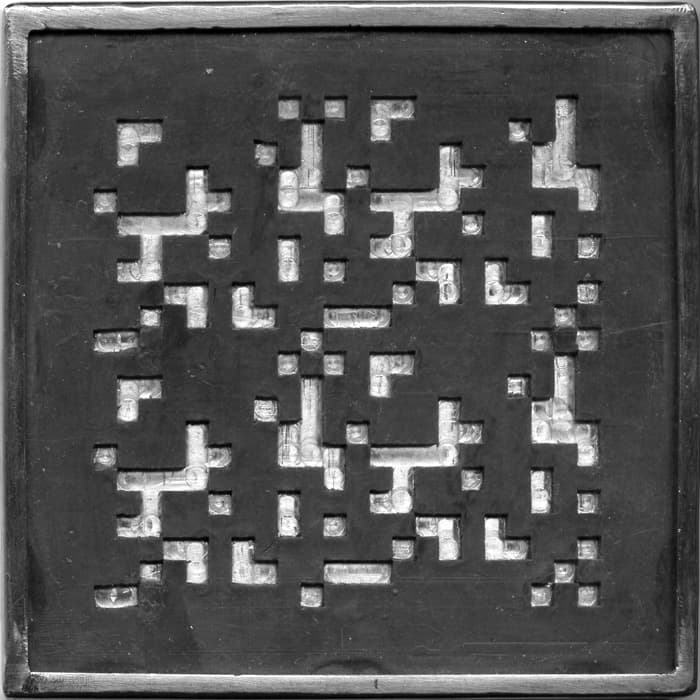
Coded Aperture: Imaging Without a Lens
A coded aperture images radiation that can't be focused, like X-rays. Instead of a lens, it uses a patterned mask to cast a complex shadow, which is then mathematically decoded into an image. It's crucial for X-ray astronomy.
We are hiring for this. Every open role lists the topics its interview covers, so you can prepare for the real thing rather than guessing.
See open roles