Advanced everything in Computer Vision, page 4
DeepSORT: Adding Visual Memory to Object Tracking
DeepSORT adds a 'visual memory' to object tracking, using a deep learning model to re-identify objects after they're hidden. It's used in surveillance and autonomous driving to maintain consistent IDs across frames.
Particle Filters for Object Tracking
A particle filter tracks an object by maintaining a cloud of possible states ('particles'), not one best guess. It's used to follow objects through clutter and occlusion, like tracking a face in a crowd.
Correlation Filters: Fast and Robust Object Tracking
Correlation filters track objects by learning a template that gives a peak response at the object's location. This makes them extremely fast for real-time visual tracking. The footgun: basic versions fail when the object changes scale or is occluded.
Two-Stream ConvNets: Seeing What vs. How It Moves
Two-Stream ConvNets split video analysis into two paths: a spatial stream sees *what* is in a frame, and a temporal stream sees *how* it moves via optical flow. This is used for action recognition, like telling 'typing' from 'waving'.
Conditional Random Fields: Labeling with Context
A Conditional Random Field (CRF) makes predictions that know their neighbors, enforcing that nearby pixels in an image get similar labels. It cleans up raw segmentation outputs by considering local context.

DeepLab: Pixel-Level Semantic Image Segmentation
DeepLab assigns a class label like 'road' or 'person' to every pixel in an image. This powers features like smartphone portrait mode by precisely outlining objects. The key challenge is achieving sharp object boundaries, not just coarse bounding boxes.
Panoptic Segmentation: A Unified View of a Scene
Panoptic segmentation unifies two tasks: it labels every pixel with a class ('stuff' like road, sky) and also identifies individual object instances ('things' like car 1, car 2). It provides a complete scene understanding for autonomous driving and robotics.
Instance Segmentation: Counting and Outlining Objects
Instance segmentation identifies and outlines each distinct object in an image, labeling 'car 1' and 'car 2' separately. It's crucial for self-driving cars tracking individual pedestrians.
Focal Loss: Forcing Models to Learn from Hard Examples
Focal Loss tells your model to ignore the easy examples during training and focus on the hard ones. This is critical for object detection, where thousands of background patches can overwhelm the few actual objects, creating a massive class imbalance.

Transfer Learning: Don't Train Vision Models from Scratch
Don't train a vision model from scratch. Transfer learning reuses a model trained on a huge dataset (like ImageNet) as a starting point for your specific task. This lets you achieve high accuracy on new image types with much less data and compute.
GoogLeNet's Inception Module: Wider, Not Just Deeper
Instead of choosing one filter size, GoogLeNet's Inception module runs 1x1, 3x3, and 5x5 convolutions in parallel. This lets the network capture features at multiple scales at once. The footgun is forgetting the crucial 1x1 'bottleneck' convolutions.
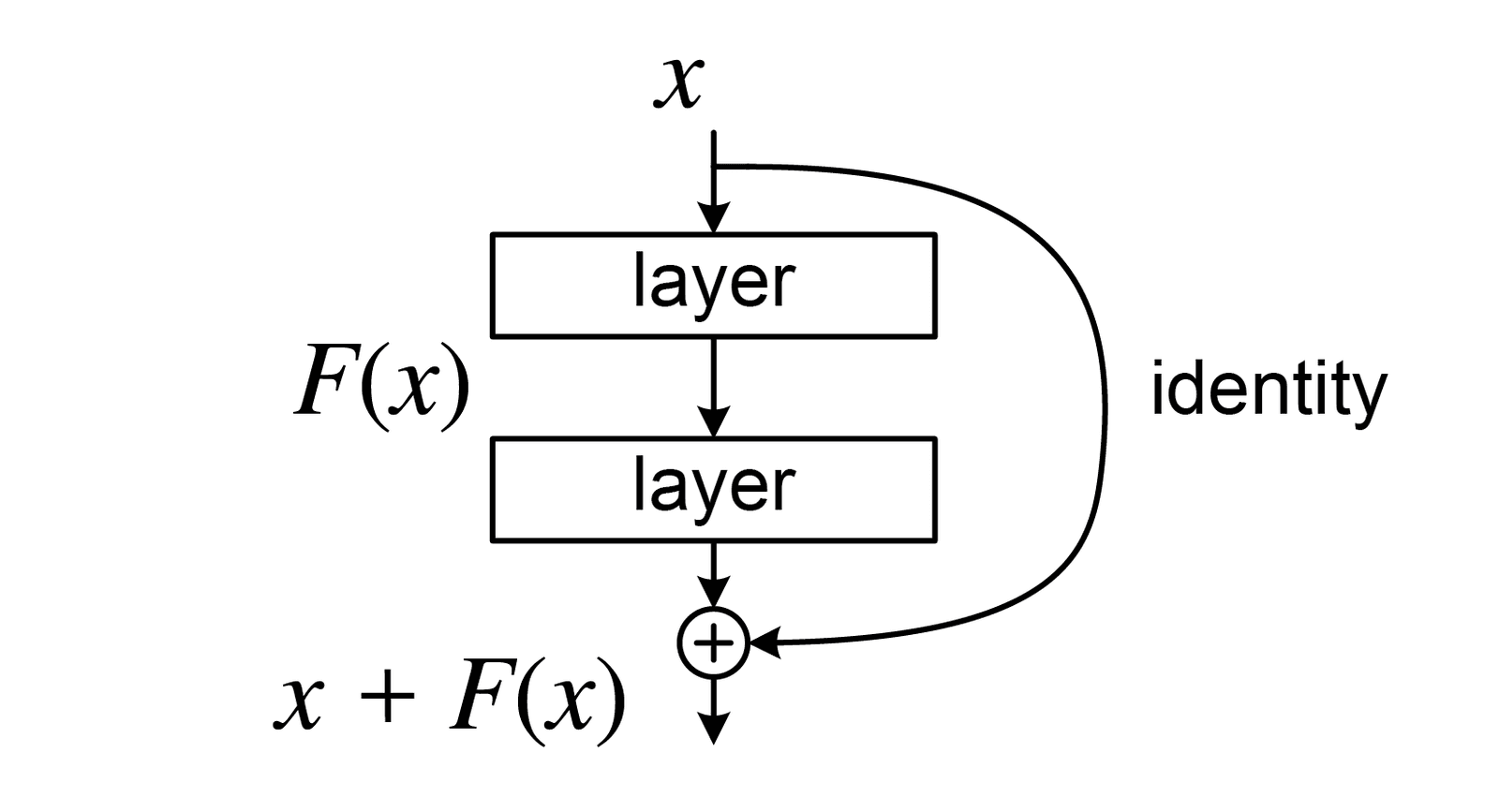
Residual Networks (ResNets): Go Deeper, Not Worse
ResNets let you train extremely deep networks by learning what to *change*, not the entire output. They use 'skip connections' to bypass layers, which helps solve accuracy degradation in deep vision models. The footgun is thinking deeper is always better.
Batch Normalization: Stabilizing Neural Network Training
Batch Normalization regulates data flow in a neural network by re-centering and re-scaling inputs to each layer. This stabilizes deep network training, allowing higher learning rates.
SLAM: Mapping a Room While You're Still In It
SLAM solves a chicken-and-egg problem: you can't map a space without knowing your location, and you can't know your location without a map. It does both at once. It's used by robots and AR headsets to navigate.
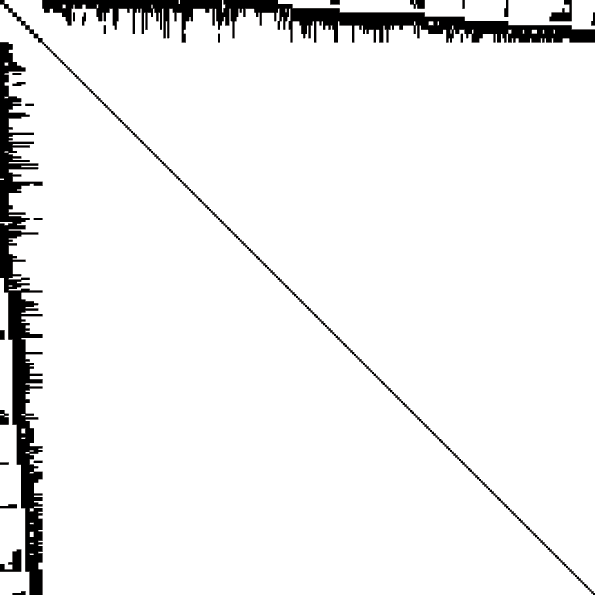
Bundle Adjustment: Jointly Refining 3D Scenes and Cameras
Bundle adjustment is a grand negotiation, simultaneously refining a 3D scene, camera poses, and lens properties to best explain the 2D images. It's the final polish in Structure from Motion (SfM) or SLAM.
Eight-Point Algorithm: Finding Geometry from Image Pairs
The Eight-Point Algorithm finds the geometric relationship between two camera views of the same scene. Given at least eight matching points, it estimates the essential or fundamental matrix.
Local Binary Patterns (LBP) for Texture Classification
LBP is a 'visual descriptor' that summarizes an image's texture into a feature set for a machine to read. It's a powerful tool for texture classification, but its performance often improves significantly when combined with other descriptors like HOG.
ORB: Fast, Free Feature Detection for Computer Vision
ORB combines the speedy FAST keypoint detector with a rotation-aware BRIEF descriptor. It offers a fast, royalty-free alternative to SIFT for finding and describing unique points in an image, even when the object is rotated.
SURF: A Faster, Patented Alternative to SIFT
SURF is a faster, more robust alternative to SIFT for finding key points in an image. It's used for real-time object recognition or stitching images where SIFT is too slow. Beware: its core algorithms are patented, limiting commercial use without a license.
Laplacian of Gaussian (LoG) for Blob Detection
LoG finds blobs by blurring an image then finding points of maximum curvature, like finding the top of a hill by looking where the slope changes fastest. It's used in medical imaging and astronomy. The footgun: the blur size dictates the blob size you can.
We are hiring for this. Every open role lists the topics its interview covers, so you can prepare for the real thing rather than guessing.
See open roles