Easy everything in Computer Vision, page 2
How a convolutional layer works
Learnable kernels slide over the input computing dot products, with stride controlling step size and padding controlling output size.
Disparity and depth in stereo vision
Disparity is the horizontal shift of a point between left and right images; depth is inversely proportional to disparity given baseline and focal length.
Epipolar constraint for correspondence search
The match for p1 must lie on its epipolar line in the second image, reducing a 2D search to 1D; the relation is encoded by the fundamental matrix.
Image gradients, Sobel, and Canny
The gradient measures local intensity change in x and y; Sobel approximates it via convolution kernels; Canny uses gradient magnitude and direction plus non-max suppression and hysteresis.
Harris corner detector and corner stability
Harris finds points where intensity changes strongly in all directions using the structure tensor of gradients; corners are well localized in two directions, unlike edges.
RGB versus HSV color spaces
RGB mixes three light channels; HSV separates hue, saturation, value so color identity decouples from brightness.
What is an image histogram and how does histogram equalization improve contrast?
Define a histogram as pixel counts per intensity; explain equalization normalizes the CDF to spread intensities across the full range.
How would you implement a simple box blur on a grayscale image?
Iterate interior pixels, sum the N by N neighborhood, divide by kernel area, write to a new buffer.
Describe a grayscale histogram and its use in exposure and equalization
Tests pixel distribution intuition. A strong answer covers intensity bin counts, left or right clustering for exposure errors, and CDF-based redistribution for equalization. Red flag: calling equalization min-max stretching without cumulative mapping.

What is the difference between lossy and lossless image compression?
This tests irreversible discard versus perfect reconstruction. A strong answer defines lossy as dropping detail, lossless as fully reversible, names JPEG, PNG, and chooses lossless for masters, lossy for web. Red flag: claiming lossless is always smaller.
Confusion Matrix: Grading Your Model's Predictions
A confusion matrix is a scorecard showing how a classification model gets confused. It grids predicted labels against actual labels to reveal specific error types. It's essential for diagnosing failures that overall accuracy metrics might hide.
Data Labeling: Teaching Computers How to See
Data labeling is like creating flashcards for an AI. You show it an image and explicitly tell it what's important, like 'this is a cat.' It's essential for training models for self-driving cars or medical imaging.
ImageNet: The Dataset That Launched the Deep Learning Boom
ImageNet is a massive, human-labeled image library that became the standard benchmark for teaching computers to "see". It's the dataset behind the deep learning revolution, used to pre-train models for photo search and more.
Image Sensors: Converting Light to Data
An image sensor is the digital equivalent of film, turning light into electrical signals. It's the core component in everything from your phone's camera to medical imaging.

Focus Stacking: Combining Focal Planes for Ultimate Sharpness
Focus stacking creates an image with impossible depth of field by combining the sharpest parts of multiple photos. It's essential for macro, landscape, and microscopy where one shot can't keep everything sharp.
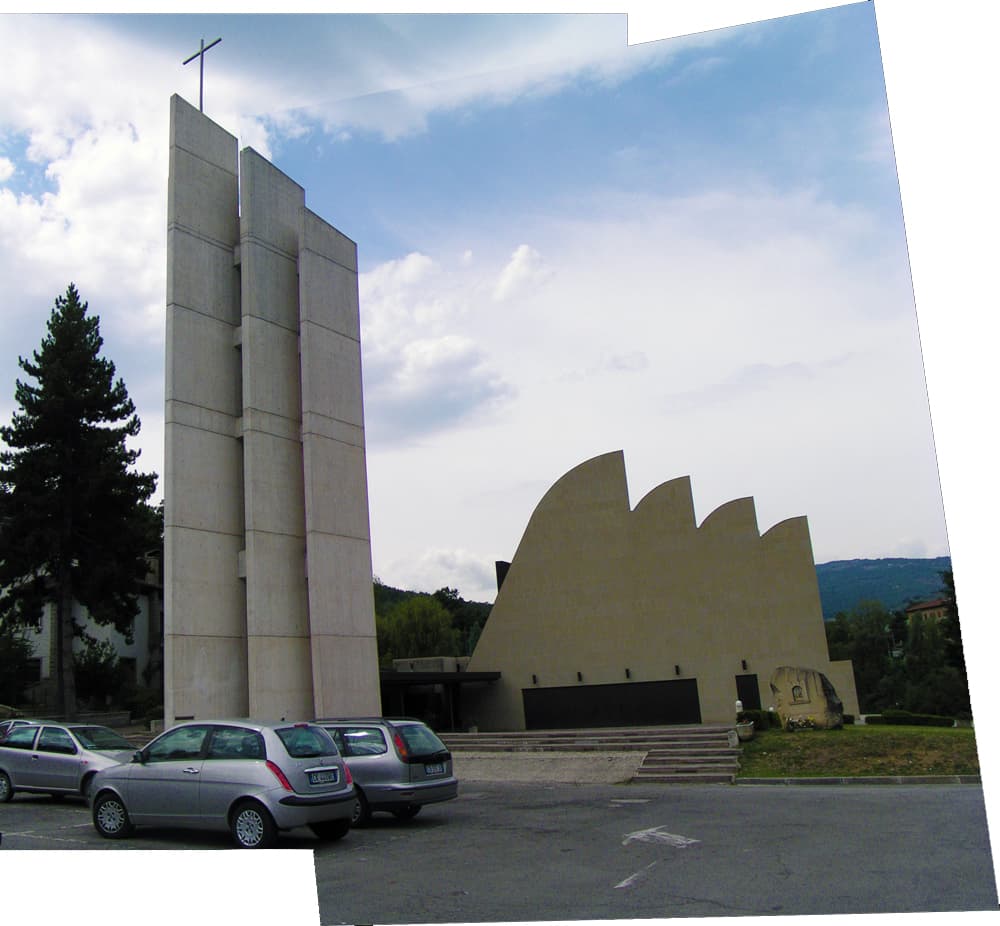
Image Stitching: Creating Panoramas from Overlapping Photos
Image stitching digitally 'tapes' together overlapping photos to create a single, wider panorama or a super-high-resolution image. It's used in phone panorama modes and for creating gigapixel photos. The main footgun is insufficient overlap between shots.
High Dynamic Range (HDR): Seeing More Light
HDR captures a wider range of light and dark than standard images, preventing blown-out highlights and crushed shadows. It's used to show scenes as the human eye sees them. The footgun is thinking HDR is just 'brighter'—it's about more detail in the extremes.

N-way-K-shot: Classifying with Few Examples
N-way-K-shot is a framework for testing a model's ability to learn from scarce data. It asks: 'Can you classify between N categories after seeing only K examples of each?'
Semi-Supervised Learning: More From Less Data
Semi-supervised learning uses a small set of labeled data and a large set of unlabeled data to train a model. It's ideal for tasks like image classification where labeling is costly. The footgun: if your unlabeled data is noisy, it can degrade performance.
Pretext Tasks: Making Data Teach Itself
A pretext task is a fake problem you invent for a model so it learns from unlabeled data. For example, asking it to predict a missing image patch forces it to learn about objects. This is the core of self-supervised learning.
We are hiring for this. Every open role lists the topics its interview covers, so you can prepare for the real thing rather than guessing.
See open roles