Advanced everything in Data Science & Analytics
Federated learning architecture, risks, and defenses
Devices train locally and send updates not data, a server aggregates; gradients still leak, enabling inversion or membership inference; defend with secure aggregation and DP.
Differential privacy, epsilon, and noisy aggregates
Define DP as bounded output change when one record is added or removed, explain epsilon as the privacy-accuracy knob, add calibrated noise scaled to sensitivity.
Minimizing model prediction latency end to end
Shrink the model via quantization, pruning, distillation, compilation; cut infra latency via caching, edge, faster runtimes.
Zero-downtime model updates with blue-green or canary
Blue-green swaps full traffic after validation, canary ramps a small slice; both need health, latency, and quality monitoring plus instant rollback.
Diagnosing Spark executor OutOfMemoryError
Check the Spark UI for skew and spills, inspect executor memory and partition count, find culprits like wide collect, huge shuffles, or skewed keys, and fix via more partitions, memory tuning, or…
Mode collapse in GANs and how to fix it
Mode collapse is the generator producing few similar outputs, missing data diversity to fool the discriminator; fixes include Wasserstein loss, minibatch discrimination, unrolled GANs, and feature…
Why Transformers use multi-head attention
A single head averages into one representation subspace; multiple heads attend in parallel to different subspaces, letting the model capture diverse relations like syntax and coreference at once, then…
Exploration versus exploitation: epsilon-greedy and UCB
Exploit current best to earn reward, explore to discover better options; epsilon-greedy explores randomly with probability epsilon; UCB explores by an uncertainty bonus…
Interpreting a black-box gradient boosting model
Global tools like permutation importance or aggregated SHAP rank overall feature influence; local tools like per-instance SHAP or LIME explain one prediction; SHAP unifies both via additive…
Stemming versus lemmatization in text preprocessing
Stemming chops affixes fast but crudely, yielding non-words; lemmatization maps to real dictionary base forms using POS, slower but accurate; skip both for embedding or transformer models.
MLE versus MAP estimation and the role of priors
MLE maximizes likelihood alone; MAP maximizes likelihood times a prior, acting as regularization that shrinks toward prior beliefs; with abundant data they converge.
Eigenvalues, eigenvectors, and their role in PCA
An eigenvector keeps direction under a matrix, its eigenvalue scales it; PCA finds eigenvectors of the covariance matrix as principal axes.
Framing ad-load tradeoffs: revenue versus retention
Define revenue plus guardrail engagement metrics, run a long-enough experiment to see retention effects, and weigh short-term lift against lifetime-value erosion.
Does forcing profile completion cause retention?
Name the confounder (engaged users self-select into completing profiles), warn that forcing it may not transfer the effect, and propose a randomized experiment.
Transformer Architecture
The Transformer replaces recurrence with self-attention, letting every token directly attend to every other token in parallel. This enables long-range context and fast training on GPUs, making it the backbone of modern large language models and much of…
Explain Regression Discontinuity Design and propose a real-world scenario
Compare units just above and below a threshold for local effects; propose scenario with forcing variable.
How would you estimate causal impact using a quasi-experimental method?
DiD with Canada versus Australia; assert parallel trends; validate with pre-period plots and placebo tests.
K-Means vs DBSCAN: which for geospatial hotspots?
Tests matching algorithmic assumptions to data structure. K-Means needs K and assumes spheres; DBSCAN discovers arbitrary density shapes and labels noise. Choose DBSCAN for geospatial hotspots because density is irregular.

High ROC-AUC but low PR-AUC: what does this imply?
Tests if ROC-AUC hides imbalance while PR-AUC exposes it. Severe imbalance dilutes FPR across many negatives, inflating ROC-AUC, but precision crashes. Critical for rare positives with costly false positives. Praising the model on ROC-AUC alone fails.
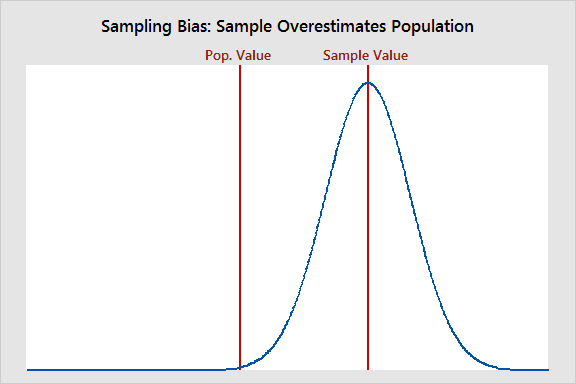
How can EDA and visualization identify dataset bias before modeling?
Tests operationalizing bias detection before modeling. Strong answers compare sample distributions to population norms, audit feature coverage with heatmaps, and track missingness by subgroup. Red flag: citing only class imbalance or ignoring sampling frame.
We are hiring for this. Every open role lists the topics its interview covers, so you can prepare for the real thing rather than guessing.
See open roles