More in Design & UX — page 27
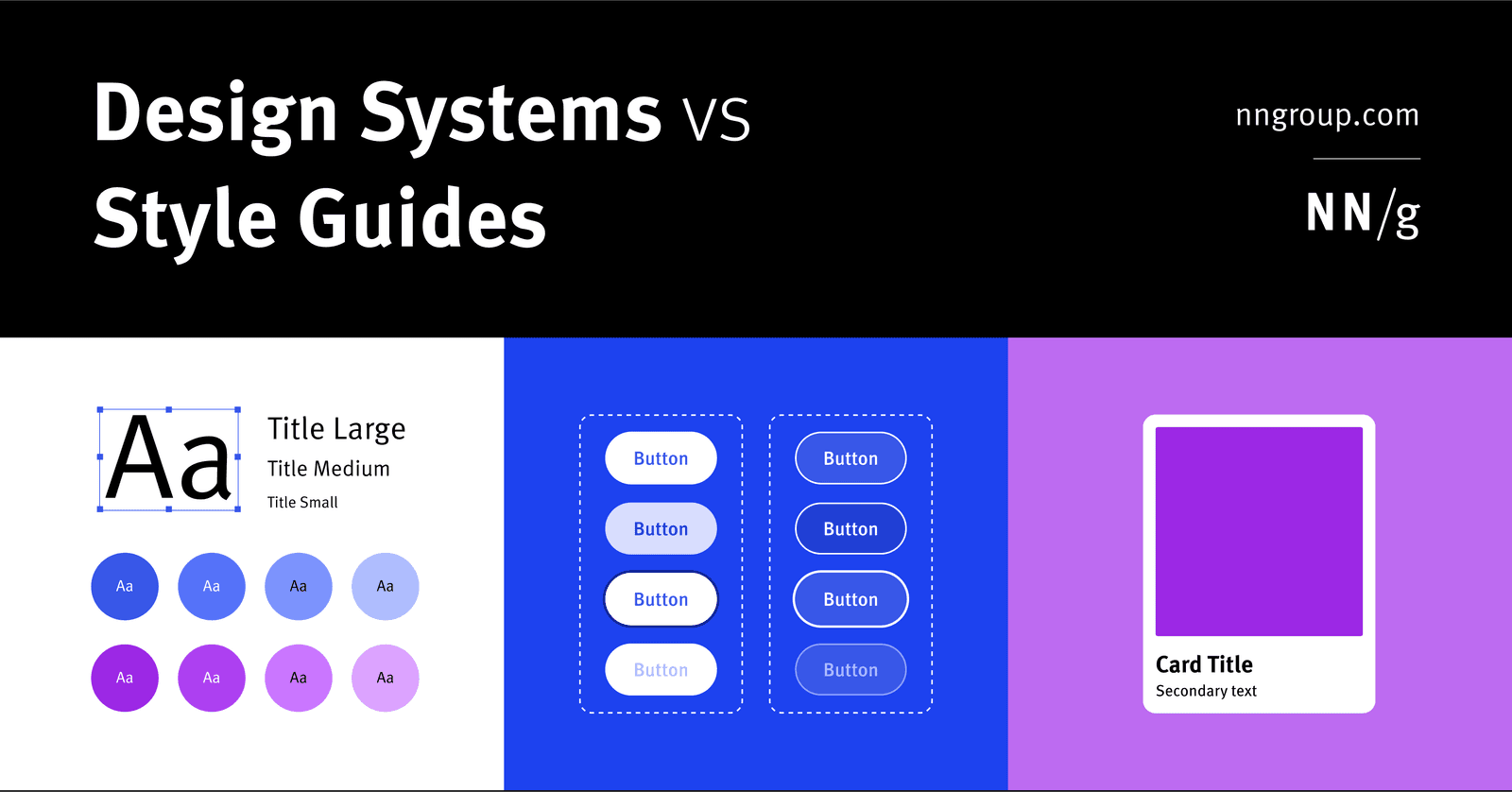
Component library vs style guide vs design system
WHAT IT TESTS: Knowledge of hierarchy in design artifacts. ANSWER: A design system is holistic parent for scale; a style guide is a narrow visual/content child; a component library is a coded child of reusable UI elements. RED FLAG: Do not conflate them.
What is a design system and its primary engineering components?
Tests if you treat design systems as engineering infrastructure, not just UI kits. Strong answers cite reusable coded components, design tokens, documentation, and governance as the core. Red flag: calling it just a component library or style guide.
Map Components to Native Platform Equivalents
Map design system components to native OS equivalents instead of forcing identical custom widgets everywhere. Use this when cross-platform apps must respect platform conventions.
Material Design: Android's Paper Metaphor
Material Design models Android UI as stacked paper with light and elevation. It ships pre-built components like cards and FABs so your app feels native immediately.
Structural vs. Thematic Tokens: Job vs. Value
Structural tokens describe the role, like text-primary; thematic tokens describe the value, like blue-500. Split them so retheming does not require hunting hexes. The footgun is using only thematic tokens, which hardcodes intent and breaks dark mode.
Scoped Theming: Local Overrides Without Global Leaks
Scoped theming is sunglasses for a UI subtree: it swaps tokens for one section without touching the global page. Use it for a dark-mode dashboard or white-label widget inside a light app, but avoid deep nesting or you will fight invisible inheritance chains.
Token Aliasing: Theme by Role, Not Value
Token aliasing names a color by its job, not its hex, so you swap the underlying value per theme. One library supports light mode, dark mode, or multiple brands without code changes. The footgun is deep alias chains that hide which primitive value renders.
Design System API Review
A design system API review treats component props as a public contract before code ships. It catches inconsistent naming, prop bloat, and breaking changes that fragment the product. Teams skip it because "it is just UI," creating unmaintainable interfaces.
Automated Deprecation Warnings in Design Systems
Deprecation warnings are a design system's immune system: they flag outdated components in an editor before bad code ships. They matter most when dozens of teams consume the system. The footgun is warning fatigue; silenced errors hide real breaking changes.
Migration Guide: Operational Playbook for Design System Changes
A migration guide is an operational playbook, not just docs: it phases breaking design system changes across production code so teams don't freeze development. Skip the operational plan and you end up with a permanent dual-system mess.
Quantify UI Debt Before It Compounds
UI debt quantification turns messy interfaces into measurable cost. Teams track component adoption, override rates, and design-dev drift to prioritize refactors. The footgun is treating every inconsistency as debt, ignoring the business value of shipping fast.
NPS for Design Systems: Smoke Alarm, Not Scorecard
NPS for design systems is a smoke alarm for team trust, not a feature scorecard. Poll consuming teams quarterly to catch sentiment drops before adoption stalls. Never benchmark against consumer SaaS; internal tools face forced usage and different expectations.
Pair Programming Drives Design System Adoption
Pair programming with the system team embeds design system knowledge directly into product code. Use it when a squad ships their first feature with new tokens or components. The footgun is treating the session as code review rather than knowledge transfer.
Design System Roadshow: The Internal Campaign
A design system roadshow treats adoption as a political campaign, not a product launch. You visit every squad to demo components, surface fears, and co-build trust.
Release Cadence: The Design System Heartbeat
Release cadence is the heartbeat of a design system: a fixed shipping rhythm that lets teams plan upgrades instead of absorbing random change. It is vital when many squads share a library.
ADR: Capture Context, Not Just Conclusions
An Architecture Decision Record captures why a significant technical choice was made, so teams understand trade-offs without relitigating them. Use it when a decision is costly to reverse or crosses team boundaries.
Component Definition of Done: The Shipping Checklist
Component Definition of Done is the checklist that turns UI code into a team dependency. It covers a11y, tokens, tests, and docs so teams can adopt without asking questions. Stopping at code-complete is the footgun; orphans silently fracture systems.
Hybrid Model: Core Team Plus Federated Contributors
A hybrid design system team pairs a central group owning primitives with product squads shipping patterns. Large orgs use it when one team cannot cover every surface. It fails when contribution rules are vague and the core becomes a bottleneck not an enabler.
Federated Design System Team Model
Federated ownership spreads design system control across teams, not a silo. A lean core owns standards while contributors ship components from the field. The footgun is treating federation as zero governance, splintering the system into forks.
Design System Roadmap: A Prioritization Contract
A design system roadmap is a contract with product teams, not a release calendar. It balances platform health against consumer demand so the system stays relevant. The footgun is letting roadmaps dictate every sprint, reducing the team to a service desk.