Concepts in DevOps & Cloud, page 4
Git Merge: Combining Development Histories
Git merge combines separate lines of development into one branch. It creates a special merge commit that ties the two histories together, preserving the context of each. Use it to integrate a feature branch into your main line.
Sampling: Tracing Everything Without Storing Everything
Sampling makes high-volume observability affordable by deciding which traces to keep and which to discard. It's essential in distributed systems where capturing every request is too costly.
The .dockerignore File: Keep Your Build Context Lean
.dockerignore is like .gitignore for your Docker build. It tells the daemon which files to exclude from the build context, preventing large or sensitive files from slowing your build and bloating your image. The footgun is forgetting it and sending everything.
Cloud Load Balancer: Your App's Traffic Cop
A cloud load balancer is a traffic cop for your servers, distributing requests across a pool of machines to prevent overload. It's essential for scaling apps and ensuring high availability.
Error Budgets: The Currency of Reliability
An error budget is the acceptable amount of downtime or errors your service can have over a period. Calculated as (1 - SLO), it's a currency for balancing risk (new features) and reliability work. The main footgun is treating it as a target to spend.
Docker Multi-stage Builds: Slimmer, Faster Images
Treat your Dockerfile like a pipeline: build your app in one stage with all its tools, then copy only the final artifact to a clean production stage. This keeps images small by excluding build-time dependencies.

Auto Scaling Groups: Elasticity and Self-Healing
An Auto Scaling Group (ASG) is like a thermostat for your servers, automatically adding or removing instances to match demand and replacing any that fail. Use it for web apps with variable traffic or services that need to self-heal from instance failures.
Git Rebase: Rewriting History for a Cleaner Timeline
Git rebase rewrites history by transplanting your commits onto a new base, creating a clean, linear project history instead of a merge bubble. It's used to catch a feature branch up with main. Never rebase a branch others are using; it rewrites history.
Git Tags: Immutable Milestones for Release History
A Git tag is a permanent bookmark on a commit, usually marking releases like v2.0. Annotated tags store author, date, and GPG signatures to anchor deploy pipelines.
SLO Time Windows: Choosing Your Measurement Period
An SLO's time window is the calendar for grading reliability. A short window forces rapid fixes, while a long one smooths out blips for strategic planning. The footgun is using calendar months, which have unequal lengths and complicate budget math.
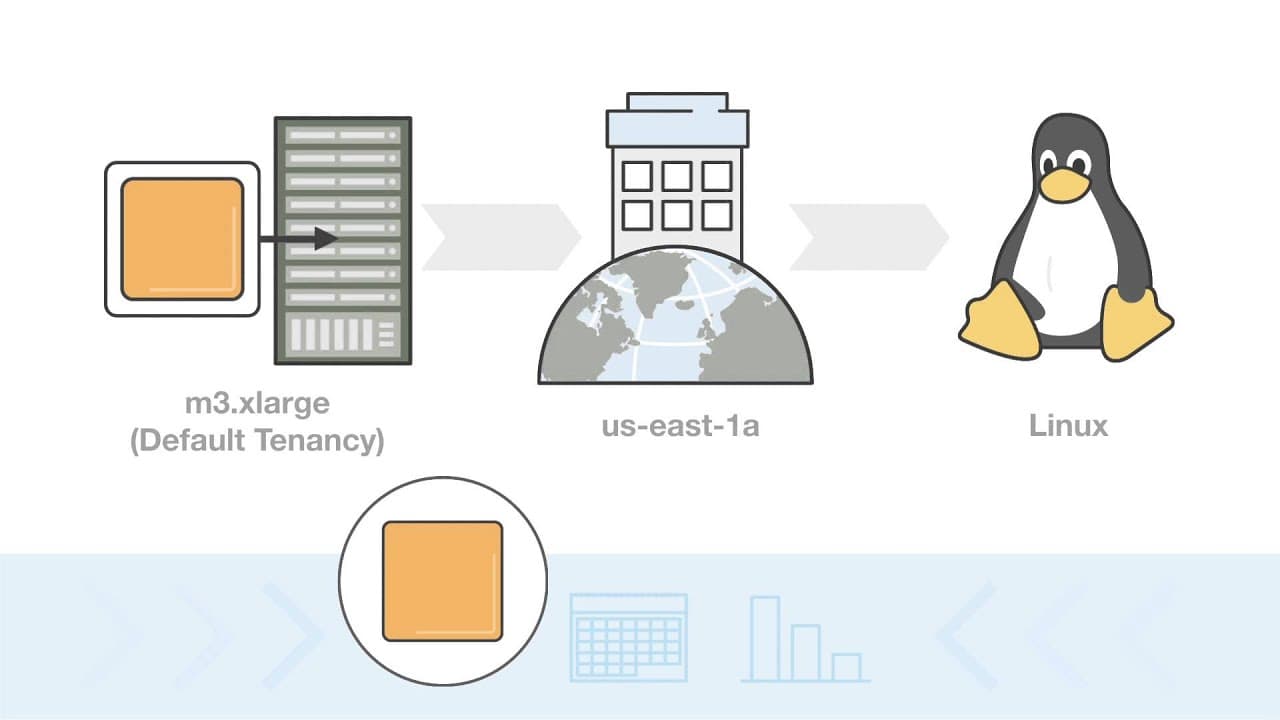
AWS Reserved Instances: Commit to Compute, Save Big
Reserved Instances are like leasing a car instead of renting daily: commit to 1-3 years of compute for a steep discount. They're ideal for predictable, steady-state workloads. The footgun is buying inflexible Standard RIs when your needs might change.
Docker Image Scanning: A Background Check for Your Code
Docker image scanning is a background check for your software dependencies, checking packages against known vulnerability lists (CVEs). It's used in CI/CD to block vulnerable builds and in registries for continuous monitoring.
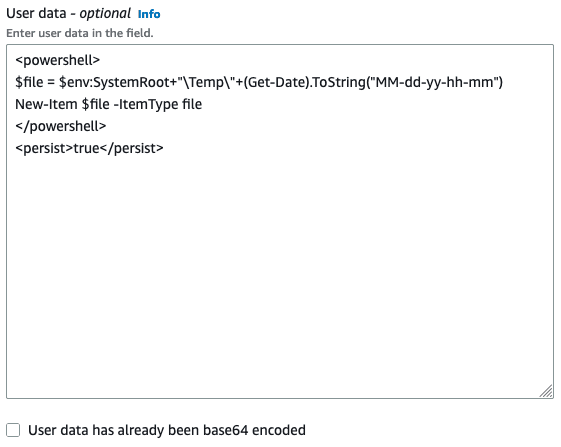
User Data Scripts: Day-One Instance Configuration
User data scripts are your instance's "Day One" instructions, automatically running commands like package installs on first boot. Use it to set up a web server or install agents without manual SSH.
GitHub Flow: A Simple, Branch-Based Workflow
GitHub Flow is a simple workflow where main is always stable and new work happens on a feature branch. It's used for continuous delivery, from code to documentation.
SLO Document: Your Service's Reliability Contract
An SLO document is the source of truth for a service's reliability promises, acting as a formal contract between teams on what 'good enough' looks like. It defines measurable targets for availability and latency, guiding engineering priorities.
The docker-compose.yml File: Your App's Blueprint
The docker-compose.yml file is a blueprint for defining and running multi-container Docker applications. Use it to spin up a local dev environment with a database, backend, and frontend with one command.
Spot Instances: Trade Reliability for Huge Cost Savings
Spot Instances let you use spare AWS compute for up to 90% off. They're great for fault-tolerant jobs like batch processing or CI/CD. The footgun: AWS can reclaim your instance with a two-minute warning, so don't use them for critical workloads.
GitFlow: A Branching Model for Versioned Releases
GitFlow organizes your repo around two main branches: master for production and develop for integration. It's designed for projects with distinct, numbered releases, like desktop apps, not for continuously delivered web apps where simpler models are…
Docker Compose Services: Defining Your App's Components
A service in Docker Compose is a blueprint for a running container. You define its image, ports, and environment to describe one piece of your application, like a web server or database. The footgun is using build and image together for one service.
Bare Metal Instances: Your Own Dedicated Cloud Server
A bare metal instance is your own dedicated physical server in the cloud—no sharing, no virtualization layer. Use it for workloads needing direct hardware access or for licensing that forbids VMs. The footgun: you trade cloud elasticity for this control.
We are hiring for this. Every open role lists the topics its interview covers, so you can prepare for the real thing rather than guessing.
See open roles