Easy everything in Growth & Experimentation
Why consistent user IDs matter in experiments
The user id seeds deterministic bucketing and ties events to one person across devices; achieve it via authenticated ids and anonymous-to-known stitching.
Trace an event from click to analysis
Client SDK captures and batches, a collection endpoint ingests, a stream and ETL enrich and load into a warehouse for analysis.
Instrument a first-full-song activation event
Define 'full song' server-side, emit a typed event with user, song, and context, dedupe the first-time flag.

Lifecycle of a feature flag experiment from creation to cleanup
Tests operational rigor across the full flag lifecycle. A strong answer covers six stages: SDK instrumentation with event tracking, phased rollout, monitored experiment, ship/kill decision, and code cleanup.

How would you implement a simple feature flag system?
Tests runtime config separation and distributed hygiene. Outline: control service, datastore, API, SDK, and update mechanism; local evaluation with cached state; short-lived flags. Red flag: static config files requiring redeployment are not feature flags.

What differentiates leading and lagging indicators for subscriptions?
Leading indicators forecast; lagging indicators confirm. Subscriptions: activation rate leads, MRR lags.

Why is extrapolating 5% weekly growth naive for annual forecasting?
This tests knowledge of extrapolation limits. A strong answer cites market saturation, seasonality, and channel exhaustion as invalidating factors, and notes that compounding 5% over 52 weeks magnifies error.

What data and approach for a simple 30-day DAU forecast?
Tests forecasting from sessionized logs without overengineering. Cite timestamped events, a 30 min session rule, and a regression baseline with day-of-week, recent totals, scored with MAE. Red flag: deep learning before a baseline or ignoring privacy hashing.
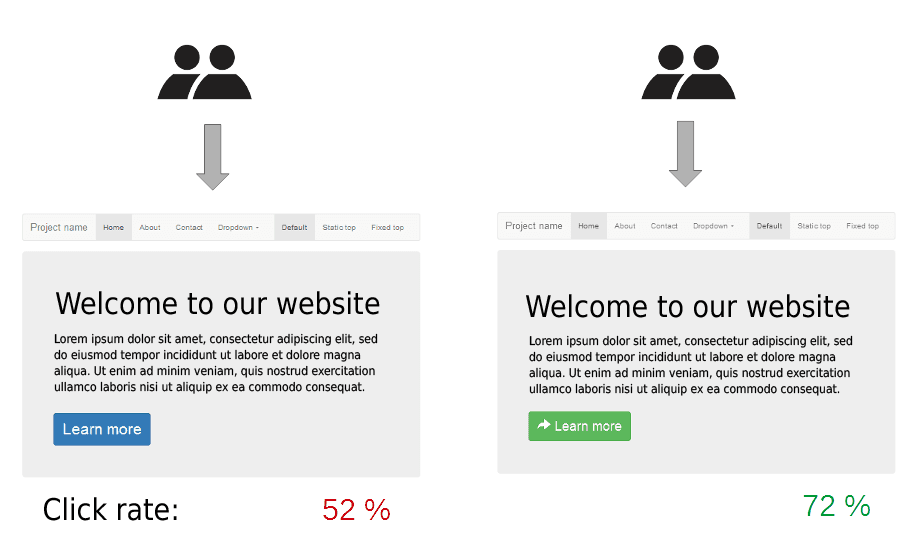
Implement a 10% onboarding tutorial feature flag and track success
Tests lightweight experiment design and metric selection beyond vanity numbers. Strong answers cover user-ID bucketing, conversion tracking, and guardrail metrics like drop-off. Red flag: manual toggles or click-through without downstream outcomes.
How would you instrument a key activation milestone event?
Tests schema design beyond a bare event name. A strong answer includes the event key, user ID, timestamp, and properties like project_id and is_first_project. Red flag: omitting the user ID or sending only a human-readable label without structured context.
Model a 3-month 20% promo discount and apply it at billing
This tests separating coupon rules from per-user redemptions. Good answers use a coupons table for the 20%/3-month rule, a redemptions table for usage, and apply the discount to the first three invoices. A red flag is hard-coding the discount on the user row.

What schema changes are needed to add a Pro subscription tier?
This tests normalization of billing data versus hardcoding tiers. Add a plans table with integer cents pricing, link subscriptions via plan_id, and leave users untouched. Red flag: adding a tier string column to users or storing prices in subscriptions.

Describe the data model and backend logic for a daily login bonus.
This tests streak state machines and calendar edge cases. A strong answer stores last_login_utc and streak_count, uses UTC day buckets, resolves timezones per user tz, and needs no leap-year logic.

Describe the end-to-end data flow for tracking a 'Share' button click
Payload carries event type, user ID, timestamp, device, content; client batches with retry; backend validates and lands in a partitioned store.

How do you determine if a user is 'new' for a setup guide?
This tests whether you separate account age from user state for onboarding. Good answers compare created_at (brittle) with a persistent flag (idempotent) and consider milestones. A red flag is using a timestamp as a permanent new proxy without managing reruns.
How would you instrument a 4-step onboarding wizard?
Track Step Started and Step Completed with step_index and flow_variant; tie via distinct_id.
What is a p-value in A/B tests and what does threshold mean?
P-value is the chance of this or more extreme result if the null is true; the 5% threshold is the accepted false-positive rate.
How do you set up a button color A/B test?
Tests whether you can define a valid experiment, not just a color change. A strong answer covers hypothesis, randomization, primary metric, sample size, and significance threshold.

What framework decides between low-effort/low-impact and high-effort/high-impact experiments?
This tests structured experiment sequencing beyond gut instinct. A strong answer picks ICE, RICE, or PIE; scores both experiments by impact, confidence, and effort or reach; then weighs opportunity cost and bandwidth.

Which three data sources would you analyze to improve activation?
This tests whether you ground hypotheses in diverse evidence before experimenting. A strong answer names qualitative feedback, funnel metrics, and behavioral analytics as distinct inputs.
We are hiring for this. Every open role lists the topics its interview covers, so you can prepare for the real thing rather than guessing.
See open roles