Intermediate everything in Growth & Experimentation, page 8
The Peak-End Rule: Design for Memory, Not Averages
Users don't remember the average of an experience; they remember its most intense moment and its end. This shapes recall of onboarding, support calls, or checkout. The footgun is optimizing for overall 'goodness' while ignoring a painful peak or weak ending.
Anchoring Bias: The First Number You See Matters Most
The first number you see acts like a mental anchor, warping all subsequent judgments. This is used in pricing, where a high "original" price makes a sale price seem better, and in negotiations.
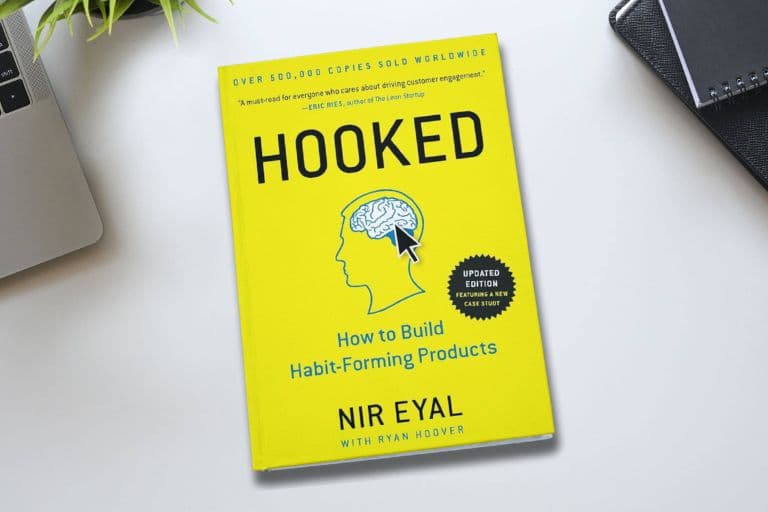
The Hook Model: Designing for Repeat Engagement
The Hook Model engineers user habits with a 4-step loop: Trigger, Action, Variable Reward, and Investment. It's a framework for building products people return to on their own, common in social media and games.

Fogg Behavior Model: Why Users Act (or Don't)
The Fogg Behavior Model states a behavior only happens when Motivation, Ability, and a Prompt converge (B=MAP). Use it to diagnose why a feature fails or to design new ones. The footgun is blaming low motivation when the real issue is low ability.

The Data Layer: A Central Hub for Website Events
A data layer is a central JavaScript object acting as a message bus between your site and analytics tags. It passes event data, like button clicks or purchase values, in a structured way. The key footgun: never overwrite it; always use dataLayer.push().
Churn Rate: How Fast Your Business is Leaking
Churn rate is your business's leak rate—the percentage of customers lost over a period. It's a vital health metric for subscription services like SaaS or streaming. The footgun?
User Activation: Engineering the 'Aha' Moment
User activation engineers the 'aha' moment when a new user first experiences your product's value. It's measured by a key action, like sending a message in Slack, that predicts retention.

ICE Score: A Quick Framework for Prioritizing Ideas
The ICE score is a quick framework for ranking ideas by asking: what's the potential Impact, our Confidence in the outcome, and the Ease of implementation? Growth teams use it to prioritize experiments, balancing big bets with quick wins.

High-Tempo Testing: Move Faster Than Your Channels Decay
High-tempo testing treats growth as a continuous experiment, not a one-time campaign. Since marketing channels decay quickly, this lets you find new wins across the entire user journey.
We are hiring for this. Every open role lists the topics its interview covers, so you can prepare for the real thing rather than guessing.
See open roles