Intermediate everything in LLMs & Generative AI, page 9
AI May Automate AI R&D by EOY 2028
Claude Mythos Preview now solves 93.9% of real-world GitHub issues on SWE-Bench, a massive leap from Claude 2's 2% in late 2023. This near-saturation of coding benchmarks is a key indicator that AI can automate its own engineering. Based on this trend, Anthropic's Jack Clark predicts a 60%+ chance of no-human-involved AI R&D by EOY 2028. This shifts the focus from AI-assisted coding to fully automated AI development.

Google Search demos visual AI and planning tools
Google Search is showcasing new visual AI capabilities, including an 'AI Mode' with a 'Canvas tool' for planning and 'Search Live' for real-time camera analysis. This demonstrates Google's strategy of integrating multimodal AI directly into its core product, moving beyond text queries to interactive, visual problem-solving. Engineers should note the shift towards integrated, task-oriented AI experiences that combine visual input, planning, and real-world data.
Explain prompt injection and how to defend against it
This question tests your understanding of LLM security vulnerabilities and how untrusted user input can manipulate model behavior. A strong answer defines prompt injection as hijacking the model's instructions, then outlines a layered defense including input sanitization, instruction-tuned models, and separating user input from system prompts. A common red flag is confusing it with traditional SQL injection or suggesting simple input filtering is a sufficient solution.
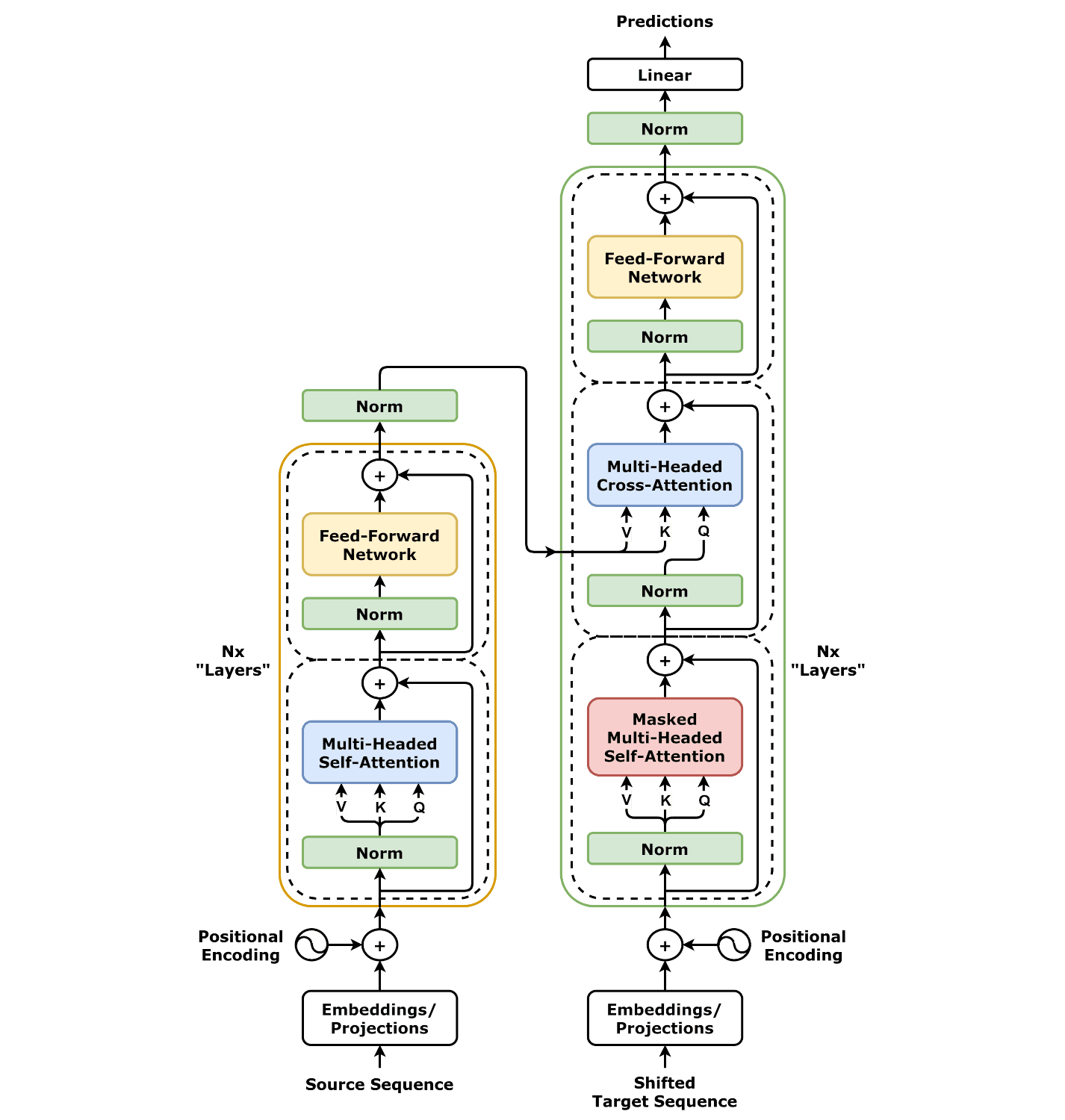
How does positional encoding work in transformers?
This tests your understanding of why Transformers need explicit position data. A great answer explains that self-attention is permutation-invariant, meaning it sees inputs as an unordered set. Positional encodings—vectors derived from sine and cosine functions—are then added to the input embeddings to inject sequence order. A red flag is simply saying 'it adds position' without explaining why this is necessary or how it's done.
Encoder-Only vs. Decoder-Only vs. Encoder-Decoder Transformers?
This tests your ability to connect transformer architecture to specific NLP tasks. A great answer explains how each model's attention mechanism dictates its use: encoder-only (bidirectional attention) for understanding content, decoder-only (causal attention) for text generation, and encoder-decoder for sequence-to-sequence tasks like translation. The key red flag is failing to explain the *why* behind the task suitability—the attention mechanism.
RAG vs. Fine-Tuning: Key Differences
This tests your understanding of how LLMs incorporate knowledge, specifically the trade-offs between embedding it in model weights versus retrieving it at runtime. A great answer defines RAG as runtime retrieval from an external source and fine-tuning as baking knowledge into model parameters, then contrasts their approaches to knowledge updates, cost, and providing citations. A red flag is stating one is always better, or failing to explain that they solve different problems and can be used tog
What is the trade-off between top-k and top-p sampling?
This tests your practical knowledge of tuning LLM output for the creativity vs. coherence trade-off. A strong answer defines top-k (static token count) and top-p (dynamic probability mass), then explains that top-p's adaptive window is generally more robust than top-k's fixed window. A red flag is failing to contrast the static nature of top-k with the dynamic nature of top-p, which is the core of the trade-off.

Explain the concept of self-attention
This tests your ability to explain the core mechanism of Transformers. A strong answer defines self-attention as a process for relating positions of a single sequence, explains the Query-Key-Value (QKV) model where a token's Query is compared to all Keys to generate weights, and describes how these weights create a weighted sum of Values. A red flag is vaguely describing 'importance' without mentioning the QKV mechanism.
Gemini API Webhooks Eliminate Polling for Long Jobs
The Gemini API now includes event-driven Webhooks, eliminating the need for continuous polling on long-running jobs like batch processing or video generation. Instead of repeatedly calling GET operations, your server will receive a real-time HTTP POST payload the instant a task finishes. This simplifies building efficient, agentic workflows that might take minutes or hours, reducing latency and infrastructure overhead for your applications.
Google's April AI Push: Gemma 4 and Agent Platform
Google's April AI update introduces the Gemma 4 open model, an eighth-generation chip, and the Gemini Enterprise Agent Platform. This signals a major push into the "agentic era," providing engineers with the foundational models, hardware, and platforms to build more autonomous AI systems. The release also includes a personalized coding tutor in Colab and the Deep Research Max data analysis tool. Evaluate Gemma 4 for your open-source needs and explore the new agent platform for building complex w
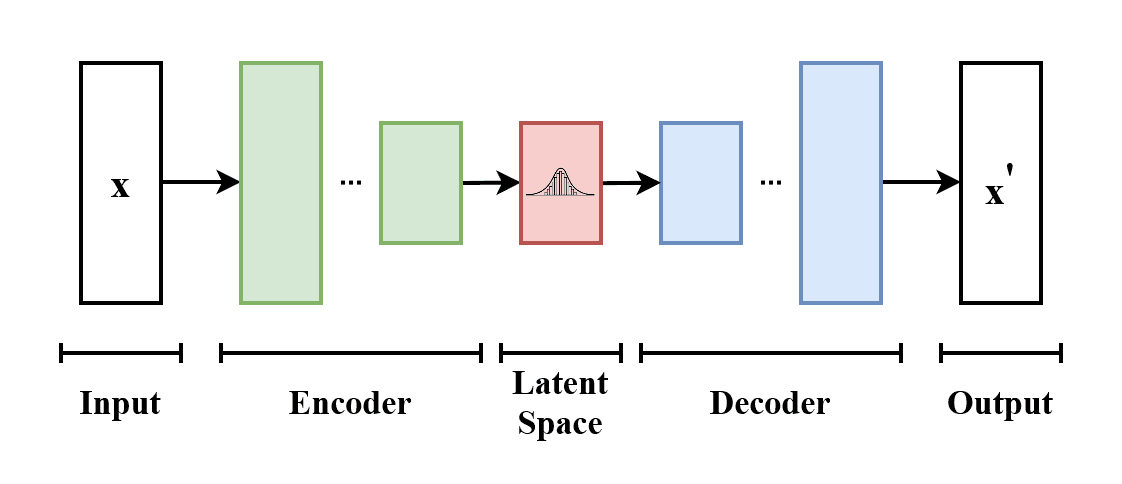
VAEs: Generating New Data by Learning Its Essence
A Variational Autoencoder (VAE) learns the *essence* of data, not just how to copy it. Instead of compressing an input to a single point, it maps it to a fuzzy region in a "concept space," allowing you to generate new, similar data by sampling from that region. This is key for creating novel images or music. The footgun is expecting sharp outputs; VAEs often produce blurrier results than models like GANs.
Tool Use: Giving LLMs Access to External Systems
Tool use lets an LLM call external functions, like a brain accessing a calculator or the internet. This is the core mechanism behind AI agents that can search the web, run code, or query a database to answer questions. The biggest footgun is assuming the model will always generate a valid function call; without enforcing a strict schema to match your function's expected input, your agent can fail unpredictably.
RAG: Giving Language Models an Open-Book Exam
Retrieval-Augmented Generation (RAG) gives a language model an open-book exam instead of forcing it to memorize everything. It combines a model's reasoning ability with a searchable external knowledge base. This grounds LLM responses in specific, up-to-date information, like a support bot using a product manual. The footgun is forgetting that the quality of the retrieved information directly limits the quality of the final answer.
Chain-of-Thought: Making LLMs 'Show Their Work'
Chain-of-thought prompting makes an LLM 'show its work' by generating intermediate reasoning steps before the final answer. This simple few-shot technique dramatically improves performance on complex tasks like math word problems or commonsense questions, especially for very large models. The common footgun is applying it to smaller models, where it can actually degrade performance instead of helping, as the reasoning ability hasn't yet emerged.

Generative Adversarial Networks (GANs): An AI Arms Race
Think of a GAN as an AI arms race between two networks: a forger and a detective. The forger network (Generator) creates fake data, like images or audio, while the detective network (Discriminator) tries to spot the fakes. This competition forces the forger to create increasingly realistic outputs. The main footgun is training instability—if one network overpowers the other too early, the whole system fails to learn and produces garbage.
Diffusion Models: Generating Data by Reversing Noise
Think of diffusion models as learning to reverse a "random walk." They take a clean data point, gradually add noise until it's unrecognizable, and then train a model to reverse that process step-by-step. This allows them to start with pure noise and guide it back into a coherent sample that resembles the original dataset. The footgun is that this multi-step reversal makes generation computationally intensive compared to single-pass models.
Perplexity: Measuring a Model's Uncertainty
Perplexity frames a model's uncertainty as the effective number of choices it's considering. For a fair die with six outcomes, the perplexity is 6, reflecting perfect confusion among six options. When evaluating language models, a lower perplexity score indicates a better ability to predict a sequence of text. The footgun is judging the score in a vacuum; a 'good' perplexity is always relative to the task's inherent randomness.
BLEU Score: Judging Translation by Human Overlap
The BLEU score judges a machine translation by how closely its text matches a professional human translation. It's a popular, automated, and inexpensive way to benchmark translation systems, like comparing different versions of a model. The main footgun is that a high score indicates high textual overlap, not necessarily better fluency or meaning, as it's just a proxy for human judgment.
RNNs: Neural Networks with Short-Term Memory
A Recurrent Neural Network (RNN) processes sequences by keeping a running memory of what it's seen. It feeds its own output from one step back into the next, like someone reading a sentence one word at a time. This is ideal for sequential data like text or time series where context is key. The main footgun is its notoriously short memory; information from early in a long sequence often gets lost.
Vector Databases: Searching by Meaning, Not Matches
A vector database organizes data by meaning, not just exact values. Instead of finding a record by its ID, you find it by its similarity to a query. This powers AI features like Retrieval-Augmented Generation (RAG), where an LLM finds relevant documents, and recommendation engines. The main footgun is that it finds *approximate* matches, trading perfect accuracy for speed and the ability to search unstructured data.
We are hiring for this. Every open role lists the topics its interview covers, so you can prepare for the real thing rather than guessing.
See open roles