Intermediate concepts in Product Management

High-Tempo Testing: Move Faster Than Your Channels Decay
High-tempo testing treats growth as a continuous experiment, not a one-time campaign. Since marketing channels decay quickly, this lets you find new wins across the entire user journey.

ICE Score: A Quick Framework for Prioritizing Ideas
The ICE score is a quick framework for ranking ideas by asking: what's the potential Impact, our Confidence in the outcome, and the Ease of implementation? Growth teams use it to prioritize experiments, balancing big bets with quick wins.
Lean Software Development: Focus on Value, Not Waste
Lean Software Development applies manufacturing principles to code, focusing on maximizing value by systematically eliminating waste. It's the philosophy behind Kanban-style pull systems and delaying decisions.
Product Roadmap: A Strategic Plan, Not a Feature List
A product roadmap is a strategic guide, not a rigid timeline, showing how work achieves long-term goals. It's used to align engineering, product, and leadership on priorities.
The Seven Wastes of Software Development (Muda)
Think of "Muda" as anything consuming resources without adding customer value. This Lean concept helps agile teams spot inefficiencies like partially done work and context switching.
Market Segmentation: Don't Sell to Everyone
Market segmentation means you don't sell to everyone. It's about dividing your market into smaller, meaningful groups to target them with tailored strategies. This is used for focused ads or niche product features.
Cohort Analysis: Comparing User Groups Over Time
Instead of averaging all user behavior, cohort analysis groups users by a shared starting point, like their sign-up month. This reveals how product changes affect retention for specific groups. The footgun is lumping everyone together, which hides real trends.

Cycle Time vs. Lead Time: Team Speed vs. Customer Wait
Lead Time is the total time a customer waits for a feature, from request to delivery. Cycle Time is the portion of that time your team is actively working. The footgun is optimizing only for Cycle Time, which can hide major customer-facing delays in the.

User Activation: Engineering the 'Aha' Moment
User activation engineers the 'aha' moment when a new user first experiences your product's value. It's measured by a key action, like sending a message in Slack, that predicts retention.
Customer Segmentation: Treat Different Customers Differently
Instead of treating all customers the same, segmentation groups them by shared behaviors or traits. This helps tailor marketing campaigns or manage relationships.
Churn Rate: How Fast Your Business is Leaking
Churn rate is your business's leak rate—the percentage of customers lost over a period. It's a vital health metric for subscription services like SaaS or streaming. The footgun?

The Data Layer: A Central Hub for Website Events
A data layer is a central JavaScript object acting as a message bus between your site and analytics tags. It passes event data, like button clicks or purchase values, in a structured way. The key footgun: never overwrite it; always use dataLayer.push().
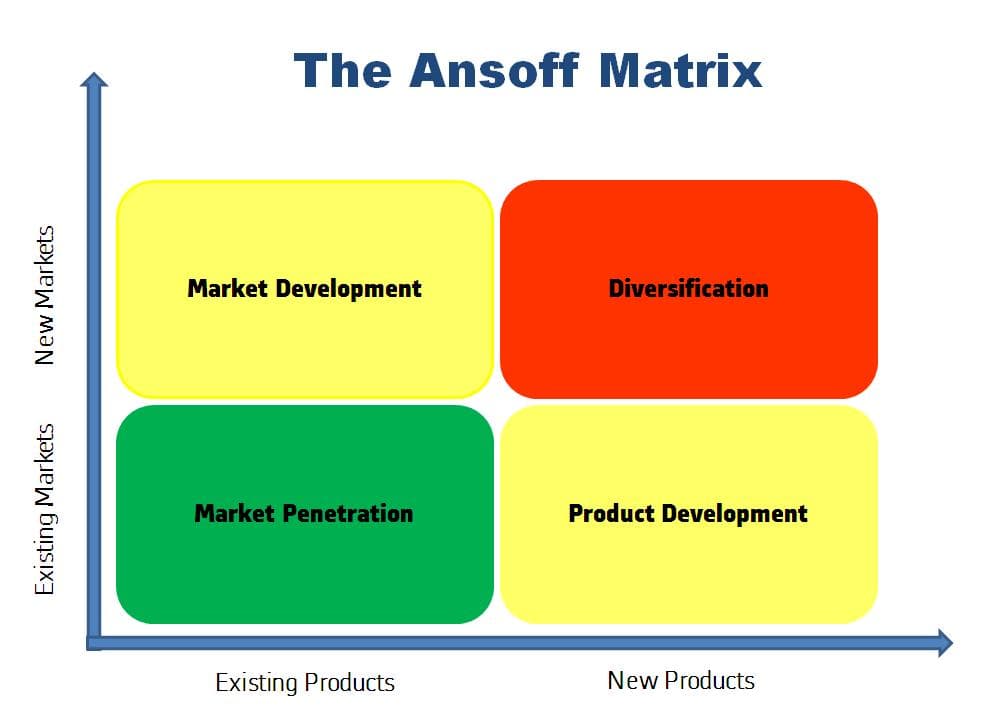
The Ansoff Matrix: Four Paths to Business Growth
The Ansoff Matrix maps growth strategy onto a 2x2 grid of products (new vs. existing) and markets (new vs. existing). It helps you decide whether to sell more of what you have or invent something new. The footgun is underestimating the risk of new ventures.
Blue Ocean Strategy: Make Competition Irrelevant
Instead of fighting rivals in a crowded market ("red ocean"), Blue Ocean Strategy creates new, uncontested space ("blue ocean") that makes competition irrelevant. It applies when you pursue both differentiation and low cost.

The Data Layer: Your Web Page's Central Message Bus
The data layer is a central message bus for your website, decoupling your app from analytics tags. It passes dynamic data like purchase totals or button clicks to tools like Google Tag Manager, which listens for these events to fire tags.

Diffusion of Innovations: How Good Ideas Spread
New tech spreads in a predictable S-curve, moving through groups from Innovators to Laggards. Use this model to target the right users at the right time, like focusing on Early Adopters to cross the 'chasm' to the majority.

User ID: The Key to Cross-Device Analytics
A User ID stitches together a person's journey across devices and sessions, moving beyond anonymous tracking. It's key for apps with logins to see the full customer lifecycle. The footgun: never use the User ID for a custom dimension; it will break reporting.
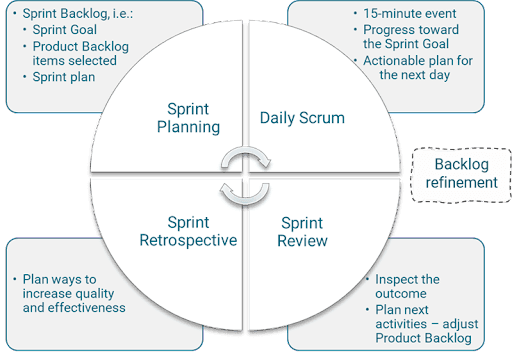
The Scrum Master: A Coach, Not a Manager
A Scrum Master is a servant-leader who coaches a team on Scrum practices, not a project manager who assigns tasks. They facilitate events and remove impediments. The footgun is treating them as a team admin, which undermines the team's self-organization.

Client-Side vs. Server-Side Tracking
The difference is who sends your data: the user's browser (client-side) or your server (server-side). Client-side is simple but fragile against ad blockers. Server-side offers more control but adds cost. The footgun is thinking server-side is a magic fix.
Event Autocapture: Low-Effort Frontend Analytics
Event autocapture is like a security camera for your UI, recording all user interactions automatically. It's used in web analytics to capture clicks and page views with minimal setup, letting you analyze behavior without manually instrumenting every button.
We are hiring for this. Every open role lists the topics its interview covers, so you can prepare for the real thing rather than guessing.
See open roles