Advanced interview questions in Product Management, page 2

How do you frame monolith vs microservices trade-offs under market uncertainty?
Connecting architecture to business strategy under uncertainty. Strong answers say monoliths offer cheap optionality when markets are unknown, but winner-take-all makes speed existential; microservices are a post-PMF scaling tax.

How do you guarantee at-least-once event delivery for a financial transaction?
Write events to a DB outbox in the same transaction as the biz update; a relay polls and publishes to analytics.
Guarantee at-least-once delivery for a critical analytics event?
Tests reliable messaging patterns to avoid dual-write issues. Propose the Transactional Outbox pattern: atomically write business data and the event to a DB outbox table. A separate relay process then sends the event.
Guarantee at-least-once delivery for a critical event?
This tests your grasp of atomicity without 2PC. A great answer outlines the Transactional Outbox pattern: write the event to a DB table in the same transaction as the business logic, then use a relay process. A red flag is relying on simple try/catch blocks.

Describe the architecture for multi-touch attribution with time-decay
Stitch IDs, stream events to warehouse, sessionize journeys, then apply decay weights in SQL.
Why the Sprint is a 'container' for empiricism
A steady cadence creates regular inspection points, the Sprint Goal stays fixed once committed, and Developers are shielded from scope churn.
How do you architect a global notification holdback group?
Tests persistent control-group isolation without breaking critical flows. Strong answers use deterministic sticky bucketing by user ID, separate marketing and transactional namespaces, and audit holdout bleed.
How does the Sprint container enable empiricism and protect developers?
This tests your grasp of the Sprint's structural role in Scrum. A good answer defines the Sprint as a fixed-length container for all events, explains how this cadence enables empiricism, and how the Sprint Goal protects developers.
How does the Sprint container enable empiricism and protect developers?
Tests if you see the Sprint as a time-box for empirical control. A good answer explains how the fixed duration and Sprint Goal create a cadence for inspection and protect developers from shifting priorities.
How do the Sprint Retrospective and Definition of Done support empiricism?
Tests if you see the DoD as a transparency standard and the Retrospective as inspect-and-adapt. Explain that the DoD makes true progress visible, enabling honest inspection, while the Retrospective inspects process and adapts the DoD.
Scrum Empiricism: Retro and Definition of Done
This tests your grasp of Scrum theory beyond mechanics. A great answer links the Definition of Done to transparency, the Retrospective to inspection, and the Retro's output to adaptation. A red flag is confusing the Sprint Review with the Retrospective.
How do the Sprint Retrospective and Definition of Done support empiricism?
This tests connecting Scrum theory to practice. Answer by linking the Definition of Done (Transparency) to the Retrospective, where the team Inspects process effectiveness and Adapts by improving the DoD itself. Red flag: defining terms in isolation.
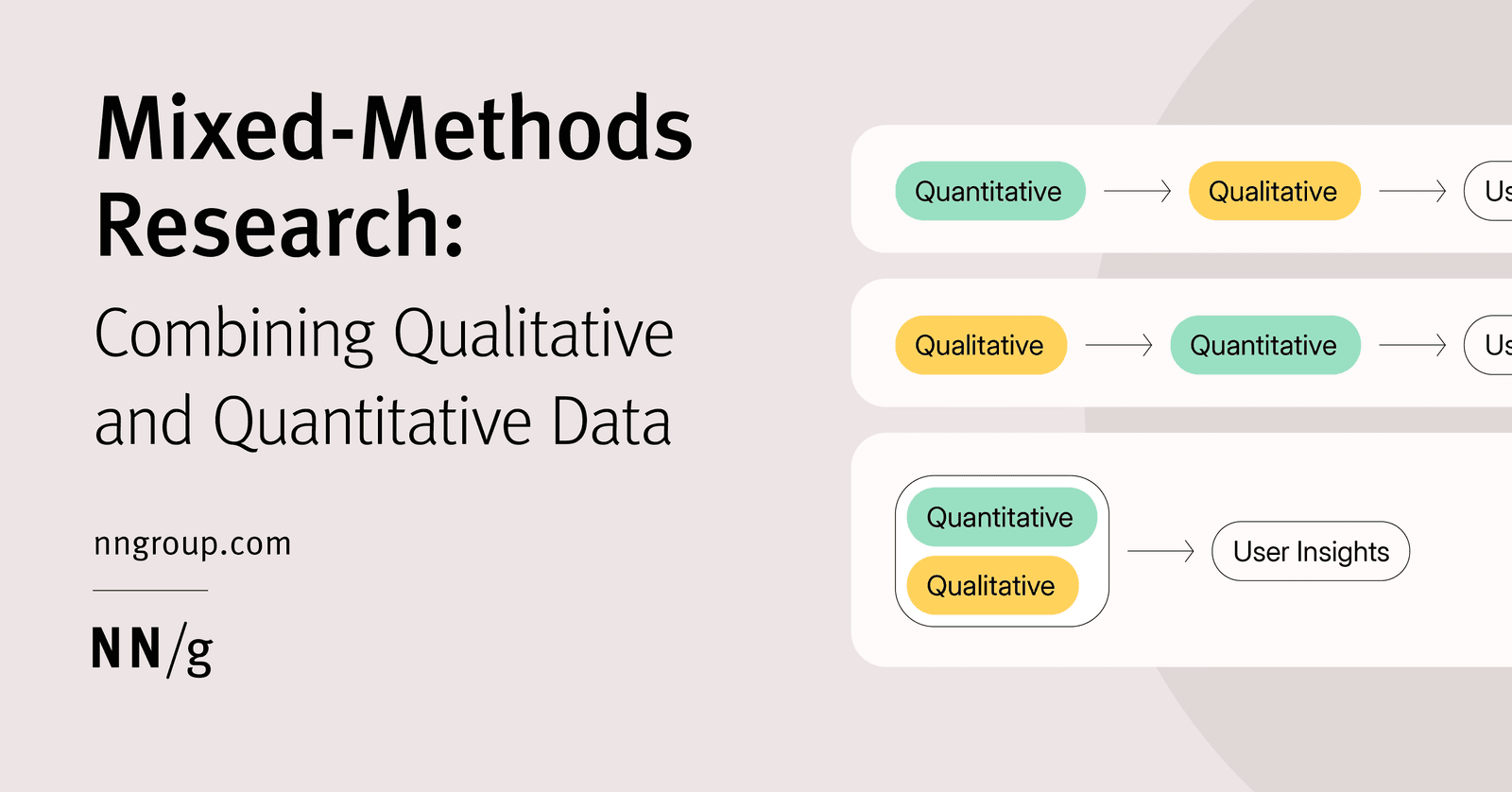
Design a follow-up experiment to resolve conflicting qualitative and quantitative data
This tests mixed-methods integration. Strong answers sequence experiments: observe users in the low-engagement flow for friction, then run a higher-fidelity quantitative test with behavioral metrics tied to stated intent.
Diagnose out-of-memory errors in a growing Spark job
Inspect plans for skewed partitions and joins; tune shuffle partitions, batch sizes, and join strategies; leverage AQE and statistics.
Diagnosing Out-of-Memory Errors in a Spark Job
This tests your systematic debugging of distributed systems. A great answer first diagnoses the failure location via the Spark UI, then investigates data skew and code inefficiencies, and finally tunes memory configs.
How do you debug out-of-memory errors in a Spark job?
Tests your systematic debugging of distributed systems. A great answer diagnoses via the Spark UI, investigates data skew and inefficient code (e.g., shuffles), and only then tunes memory or partition configs. Red flag: immediately increasing executor memory.

How would you architect a system for rapid experimentation and validation?
Tests designing decoupled experimentation infrastructure that scales past 1M users. Strong answers split assignment, flags, metrics, and analysis into independent event-driven services with change data capture isolating production.
Design a near real-time user interaction tracking and analytics system
Tests decoupling ingestion from querying with justified tech choices. Outline: client → Kafka → Flink → ClickHouse → API; budget sub-30s latency and backpressure per stage. Red flag: one monolithic RDBMS or batch ETL handling both writes and reads.

Design a data quality framework from source to consumption
This tests full-lifecycle data architecture. Strong answers define ownership first, then schema contracts at ingestion, profiling and anomaly detection in CI/CD, column-level lineage, and KPI-linked scorecards. Red flag: tools before ownership or RACI.
Design a framework for ensuring data quality and integrity
This tests your ability to design a proactive, multi-layered data quality system, not just reactive fixes. Start with governance (roles/ownership), then detail profiling, validation, and cleansing. Finally, discuss lineage. Red flag: focusing only on one tool.
We are hiring for this. Every open role lists the topics its interview covers, so you can prepare for the real thing rather than guessing.
See open roles