Easy interview questions in Product Management, page 3

What is a data warehouse vs. a transactional database?
Tests your grasp of systems optimized for different access patterns (writes vs. reads). Define OLTP for transactions and OLAP for analytics. Contrast their schema (normalized vs. denormalized), data, and workload. A red flag is calling it a 'big database'.
What is a data warehouse vs. a transactional database?
Tests your grasp of read-optimized (OLAP) vs. write-optimized (OLTP) systems. A great answer defines warehouses for analysis, contrasts them with transactional DBs for operations, and explains the resulting differences in workload, schema, and data structure.
How would you track a 'Sign Up' button click end-to-end?
It tests your ability to instrument a custom event and validate the pipeline. Attach a gtag listener to the button, fire a sign_up_click event, then confirm the hit in GA4 DebugView or real-time reports.

What is a conversion funnel? Instrument a three-step onboarding funnel with events.
This tests translating business funnels into concrete event instrumentation. A strong answer outlines three ordered steps, names exact events like user_signed_up and project_created, and notes unique-user counting.
How do you handle a mid-Sprint urgent feature request?
Send the stakeholder to the Product Owner; do not add directly to the Sprint Backlog; protect the current plan.
How do you handle an urgent, mid-sprint stakeholder request?
Tests your understanding of Scrum roles and stakeholder management. First, acknowledge the request's urgency. Then, redirect the stakeholder to the Product Owner, who manages all new work. A red flag is saying 'yes' and derailing the sprint, or a flat 'no'.
How do you handle an urgent request during a Sprint?
This tests your ability to protect team focus while managing stakeholders. Acknowledge the request, explain its impact on the Sprint Goal, and redirect the stakeholder to the Product Owner, who owns the backlog. A red flag is saying 'yes' or 'no' directly.
Measure a competitor's public performance
Synthetic audits via Lighthouse and WebPageTest, timed public-API probes, and reading response headers.
How do you handle 10% nulls in a key numerical column?
Check MCAR/MAR/MNAR; prefer median or mean imputation; add an "is_missing" indicator.
How would you handle 10% null values in a key column?
This tests your understanding of data cleaning trade-offs. First, investigate the cause of nulls. Then, discuss simple imputation (mean/median) vs. discarding rows, weighing pros and cons. A red flag is jumping to a solution without asking about the data.
How would you handle 10% nulls in a key column?
This tests your ability to diagnose data issues before solving. First, investigate why data is null. Then, discuss trade-offs of dropping vs. imputing with the mean or median, considering the impact on the dashboard's accuracy.
What technical attributes or metrics would you analyze comparing authentication or search?
Concrete p99 latency, SLA, throughput QPS, security; contrast features versus resilience.
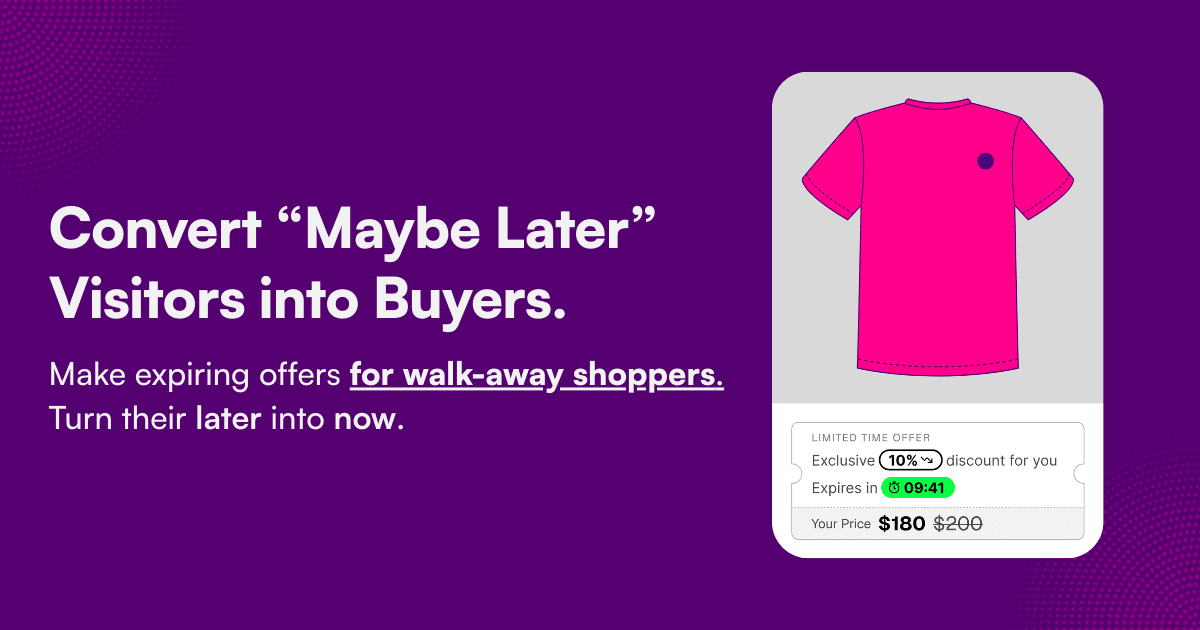
How would you implement a timezone-safe, tamper-proof offer countdown?
Tests distrust of the client and server-side UTC enforcement. Outline: server owns canonical end time; client syncs clock offset to render remaining time; checkout re-validates expiry. Red flag: using local Date.now or localStorage.
What validation checks would you implement for a user-submitted email field?
Tests whether you separate syntax validation from deliverability and know practical ingestion guards. A strong answer covers RFC-aware syntax, domain checks, normalization, and deduplication.
What validation checks would you implement for an email field?
Tests your understanding of practical validation vs. theoretical purity. A great answer prioritizes user experience, uses simple syntax checks (like a single '@'), and relies on sending a verification email as the ultimate test.
How would you validate user-submitted email addresses at ingestion?
Tests your understanding of data validation beyond simple regex, focusing on robustness and system-level thinking. A good answer covers format checks, DNS/MX record validation, and blocking disposable services.
What technical steps estimate effort to build a competitor's missing feature?
Tests whether you decompose unknown scope before guessing timelines. A strong answer covers: reverse-engineering the user flow, mapping integration points, sizing unknowns, and validating with a spike.
How would you design a near real-time social proof notification system?
This tests low-latency event pipeline design with bounded load. A strong answer uses a fire-and-forget beacon, stream processor, and cache with TTL; it favors approximate counts and windowed aggregation.

What is a data schema and why enforce it at ingestion?
Tests schemas as contracts and ingestion validation as a quality gate. Strong answers cite blueprints with constraints, fail-fast ingestion catching type errors upstream, and downstream trust. Red flag: treating schemas as optional docs affecting only storage.
Daily Scrum runs over 15 minutes; what facilitation techniques realign it?
This tests if you view the Daily Scrum as an inspection and adaptation event. A strong answer proposes a parking lot, coaches self-management of the timebox, and keeps talk focused on adapting the plan. A red flag is asking the Scrum Master to extend the.
We are hiring for this. Every open role lists the topics its interview covers, so you can prepare for the real thing rather than guessing.
See open roles