Easy interview questions in Product Management, page 8

What columns would you set up on a new Kanban board?
Tests your grasp of workflow visualization, not just Agile terms. A good answer starts with To Do/In Progress/Done, then adds columns like Code Review to mirror the real process, and crucially, mentions setting WIP limits to manage flow and identify…

How would you measure a sales forecast model's accuracy?
This tests your ability to connect statistical metrics to business impact. A great answer defines MAE (linear error cost) and RMSE (penalizes large errors), explains the choice depends on business context, and stresses using a test set.
What initial columns would you set up on a Kanban board?
Tests your grasp of Kanban's core goal: visualizing workflow. Start with a simple board (To Do, In Progress, Done), explaining how each column represents a work state. A red flag is creating an overly complex board without justifying the need for each stage.
How would you instrument a key activation milestone event?
Tests schema design beyond a bare event name. A strong answer includes the event key, user ID, timestamp, and properties like project_id and is_first_project. Red flag: omitting the user ID or sending only a human-readable label without structured context.

Lead Time vs Cycle Time in Kanban and measuring Cycle Time
Tests whether you distinguish customer wait time from active work. Strong answer: Lead Time is request-to-delivery with queues; Cycle Time is active start-to-finish measured from In Progress to Done. Red flag: treating them as synonyms or ignoring wait states.
Explain Lead Time vs. Cycle Time on a Kanban board
This tests your grasp of core Kanban flow metrics. Define Lead Time (customer request to delivery) and Cycle Time (work start to finish). Measure Cycle Time from the first 'In Progress' column to 'Done'. Red flag: defining terms without explaining their value.
Lead Time vs. Cycle Time in Kanban
Tests your understanding of core Kanban metrics for process improvement. Define Lead Time (request to delivery) and Cycle Time (work start to completion), noting Cycle Time is a subset. A red flag is confusing the two or being imprecise about start/end points.
Implement a 10% onboarding tutorial feature flag and track success
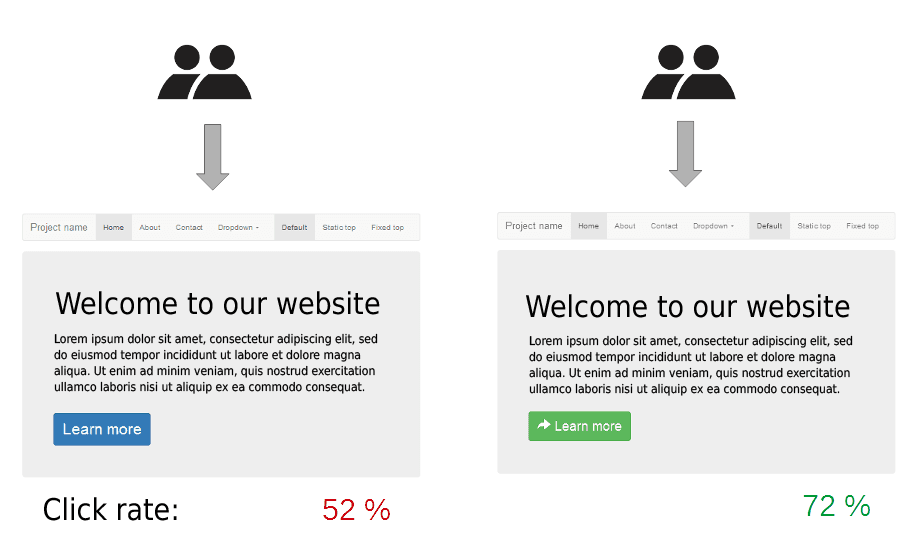
Tests lightweight experiment design and metric selection beyond vanity numbers. Strong answers cover user-ID bucketing, conversion tracking, and guardrail metrics like drop-off. Red flag: manual toggles or click-through without downstream outcomes.
How does a fixed marketing launch date change your development approach?
Acknowledge the business case, fix time and flex scope via Iron Triangle, front-load risk.
What event and data payload track Add to Cart actions?
This tests GA4 ecommerce schema design. Fire add_to_cart with items array containing item_id, price, currency, quantity; include user_id, user_segment, session_id, and timestamp. Red flag: generic button_click with DOM selectors instead of semantic data.
Describe the client-side event for an 'Add to Cart' button
Tests your knowledge of standard analytics schemas (like GA4) and designing payloads for business analysis. A great answer names the 'add_to_cart' event, details the 'items' array with product data, and mentions user/session context.
Describe the client-side event for an 'Add to Cart' button
This tests your ability to design analytics events for future analysis. Name a standard event like add_to_cart and list item parameters (item_id, price, quantity).
How would you design UTM capture and attribution persistence?
Capture UTMs on landing, store in a first-party cookie with TTL, attach to events, and persist on conversion.
How would you capture UTM parameters for attribution?
This tests your grasp of the data lifecycle from capture to persistence. A good answer covers client-side parsing, cookie storage, and linking anonymous data to a user record upon sign-up. A red flag is forgetting to persist the data server-side.
How would you capture and persist UTM parameters for attribution?
Tests your grasp of state management and data persistence for analytics. A good answer covers capturing UTMs with JS, persisting them in a cookie, and associating them with a user record on the server during a conversion event.
What is a Scrum of Scrums purpose and what technical info is shared?
Multi-team sync for blockers, dependencies, API changes, integration risks; not a status meeting.
What is a Scrum of Scrums, and what do you share there?
Tests your understanding of scaling agile and representing your team's technical risks. A good answer defines it as a coordination meeting, not a status report, and focuses on sharing/receiving info on cross-team dependencies and blockers.
What is a Scrum of Scrums and what's shared there?
This tests your understanding of scaling Agile. A good answer defines it as a coordination meeting for multiple teams, focusing on sharing inter-team blockers, dependencies, and integration points, not just status.
Shared component library versus per-product builds
Shared libraries cut duplication and enforce consistency but add coupling, versioning, and a coordination tax; per-product code is fast but drifts.

What data and approach for a simple 30-day DAU forecast?
Tests forecasting from sessionized logs without overengineering. Cite timestamped events, a 30 min session rule, and a regression baseline with day-of-week, recent totals, scored with MAE. Red flag: deep learning before a baseline or ignoring privacy hashing.
We are hiring for this. Every open role lists the topics its interview covers, so you can prepare for the real thing rather than guessing.
See open roles