Interview questions in Product Management, page 22
A/B test p-value is 0.08, PM wants to ship. What now?
Tests if you can translate statistical risk into business terms for a PM. A good answer defines the 8% false positive risk, weighs it against the cost of shipping, and suggests next steps like running the test longer instead of just saying no.
How would you introduce TDD to a team?
Tests your ability to drive change pragmatically. A great answer outlines a gradual adoption: start with a pilot, gather data on bug rates and velocity, and scale based on demonstrated value. A red flag is demanding immediate, universal adoption.
p-value is 0.08, significance is 0.05. Ship it?
This tests your ability to translate statistical risk for business partners. Explain that p=0.08 means an 8% chance of a false positive, quantify the cost of a bad decision, and suggest extending the test to increase power.
How would you introduce TDD to a team?
This tests your ability to influence a team and implement change pragmatically. A great answer outlines a gradual adoption: understand context, advocate with data, pilot on a new feature, then scale. A red flag is demanding a sudden, mandatory switch.
User session length dropped 15%: what technical issues and data to check?
Tests structured incident response. Outline: check exposure traffic, deployments, platform splits, and instrumentation bugs like dupes or bots. Red flag: blaming users before ruling out data quality or deployment changes.

Describe the data model and backend logic for a daily login bonus.
This tests streak state machines and calendar edge cases. A strong answer stores last_login_utc and streak_count, uses UTC day buckets, resolves timezones per user tz, and needs no leap-year logic.
Explain the difference between correlation and causation with a software example.
Tests whether you distinguish association from causation to avoid blaming production issues. A strong answer defines both concepts, names a confounding variable, and gives a software example with a common cause. Red flag: claiming correlation is causation.

What is the Strangler Fig pattern and its use in legacy modernization?
Tests incremental modernization over big-bang rewrites. A strong answer covers the botanical metaphor, building new components alongside legacy, routing traffic, extracting seams, and four activities. Red flag: a long rewrite delivering no value until launch.
Explain correlation vs. causation with a software example
This tests your critical thinking about data and ability to avoid logical fallacies. A good answer defines both terms, then gives a software example where a third, confounding variable (like traffic) is the true cause of two correlated metrics.
What is the Strangler Fig pattern?
Tests your understanding of gradual legacy system modernization. A good answer defines the pattern (new system grows around old), outlines the steps (identify seams, build, redirect traffic), and links it to Agile's incremental value delivery.
Explain the difference between correlation and causation
Tests if you can avoid statistical fallacies. First, define correlation (association) and causation (cause-effect). Then, explain the difference via a confounding variable. A red flag is giving an example where one metric actually could cause the other.
The Strangler Fig Pattern for Legacy System Refactoring
Tests your understanding of gradual legacy modernization and risk management. A great answer defines the pattern (new system grows over old), outlines the process (identify seams, build new, redirect traffic), and contrasts it with risky "big bang" rewrites.

Monitor p99 improvement from 500ms to 200ms and side effects
Tests systems-thinking on tail-latency instrumentation and metric tradeoffs. Strong answers cover histogram metrics, distributed tracing for fan-out bottlenecks, and guarding error rates, cost.
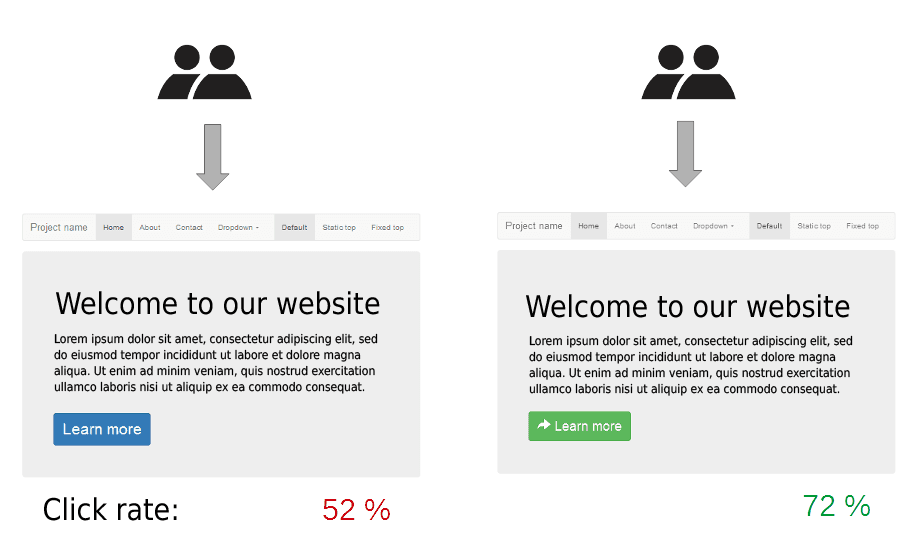
Design an A/B test for a Buy Now button
This tests experiment plumbing: deterministic bucketing, sticky storage, and logging. A strong answer covers user-ID hashing, cookie persistence, and impression-plus-conversion events.
Determine if a 10% DAU drop is statistically significant
Tests signal vs noise in stable metrics. Good answers define a null hypothesis, compute a test statistic from historical variance, compare to a critical value at set alpha, and check seasonality. Red flag: calling a large drop real without baseline variance.
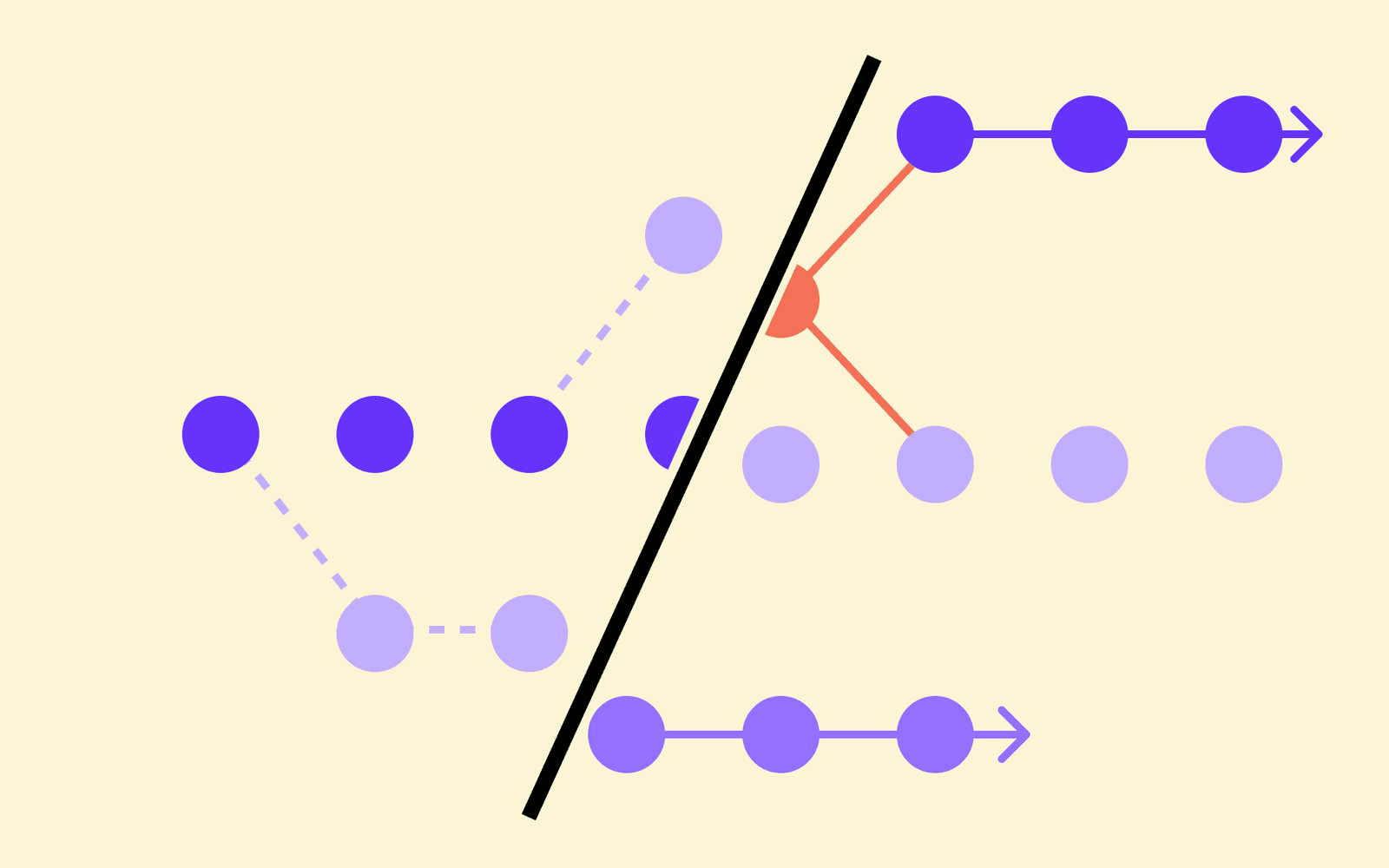
How does trunk-based development with toggles enable frequent, low-risk releases?
Tests decoupling deployment from release via TBD. Strong answers cover daily small trunk merges with toggles hiding unfinished work, plus the cultural leap from GitFlow's isolated branches to continuous integration and toggle hygiene.
DAU dropped 10% overnight. Is this a significant change?
Tests your use of statistical hypothesis testing on business metrics. Outline the process: state a null hypothesis (no change), choose a Z-test, calculate the p-value, and compare to an alpha of 0.05. A red flag is guessing causes before proving significance.
Trunk-Based Development vs. GitFlow for High-Frequency Releases
This tests your grasp of modern release strategy. Explain how TBD enables frequent merges to main, while feature toggles decouple deployment from release for safety. Contrast this with GitFlow's versioned release model.
How to Statistically Test a 10% DAU Drop?
Tests your knowledge of hypothesis testing. A good answer outlines the steps: state a null hypothesis, choose a test (e.g., Z-test), calculate a p-value, and compare it to a significance level (alpha).
Trunk-Based Development vs. GitFlow for High-Frequency Releases
This tests your grasp of modern CI/CD trade-offs. A great answer explains how TBD's frequent merges to main, decoupled from release by feature flags, enable velocity. Then, contrast this with GitFlow's complexity.
We are hiring for this. Every open role lists the topics its interview covers, so you can prepare for the real thing rather than guessing.
See open roles