Interview questions in Product Management, page 31
Platform team metrics versus product team metrics
Measure adoption, reliability SLOs, integration time, and self-service ratio over user engagement.
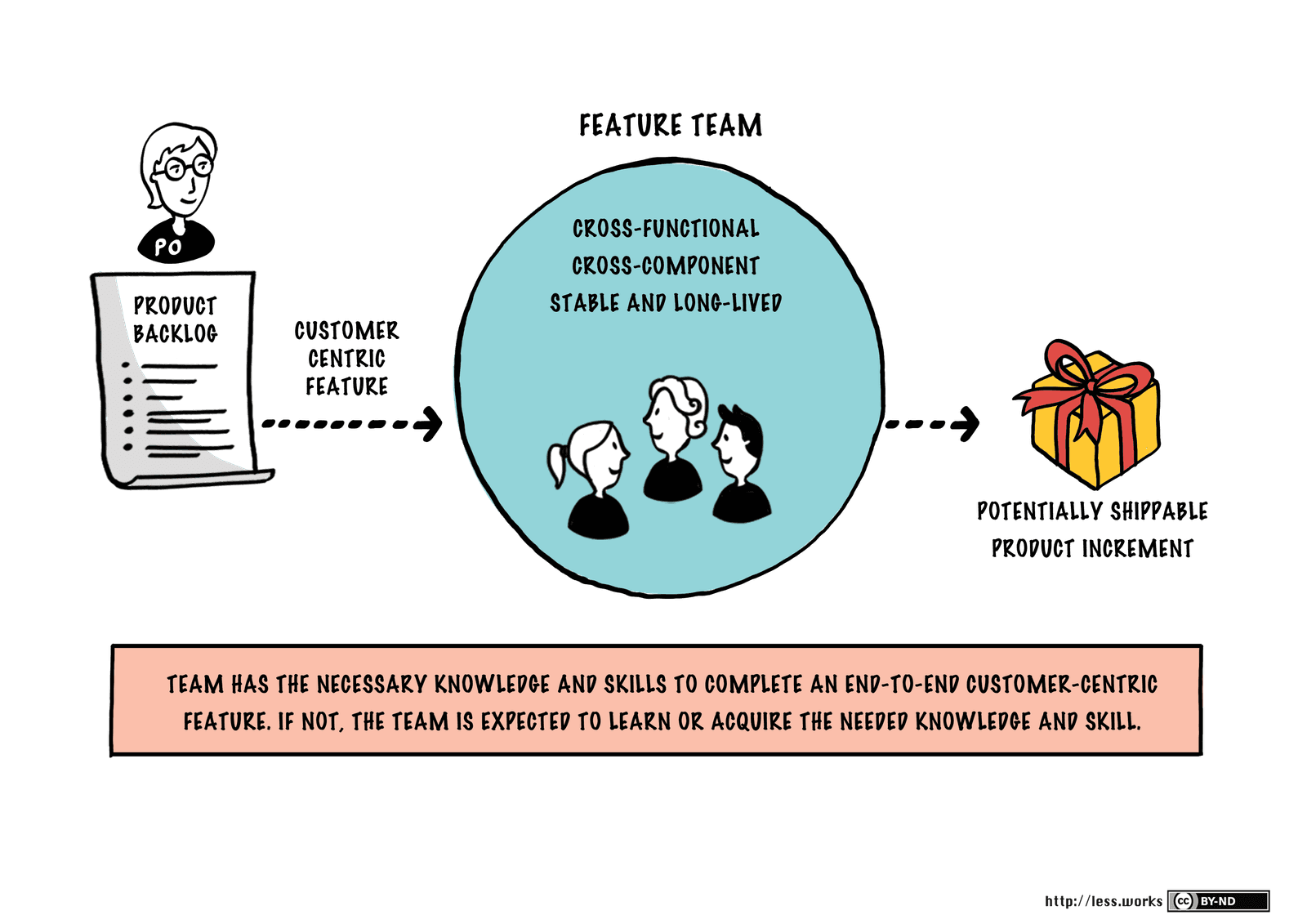
What codebase and CI/CD prerequisites enable LeSS feature teams?
Tests technical enablers for LeSS feature teams. Strong answers cover sub-10-minute CI, trunk-based development, comprehensive test automation, and decoupled architecture. Red flag: claiming coordination replaces shared ownership and continuous integration.

Why is extrapolating 5% weekly growth naive for annual forecasting?
This tests knowledge of extrapolation limits. A strong answer cites market saturation, seasonality, and channel exhaustion as invalidating factors, and notes that compounding 5% over 52 weeks magnifies error.

Design an experiment and logging to link API latency to engagement
Causal inference and data integration. Randomly inject latency for a treatment group with a control at baseline, then join server trace IDs to client events via a shared request ID. Never confuse correlation with causation or miss join issues.
Correlate API Slowness with User Engagement
This tests your ability to design a controlled experiment and join disparate data. A good answer outlines an A/B test with an artificial delay, logging with shared IDs, and statistical analysis. A red flag is proposing a purely observational study.
Technical Prerequisites for LeSS Feature Teams
Tests if you can link agile structure to technical architecture. A great answer covers codebase design for shared ownership, a fast CI pipeline for frequent integration, and a robust automated testing strategy.
Prove API Latency Affects User Engagement
This tests your ability to design a controlled experiment for a backend attribute. A great answer outlines an A/B test that artificially adds latency for a treatment group, details the necessary logging with shared IDs, and explains how to join and analyze…
Technical Prerequisites for LeSS Feature Teams
This tests your grasp of the engineering practices that enable agile scaling. A great answer covers continuous integration for shared ownership, robust test automation, and a loosely coupled architecture. A red flag is focusing only on Scrum ceremonies.
Design a cross-product feature flag strategy for coordinated release
This tests distributed coordination across service boundaries. A strong answer proposes a unified namespace, central config with local caches, and one user-scoped gate evaluated consistently in both products.

What differentiates leading and lagging indicators for subscriptions?
Leading indicators forecast; lagging indicators confirm. Subscriptions: activation rate leads, MRR lags.

Describe tracking a user event end-to-end from frontend to BI tool
Mention frontend instrumentation, routing, ingestion, warehouse transforms, and BI querying.

How would you estimate a cross-cutting initiative in PI Planning?
Tests decomposition of cross-cutting work into team enablers with visible dependencies. Good answer: teams estimate own slices in normalized points, map dependencies on the ART board, and reserve IP buffer.
Describe tracking a user event from frontend to BI tool
Tests your grasp of the modern data stack. A great answer outlines the five stages: frontend emission, ingestion, loading into a warehouse, transformation, and BI visualization. A red flag is describing only the frontend code and ignoring the data pipeline.
Estimating Cross-Team Initiatives in PI Planning
This tests your ability to lead multi-team estimation. A good answer covers decomposing work, bottom-up team estimates, mapping dependencies, and synthesizing a risk-assessed plan. A red flag is a single top-down estimate that ignores team capacity.
Track a user event from frontend code to a BI tool
Tests your understanding of the modern data stack. A good answer traces the event from frontend capture, through an ingestion pipeline, into a data warehouse, and finally to a BI tool for analysis. A red flag is describing only one part of the journey.
Estimating large, cross-team initiatives in PI Planning
Tests your ability to facilitate collaborative estimation. Break the initiative into features for teams to estimate, then use an ART board to map dependencies. A red flag is providing a single, top-down number without team input.

What technical areas would you investigate in acquisition due diligence?
Tests strategic integration risk beyond code quality. Cover: architecture compatibility and tech debt; data model overlap and migration cost; security and compliance gaps; team retention; roadmap conflicts.

How would you model a 10% Day-1 retention improvement's impact on LTV?
Tests whether you model retention as a survival curve, not a single point. A strong answer builds a cohort curve, propagates D1 lift to D30/D90 via decay, and sums revenue. Red flag: claiming 10% D1 gain equals 10% LTV growth without curve assumptions.

Describe dbt's role and how it differs from traditional ETL
Position dbt as ELT's T with lineage, tests, docs; contrast with Python ETL using external compute and Airflow only scheduling tasks.
Describe a SAFe rule that hinders agility and how to mitigate it
Cite one rigid workflow pattern, show how it delays feedback, then propose a lighter cross-team substitute.
We are hiring for this. Every open role lists the topics its interview covers, so you can prepare for the real thing rather than guessing.
See open roles