Interview questions in Product Management, page 7
Why the Sprint is a 'container' for empiricism
A steady cadence creates regular inspection points, the Sprint Goal stays fixed once committed, and Developers are shielded from scope churn.
How would you instrument front-end and back-end to quantify reported slowness?
This tests translating vague complaints into end-to-end telemetry. A strong answer covers front-end Web Vitals, back-end traces, and segments by user or page to isolate pain points. A red flag is focusing only on server CPU or logs without real user timings.
How do you architect a global notification holdback group?
Tests persistent control-group isolation without breaking critical flows. Strong answers use deterministic sticky bucketing by user ID, separate marketing and transactional namespaces, and audit holdout bleed.
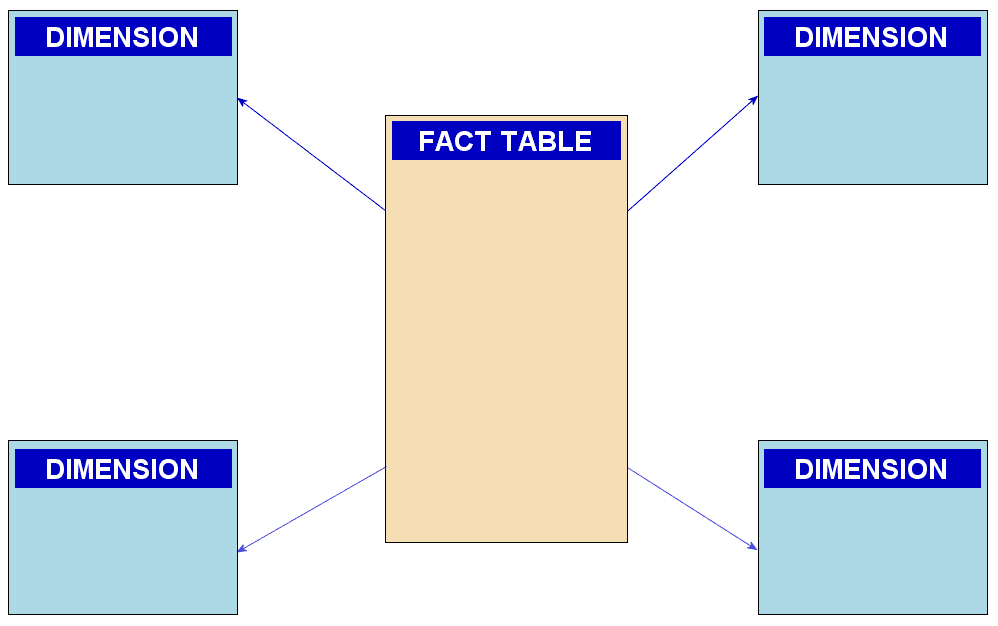
Describe star and snowflake schemas and their trade-offs
Star schemas flatten dimensions for fast joins; snowflake schemas normalize hierarchies to reduce redundancy but add joins.
Star vs. Snowflake Schemas: Trade-offs
Tests your grasp of data warehouse design trade-offs. Define star (denormalized, fast queries) and snowflake (normalized, storage efficient) schemas. Explain the core trade-off: star's query speed vs. snowflake's storage/integrity.
How does the Sprint container enable empiricism and protect developers?
This tests your grasp of the Sprint's structural role in Scrum. A good answer defines the Sprint as a fixed-length container for all events, explains how this cadence enables empiricism, and how the Sprint Goal protects developers.
Describe star and snowflake schemas and their trade-offs.
Tests your grasp of data warehouse design trade-offs. Define star (denormalized dimensions) and snowflake (normalized dimensions) schemas. Contrast them: star is faster for queries but uses more space; snowflake is space-efficient but requires more joins.
How does the Sprint container enable empiricism and protect developers?
Tests if you see the Sprint as a time-box for empirical control. A good answer explains how the fixed duration and Sprint Goal create a cadence for inspection and protect developers from shifting priorities.

Describe a technical MVP approach to validate user engagement quantitatively
Pick a KPI and cheapest viable prototype, like a fake door; instrument events with a control group; set kill criteria upfront.
How would you track a 'Sign Up' button click end-to-end?
It tests your ability to instrument a custom event and validate the pipeline. Attach a gtag listener to the button, fire a sign_up_click event, then confirm the hit in GA4 DebugView or real-time reports.
How would you handle late-arriving data in a streaming analytics pipeline?
Tests understanding of event-time processing, watermarks, and windowing for correctness. A strong answer covers watermarks with allowed lateness, event-time triggers, and idempotent updates to sinks.
How do the Sprint Retrospective and Definition of Done support empiricism?
Tests if you see the DoD as a transparency standard and the Retrospective as inspect-and-adapt. Explain that the DoD makes true progress visible, enabling honest inspection, while the Retrospective inspects process and adapts the DoD.
Handling Late-Arriving Data in a Streaming Pipeline
Tests your grasp of event time vs. processing time. A great answer defines watermarks to track completeness, uses event-time windowing to group data, and sets triggers with allowed lateness to correctly incorporate out-of-order events.
Scrum Empiricism: Retro and Definition of Done
This tests your grasp of Scrum theory beyond mechanics. A great answer links the Definition of Done to transparency, the Retrospective to inspection, and the Retro's output to adaptation. A red flag is confusing the Sprint Review with the Retrospective.
How do you handle late-arriving data in a streaming pipeline?
Tests understanding of event time vs. processing time and the mechanisms (watermarks, triggers, allowed lateness) to ensure correctness. Answer by distinguishing time types, using event-time windowing, defining watermarks, and configuring allowed lateness.
How do the Sprint Retrospective and Definition of Done support empiricism?
This tests connecting Scrum theory to practice. Answer by linking the Definition of Done (Transparency) to the Retrospective, where the team Inspects process effectiveness and Adapts by improving the DoD itself. Red flag: defining terms in isolation.

How do you assess trade-offs between a simpler implementation and validated design?
Tests whether you separate user outcomes from implementation fidelity. Great answers quantify deviation against the core job, model cost and speed savings, and propose a scoped experiment with rollback criteria.

What is a conversion funnel? Instrument a three-step onboarding funnel with events.
This tests translating business funnels into concrete event instrumentation. A strong answer outlines three ordered steps, names exact events like user_signed_up and project_created, and notes unique-user counting.
What is data partitioning in a cloud data warehouse?
Tests physical data layout and cost/performance tradeoffs. Strong answers define time-based or integer-range partitioning, explain partition pruning avoids full scans, and warn against high-cardinality keys.
How do you handle a mid-Sprint urgent feature request?
Send the stakeholder to the Product Owner; do not add directly to the Sprint Backlog; protect the current plan.
We are hiring for this. Every open role lists the topics its interview covers, so you can prepare for the real thing rather than guessing.
See open roles