Easy everything in Product Management, page 7
How would you A/B test a 'Buy Now' button color change?
Tests your grasp of the A/B testing lifecycle. A strong answer defines a clear hypothesis (e.g., 'a green button will increase clicks'), selects a primary metric (CTR), and considers guardrail metrics. A red flag is skipping the hypothesis and metrics.
What does a p-value of 0.03 mean in an A/B test?
This tests your grasp of statistical significance and ability to make a data-driven decision. A great answer defines p-value, compares it to alpha (0.03 < 0.05), and concludes to reject the null hypothesis. A red flag is misstating the p-value's definition.
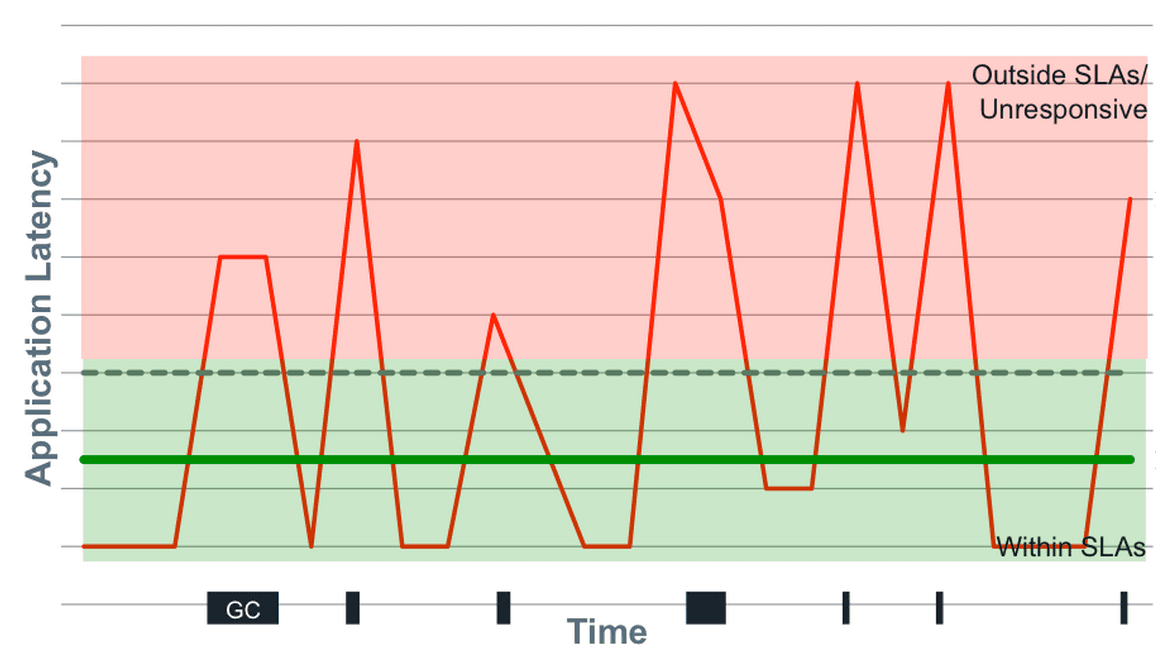
Mean vs. Median for API Response Times?
Tests your understanding of non-normal distributions like latency. Choose median as it's robust to outliers that skew the mean. Then, state that even median is insufficient; percentiles (p99, max) are crucial for capturing the full user experience.
Is Feature X Causal for 20% Higher Retention?
This tests your ability to separate correlation from causation. A great answer first identifies confounding variables (e.g., power users), then proposes an A/B test to isolate the feature's true effect, and finally suggests quasi-experiments if a test isn't…
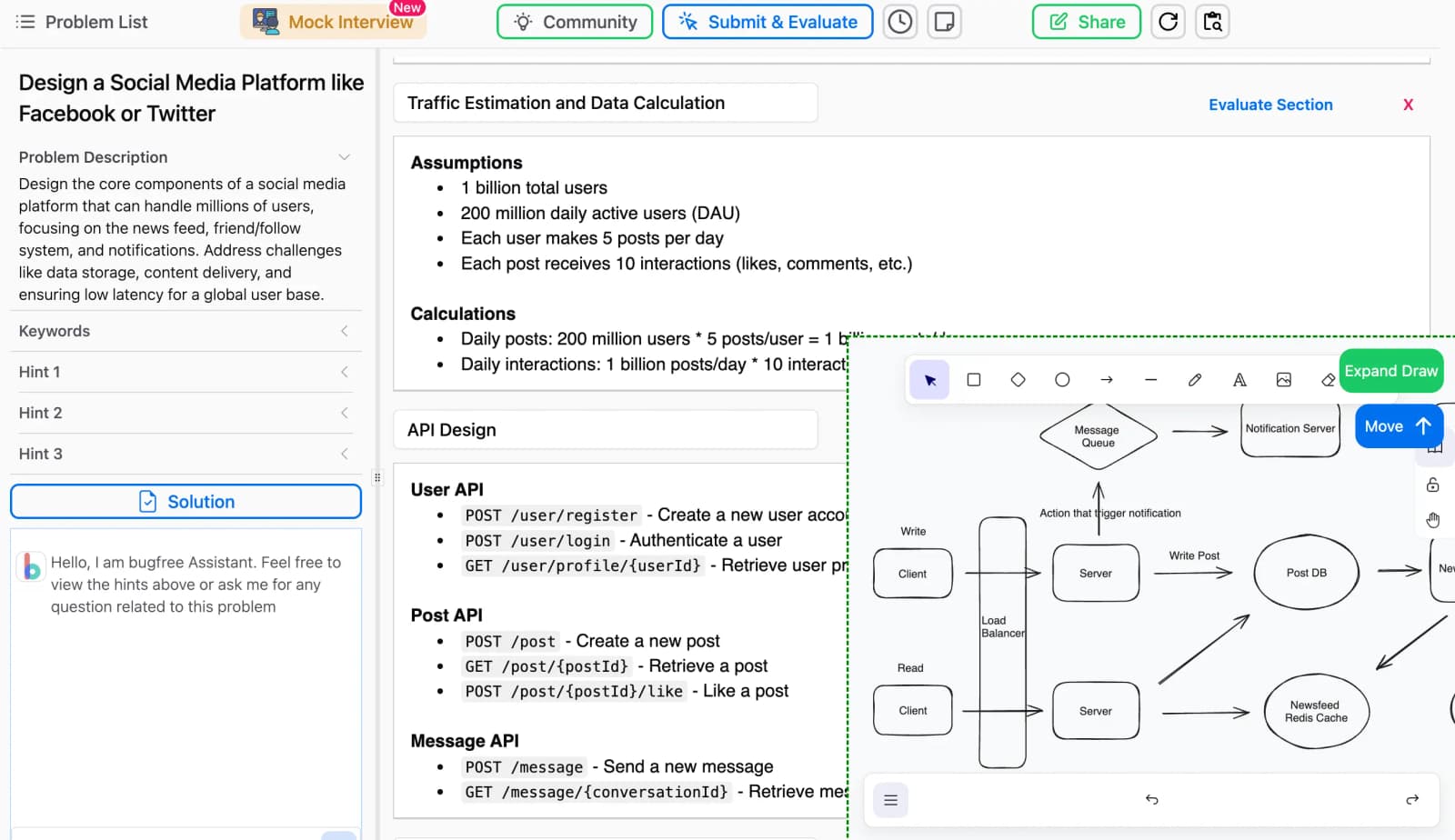
DAU dropped 10%. How do you investigate?
Tests structured problem diagnosis. First, verify the data isn't corrupt. Then, segment the drop by user type (new vs. returning), platform (iOS/Android/Web), and geography to isolate the 'what' before hypothesizing the 'why'.
Bar Chart vs. Line Chart for Market Share Comparison?
This tests your grasp of visualization fundamentals for categorical vs. time-series data. A bar chart is correct for comparing discrete categories (companies) at one point in time. A line chart wrongly implies a trend. Red flag: justifying a line chart.

When is a pie chart an appropriate visualization?
Tests your grasp of data viz principles for part-to-whole data. A good answer defines this use case (e.g., market share), then lists pitfalls like too many slices or comparing multiple pies. A red flag is defending pie charts for complex data.
Why use median/p95 for API latency instead of the mean?
This tests if you understand how long-tail distributions make averages misleading for user experience. A good answer explains that median (p50) shows the typical user, while p95 captures the worst-case experience.

What is a data schema and why enforce it on ingestion?
This tests your understanding of data contracts. A great answer defines a schema as a data blueprint, then explains how early enforcement prevents bad data, ensuring consistency and reliability for analytics. A red flag is only defining the term.
What validation checks would you implement for an email field?
Tests your understanding of practical validation vs. theoretical purity. A great answer prioritizes user experience, uses simple syntax checks (like a single '@'), and relies on sending a verification email as the ultimate test.
How would you handle 10% null values in a key column?
This tests your understanding of data cleaning trade-offs. First, investigate the cause of nulls. Then, discuss simple imputation (mean/median) vs. discarding rows, weighing pros and cons. A red flag is jumping to a solution without asking about the data.

What is a data warehouse vs. a transactional database?
Tests your grasp of systems optimized for different access patterns (writes vs. reads). Define OLTP for transactions and OLAP for analytics. Contrast their schema (normalized vs. denormalized), data, and workload. A red flag is calling it a 'big database'.
Build a pipeline to load a daily CSV into a database
This tests your ability to connect basic cloud services (storage, compute, database) into a simple, event-driven data pipeline. A good answer mentions an event trigger (S3), a serverless function (Lambda), and a database (RDS), plus error handling.

ETL vs. ELT: Key Differences and When to Use Each
This tests your grasp of data pipeline trade-offs. Define ETL (transform first) vs. ELT (load first), contrasting transform location and data state. A red flag is ignoring how cloud warehouses make ELT the modern default for flexibility.

Translate 'increase engagement' into a technical measurement plan
This tests your ability to translate a vague business goal into a structured, measurable technical plan. Clarify the goal with the PM, define a primary metric and supporting metrics, then create an instrumentation spec.
AI Use Creates 'Cognitive Debt' in Scrum Teams
Over-relying on AI for sprint planning and backlog refinement creates "Cognitive Debt," eroding a team's problem-solving skills. While AI boosts productivity, it can eliminate the collaborative friction that builds shared understanding and critical reasoning.
Feature teams vs. component teams: pros and cons?
Tests your grasp of how team structure impacts value delivery. Define feature (vertical slice) and component (horizontal) teams. Contrast speed vs. reusability. Red flag: Calling one 'good' and the other 'bad' without discussing trade-offs.
How can developers partner with the Product Owner in backlog refinement?
This tests your understanding of the developer's role in maximizing value, not just executing tasks. A great answer covers questioning the 'why,' suggesting technical alternatives to meet business goals, helping split stories, and providing realistic sizing.
What is a Scrum of Scrums, and what do you share there?
Tests your understanding of scaling agile and representing your team's technical risks. A good answer defines it as a coordination meeting, not a status report, and focuses on sharing/receiving info on cross-team dependencies and blockers.

Explain Lead Time vs. Cycle Time on a Kanban board
This tests your grasp of core Kanban flow metrics. Define Lead Time (customer request to delivery) and Cycle Time (work start to finish). Measure Cycle Time from the first 'In Progress' column to 'Done'. Red flag: defining terms without explaining their value.
We are hiring for this. Every open role lists the topics its interview covers, so you can prepare for the real thing rather than guessing.
See open roles