Intermediate everything in Product Strategy, page 6
Managing Up: Be the Co-Pilot, Not Just a Passenger
Managing up isn't flattery; it's making your manager more effective by aligning your work with their goals. This is key for getting projects resourced and ensuring your priorities align with the organization's, preventing wasted effort.
Developer Evangelism: Building a Movement for Your Tech
Developer evangelism builds a movement for a technology, aiming to make it a standard through network effects. It's used to drive adoption for new platforms, APIs, or frameworks by inspiring developers, not just selling to them.
SDKs: A Strategy to Make Your Platform the Default
An SDK is a strategic tool to drive adoption. By bundling compilers and frameworks, you make it easy for developers to build for your platform or integrate your service, making your ecosystem the path of least resistance.
Open vs. Closed Platforms: Walled Garden or Public Park?
An open platform is a public park, inviting others to build on it; a closed one is a walled garden with total control. This choice defines growth: via a third-party ecosystem (Android) or tight integration (Apple).
API-as-a-Product: Your API Is Your Business
Treat your API as a core product with developers as your customers, not just a technical integration. This mindset is crucial when exposing data to partners or building a developer ecosystem, like Stripe or Twilio do.
Brand Architecture: Your Company's Brand Family Tree
Brand architecture is a family tree for a company's products, organizing how the main corporate brand relates to its sub-brands. It dictates whether a new product gets the parent's name or a standalone identity, maximizing value across the portfolio.
GE-McKinsey Nine-Box Matrix: Portfolio Strategy Beyond the 2x2
The GE-McKinsey matrix plots business units on a 3x3 grid to guide 'invest, hold, or divest' decisions. It's used to prioritize investments by weighing multiple factors for market attractiveness and business strength, not just market share and growth.

Portfolio Roadmap: The Strategy Across Your Products
A portfolio roadmap is the top-line strategy for a group of related products, ensuring they all pull in the same direction. Use it to align multiple product lines with business objectives.
Product Line Strategy: Selling a Family of Products
A product line strategy sells a family of related products individually, not as a bundle. It's used to capture different market segments, like offering 'good, better, best' software tiers or car trims.

Rules of Engagement: API Contracts for Teams
Rules of Engagement (RoE) are an API contract for human teams, defining how they interact to prevent chaos. They clarify who owns a customer conversation or how feature requests are handled.

Customer Success Playbooks: Standardize Your Team's Responses
A Customer Success playbook is a recipe for handling key customer moments. It defines a standard workflow for events like onboarding or a drop in usage, ensuring every CSM follows the same proven process. Without them, customer experience is inconsistent.

Beta Programs: Testing with Real Users Before Launch
A beta program is your final dress rehearsal with a real audience. It's for validating user experience and catching deal-breakers before a public launch, not just finding bugs.

Sales Enablement: Mission Control for Your Sales Team
Sales Enablement is a central nervous system for your sales team, connecting them with the right content, training, and coaching. It's crucial for complex sales cycles, ensuring consistent messaging. The footgun is treating it as just a content library.
Opportunity Cost: The Value of the Road Not Taken
Opportunity cost is the value of the best alternative you forgo when making a choice. It's used to prioritize projects when resources are scarce, like choosing a new feature over a refactor. The footgun is ignoring non-monetary costs like lost time or utility.
Buy vs. Build: A Strategic Choice, Not a Cost Problem
The Buy vs. Build decision is a strategic choice, not just a cost problem. Buy commodity functions to gain speed and stability; build core features to create a unique competitive advantage. The footgun is ignoring total cost of ownership and strategic control.
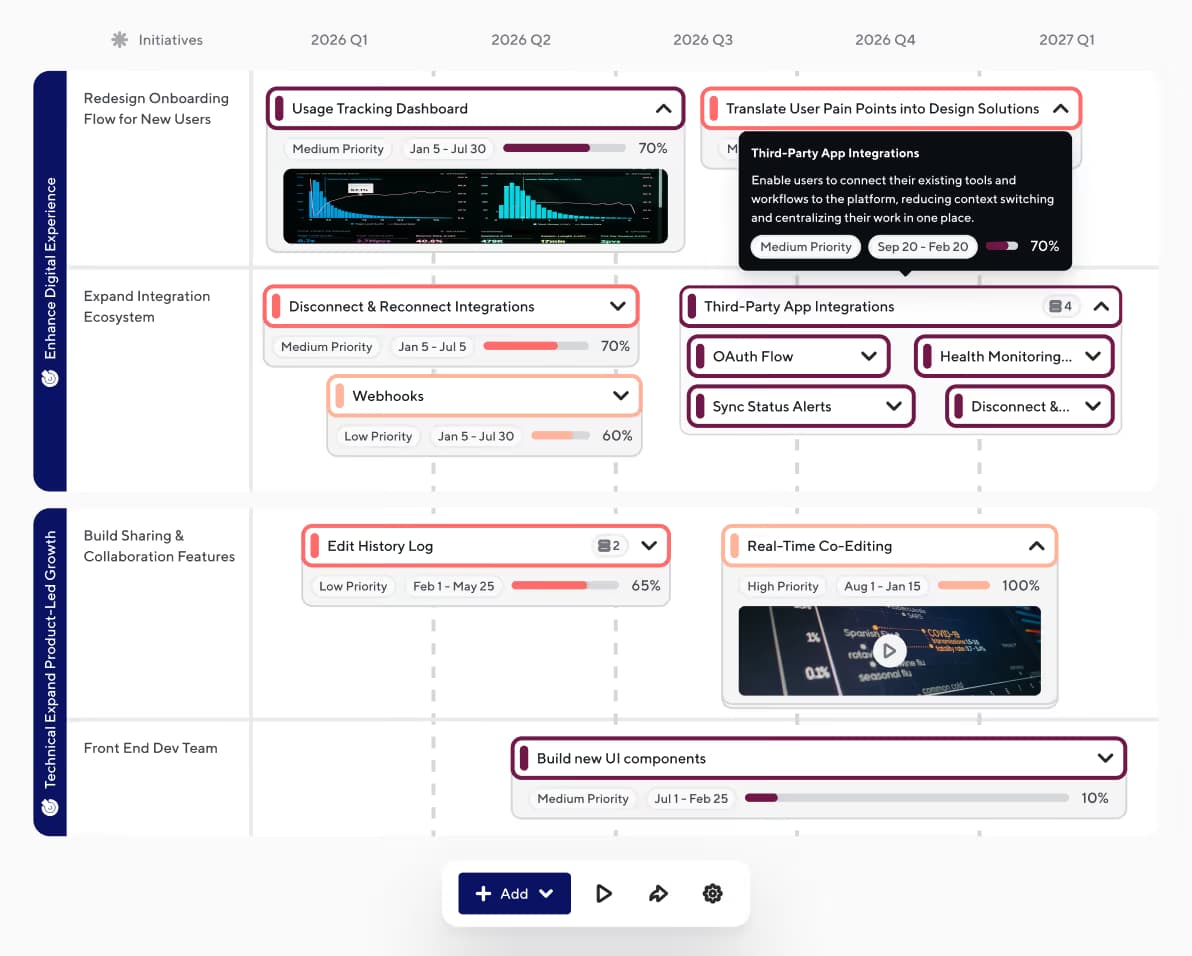
ICE Scoring: Prioritize Features with a Quick Gut Check
ICE scoring is a gut-check for prioritizing features by multiplying Impact, Confidence, and Ease. It helps teams rapidly sort experiments or backlog items. The main footgun is its bias towards easy wins, potentially ignoring high-effort strategic projects.
Roadmap Capacity Planning: Ideal vs. Reality
Capacity planning isn't about your team's ideal output (design capacity), but their actual output (effective capacity) after accounting for meetings, bugs, and on-call. Use it to build realistic roadmaps.
Outcome-Based Roadmaps: Solve Problems, Not Ship Features
An outcome-based roadmap frames work around problems to solve, not a checklist of features to build. It gives teams autonomy to find the best solution for goals like increasing user engagement or improving conversion.

Thematic Roadmaps: Focus on 'Why,' Not 'What'
A thematic roadmap organizes work around strategic goals ("themes") like "Improve User Onboarding," not just a feature list. It's used to align teams on high-level objectives and persuade executives. The footgun is mistaking a feature list for a strategy.

Counter Metrics: Guardrails for Your Goals
Counter metrics are the guardrails for your primary goal, preventing you from optimizing one number at the expense of user experience. If you increase ad impressions for revenue, track user retention to ensure you aren't just driving users away with spam.
We are hiring for this. Every open role lists the topics its interview covers, so you can prepare for the real thing rather than guessing.
See open roles