Advanced everything in Product Strategy
Resolve a low-code versus custom-build conflict
Build a spike testing real constraints, surface lock-in and exit cost, propose a hybrid scoped by differentiation.

How do you build a 3-year vision supporting roadmap and future options?
This tests strategic planning and executive communication. Map the 1-year roadmap to gaps, invest in extensible primitives, and frame enabling work as optionality with metrics. Red flag: an engineering wishlist disconnected from business outcomes.

Describe a time you influenced the roadmap via a technical opportunity
This tests converting technical insights into business cases that shift roadmaps. A strong answer names the SVPG risk, quantifies value for leadership, identifies who was persuaded, and cites discovery artifacts.
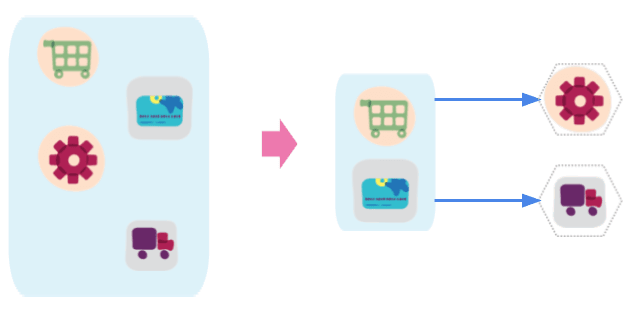
Propose a long-term strategy to decompose a monolith while maintaining API stability
This tests strategic prioritization and incremental migration without ecosystem breakage. Start with simple decoupled capability, go macro first then micro, split vertically by domain owning data, and use atomic steps with facades to preserve APIs.

How would you detect, mitigate, and penalize a noisy neighbor?
This tests multi-tenant fairness and governance. A strong answer covers tenant telemetry, graduated throttling, autoscaling with cost caps, and penalty tiers that curb abuse yet allow spikes. Red flag: hard limits before detection or graduated response.

Design a cross-product user journey data architecture
This tests portfolio-scale data platform design. A strong answer outlines streaming event ingestion, a unified identity graph, consent-aware PII vaults, and schema registries with data contracts.

What technical areas would you investigate in acquisition due diligence?
Tests strategic integration risk beyond code quality. Cover: architecture compatibility and tech debt; data model overlap and migration cost; security and compliance gaps; team retention; roadmap conflicts.

Architect a 14-day Pro trial with abuse prevention
Tests stateful billing lifecycle and anti-abuse tradeoffs. Strong answers cover: idempotent trial state machine with scheduled expiry; retention on downgrade; progressive friction via device intel and rate limits; and behavioral monitoring.
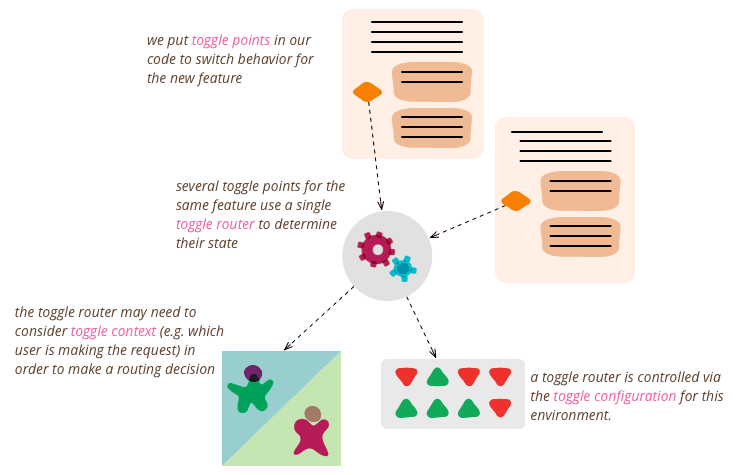
Describe an architecture that decouples business launch from code deployment
This tests feature-flag architecture separating deployment from release. Strong answers cover toggle categories and decision decoupling. They need lifecycle management to limit carrying cost. Red flag: treating flags as permanent or ignoring toggle debt.

How would you track technical health against the strategic roadmap?
Bridging engineering health signals to roadmap decisions. Combine DORA metrics, performance budgets, and architectural fitness into a scorecard with thresholds that force roadmap negotiation when health declines. Wrong: no feedback loop into roadmap.

What process do you initiate when a competitor disrupts your core value?
This tests strategic technical judgment under market pressure. A strong answer covers rapid threat assessment, feasibility spikes, and option analysis weighing speed versus debt, then proposes a staged plan.

How would you structure a technical strategy parallel to the product roadmap?
Anchor on product vision; use RICE for work vs features; ship incremental milestones; validate with product.
Design quantifiable proxy metrics for a microservices velocity claim
Use DORA velocity and stability metrics plus leading indicators like build and PR cycle time.

Architect dynamic region-specific pricing for a global SaaS product
One SKU with currency-specific rate charges; jurisdiction tax engine; immutable checkout snapshot; amendment for moves.

Design real-time usage-based billing data architecture
Tests whether you can guarantee exactly-once billing at scale without data loss. Strong answers cover idempotent Kafka ingestion, ClickHouse aggregation, reconciliation, and audit trails. Red flag: claiming exactly-once instead of at-least-once dedup.
Top three technical risks when becoming a platform and API mitigations
Tests platform architecture and API governance maturity. A strong answer cites backward compatibility, multi-tenant security, and domain leakage; it proposes versioning, OAuth with rate limits, and facade APIs.
Find a novel value proposition from a recent technology breakthrough
Tests translating a technical breakthrough into product strategy: name an underserved market, quantify economic value, map a minimal build. Pick one tech, define pricing power, list 3-4 parts. Red flag: solution seeking a problem or feature lists sans value.

When is it appropriate for engineering to propose a vision change?
Tests your sense of engineering's strategic boundary: co-creating vision without owning it. Strong answers cite a trigger where tech changes business constraints, outline a 2-week spike on the riskiest assumption, and quantify impact.

How would you prove roadmap divergence from vision and correct course?
Quantify coupling, complexity, and service creep; link compromises to feature delays; propose a funded ATD roadmap with milestones.

Architect a fast-follower AI strategy without a research team
Tests asymmetric advantage without a research lab. Strong answers propose a model-agnostic gateway, buy commoditized inference, build proprietary data loops only, and use open-source for control.
We are hiring for this. Every open role lists the topics its interview covers, so you can prepare for the real thing rather than guessing.
See open roles