All bites
The whole library, newest first. Filter by what you are here for, or pick a topic if you already know.
4330 bites
Page 177
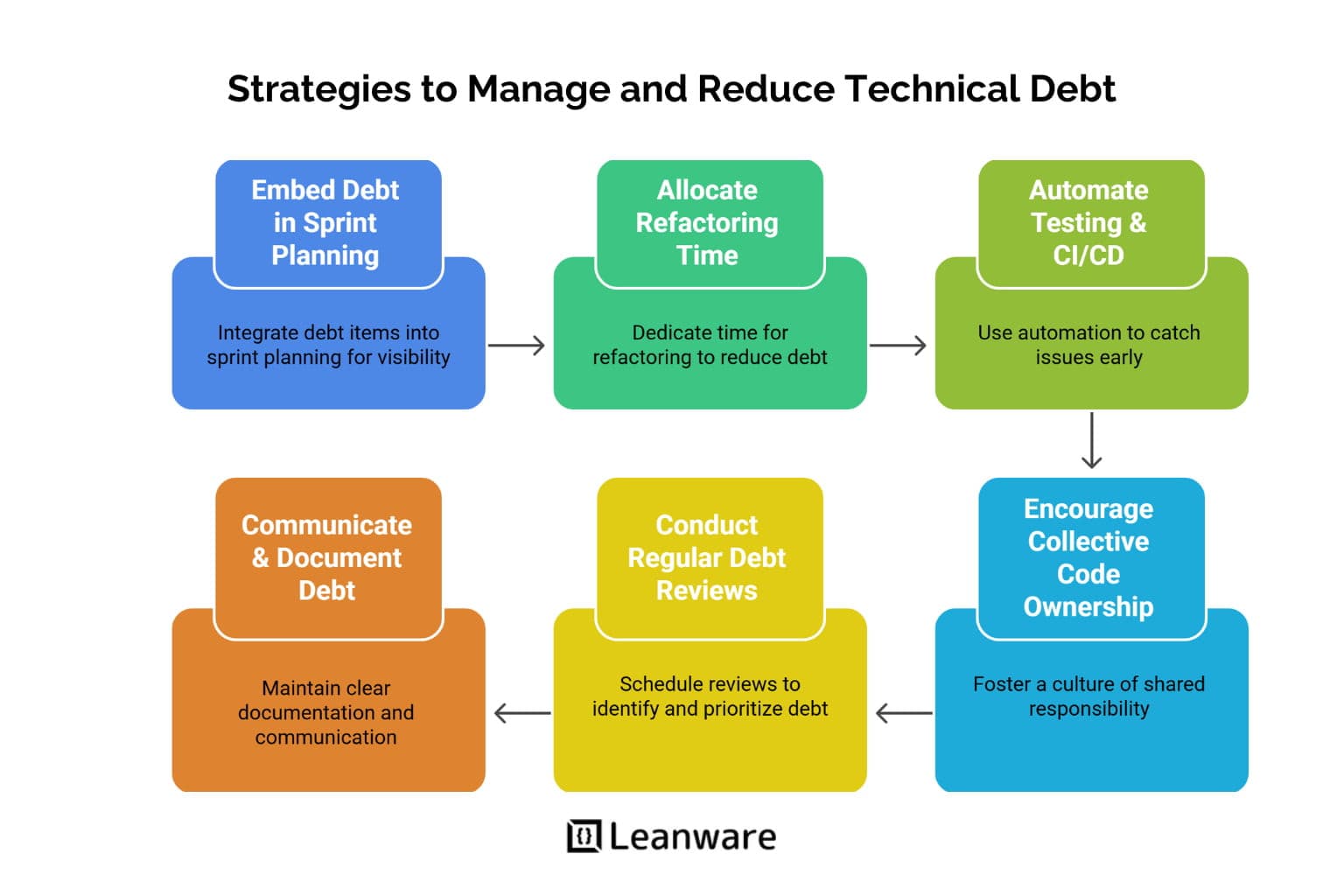
Describe your framework for managing tech debt in product discovery.
Tests your strategic view of tech debt. A good answer frames debt as a tool, describes a framework for categorizing and tracking it, and explains how to tie repayment to product milestones. A red flag is viewing all debt as bad or lacking a concrete.

Describe the initial columns for a new Kanban board and their purpose
Tests whether you understand Kanban as a flow visualization tool. A strong answer names Backlog, To Do, In Progress, and Done, explaining each as a handoff or state change. Red flag: adding too many columns upfront or conflating the board with Scrum.
What columns would you set up on a new Kanban board?
Tests your grasp of workflow visualization, not just Agile terms. A good answer starts with To Do/In Progress/Done, then adds columns like Code Review to mirror the real process, and crucially, mentions setting WIP limits to manage flow and identify…
What initial columns would you set up on a Kanban board?
Tests your grasp of Kanban's core goal: visualizing workflow. Start with a simple board (To Do, In Progress, Done), explaining how each column represents a work state. A red flag is creating an overly complex board without justifying the need for each stage.

Lead Time vs Cycle Time in Kanban and measuring Cycle Time
Tests whether you distinguish customer wait time from active work. Strong answer: Lead Time is request-to-delivery with queues; Cycle Time is active start-to-finish measured from In Progress to Done. Red flag: treating them as synonyms or ignoring wait states.
Explain Lead Time vs. Cycle Time on a Kanban board
This tests your grasp of core Kanban flow metrics. Define Lead Time (customer request to delivery) and Cycle Time (work start to finish). Measure Cycle Time from the first 'In Progress' column to 'Done'. Red flag: defining terms without explaining their value.
Lead Time vs. Cycle Time in Kanban
Tests your understanding of core Kanban metrics for process improvement. Define Lead Time (request to delivery) and Cycle Time (work start to completion), noting Cycle Time is a subset. A red flag is confusing the two or being imprecise about start/end points.

How would you implement Classes of Service in Kanban?
Tests whether you segment work by risk and cost of delay. A strong answer defines explicit policies, visualizes classes with color or lanes, and reserves WIP capacity per class. Red flag: using classes as simple priorities without capacity rules.
How would you implement Classes of Service in Kanban?
This tests your understanding of risk management and differentiated service delivery. A good answer defines the 4 classes (Expedite, Fixed Date, Standard, Intangible), explains their different pull policies, and gives a risk-based example.
How would you implement Classes of Service in Kanban?
Tests your grasp of risk management and flow optimization in Kanban. A good answer defines classes (Expedite, Fixed Date), explains implementation via swimlanes and WIP limits, and gives an example showing trade-offs.

CFD Testing band widens: what does it indicate and what experiments?
This tests flow metric literacy. A widening Testing band means arrivals exceed departures; propose experiments like smaller batches, automation, or dev-test swarming, then measure cycle time. Red flag: blaming testers or demanding headcount without data.
Diagnosing a Widening CFD 'Testing' Band
Tests your ability to interpret a CFD and propose data-driven experiments. A widening 'Testing' band means work enters faster than it leaves. Diagnose with experiments (e.g., tracking test failures, environment downtime) before proposing solutions.
CFD shows a widening 'Testing' band. What does it mean?
This tests your ability to interpret process metrics and propose data-driven solutions. First, define the bottleneck: work enters testing faster than it leaves. Then, propose experiments to diagnose the cause before suggesting solutions.
Design an Upstream Kanban process for product ideas before development
Tests your grasp of pre-commitment demand shaping. A strong answer maps an option-discovery board, defines the commitment point and triage policies, and ties early filtering to reduced downstream variability.
Design and Implement an Upstream Kanban Process
Tests your understanding of managing demand vs. capability. A great answer defines Upstream Kanban as a pre-commitment filter, outlines board stages and policies, and explains how vetting work improves downstream predictability.
Design an Upstream Kanban for Product Ideas
Tests managing work before commitment. A good answer defines the commitment point, visualizes options on a board, and applies triage discipline to refine ideas. A red flag is describing a simple 'to-do' list without a structured filtering and decision process.
Sprint velocity is highly variable. What technical root causes do you check?
Check scope stability via carryover, flow via cycle time, quality via rework, and estimation via point variance.
Investigating Variable Sprint Velocity: Technical Root Causes
This tests your ability to diagnose team issues with data, not anecdotes. Propose technical hypotheses like flaky tests or merge conflicts and link them to metrics like CI/CD failure rates or PR cycle time. A red flag is blaming individuals or poor estimation.
Investigating Variable Sprint Velocity
This tests your ability to diagnose issues by connecting process metrics to technical health. A great answer hypothesizes technical causes (e.g., tech debt, flaky tests), identifies specific data for validation (e.g., cycle time, build logs), and avoids…
What does a widening CFD Code Review band indicate?
Tests CFD literacy: a widening Code Review band shows WIP accumulation and a bottleneck. Great answers cite WIP limits, swarming, and policy fixes before hiring. Red flag: mistaking inventory growth for increased throughput.