All bites
The whole library, newest first. Filter by what you are here for, or pick a topic if you already know.
4330 bites
Page 50
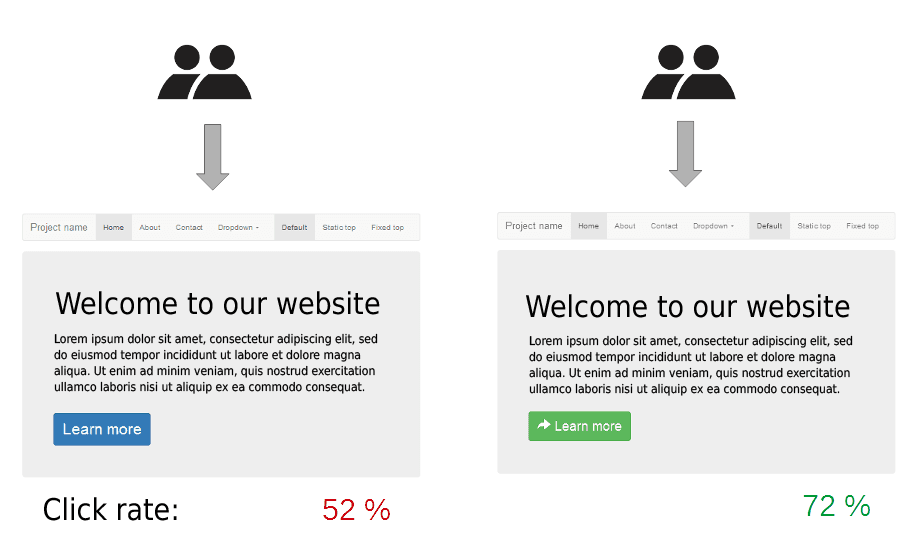
How would you structure a backend architecture A/B test and define metrics?
This tests causal inference rigor for infrastructure changes. A strong answer covers sticky user routing, controlling for geography and time, and paired primary metrics like P99 latency and error rate.
Design a screener survey to identify non-Feature X mobile users
Ask broad frequency first, use indirect disqualifiers for Feature X without naming it, add attention checks, and over-recruit 7-8 to secure 5.
What two techniques mitigate professional-tester bias in screener design?
Swap guessable questions for behavioral ones about real tasks, and add exclusion criteria to block web-savvy professional testers.
Build a compliant participant recruitment database
Capture granular, timestamped consent with lawful basis; minimize, encrypt, and retention-limit storage; and build self-service deletion that cascades.
Describe a workflow to automate a 50-person diary study
Tests operational UX research automation and API integration. A strong answer maps a pipeline of calendar APIs, email triggers, and reminder bots with no-show fallbacks. Red flag: manual spreadsheets or survey tools lacking scheduling logic.

Propose a strategy for finding and vetting low-incidence participants
This tests sourcing creativity and screening rigor for rare populations. A strong answer proposes niche outreach, snowball referrals, behavioral screeners, and anti-fraud checks. A red flag is simply boosting spend on generic panels or relying on coworkers.

Outline a technical roadmap for an internal research participant panel
Tests systems design for research ops. Strong answers: CRM-synced opt-in, canonical data model with eligibility rules, communication orchestration, and incentive automation.
Design a system integrating analytics data with participant recruiting
Tests system design for behavioral targeting in research ops. A strong answer covers: a warehouse-to-tool pipeline; consent and privacy gates; behavioral SQL segmentation; and frequency capping. Red flag: skipping GDPR and consent to focus only on data joins.
Design a centralized participant management system to prevent over-contacting
Tests ResearchOps governance at scale. Strong answers define unified data tracking contact history, consent, and segments; enforce hard frequency caps and cooling-off windows; and build automated guardrails. Red flag: siloed spreadsheets or soft guidelines.

What is the goal of contextual inquiry and what do engineers gain?
Tests grounding engineering in observed user behavior. Goal: watch users in their environment to uncover tacit work practices, workarounds, and mental models. Engineers learn system constraints, integrations, and reliability gaps.

Your role and pitfalls as an engineer note-taker in interviews
Observe to leverage researcher expertise; pitfalls are skipping prep, academic framing, and inflexible features.
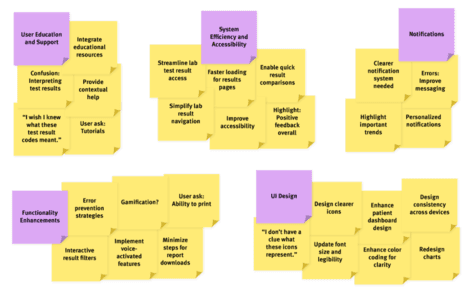
Translate qualitative insights into user stories and requirements
Clusters themes by frequency/severity, reframes pain points as user stories with clear AC, maps to technical spikes, prioritizes by impact.

How do you mitigate confirmation bias when a user validates your solution?
In the moment, probe for exceptions; in synthesis, triangulate and invite reviewers.

How would you use a journey map to find technical root causes?
Map journey stages to logs and traces, find bottlenecks, propose API or data model changes.

Advocate for generative research over a complex feature request?
Tests mapping research methods to product risk. Strong answers reframe the feature as an unvalidated problem, cite qualitative behavioral methods like field studies, and translate unknowns into scope and opportunity cost.
What lightweight generative research reveals why users drop off a funnel?
Tests bridging analytics to qualitative insight fast. Outline: run 5-8 micro-interviews at the exact drop-off step; probe confidence and expectations; map findings to technical fixes.
How do you adapt contextual inquiry for internal API and tool design?
This tests applying ethnographic methods to API design by observing engineers at work, surfacing invisible habits, and mapping findings to endpoint granularity and docs. A red flag is treating internal users as unlike external customers or using only surveys.

Usability vs A/B testing: when should engineers advocate for each?
Tests qualitative versus quantitative UX methods. Outline: usability observes why users struggle and finds bugs; A/B compares live variants to optimize conversions. Choose usability for unknown friction, A/B for known tweaks.
Describe heuristic evaluation and two heuristics that guide UI components
Tests if you bridge UX research and frontend decisions. Define heuristic evaluation as expert review against rules of thumb, cite two NN/G heuristics, and map each to a concrete component behavior. Red flag: listing heuristics without code impact.

What user struggles indicate code bugs versus design flaws?
This tests triage judgment in usability testing. Bug signals: crashes, broken interactions, data loss. Design flaws: confused navigation, ignored elements, excessive effort. Red flag: blaming users or labeling every issue a UI problem without checking logs.