All bites
The whole library, newest first. Filter by what you are here for, or pick a topic if you already know.
8664 bites
Page 45
Disruptive Innovation: Why 'Good Enough' Often Wins
Disruptive innovation isn't a better product, but a simpler, cheaper one incumbents ignore. It wins by serving overlooked customers at the bottom of a market, eventually moving up.

Describe a technical MVP approach to validate user engagement quantitatively
Pick a KPI and cheapest viable prototype, like a fake door; instrument events with a control group; set kill criteria upfront.
Qualitative vs. Quantitative: The 'Why' and the 'How Many'
Quantitative research counts and measures ("how many?"), while qualitative research explores and understands ("why?"). Use quantitative for A/B tests to get statistical proof, and qualitative for user interviews to uncover motivations.

How do you assess trade-offs between a simpler implementation and validated design?
Tests whether you separate user outcomes from implementation fidelity. Great answers quantify deviation against the core job, model cost and speed savings, and propose a scoped experiment with rollback criteria.
Problem Statement Framing: Define the 'Why' Before the 'What'
Don't just solve the problem, solve the *right* one. Problem framing forces you to deeply understand a user's need before building. It's the first step in product development, ensuring teams don't build something nobody wants.
Engineering input in a Jobs to be Done workshop
Frame the underlying job and measurable outcomes the user wants, decouple from any solution, then let features compete to serve them.

How Might We: Frame Problems, Not Solutions
“How Might We” questions turn research insights into broad prompts for brainstorming. Use them after user research to frame design challenges before ideating. The biggest footgun is embedding a solution in the question, which kills creativity.
Design a follow-up experiment to resolve conflicting qualitative and quantitative data
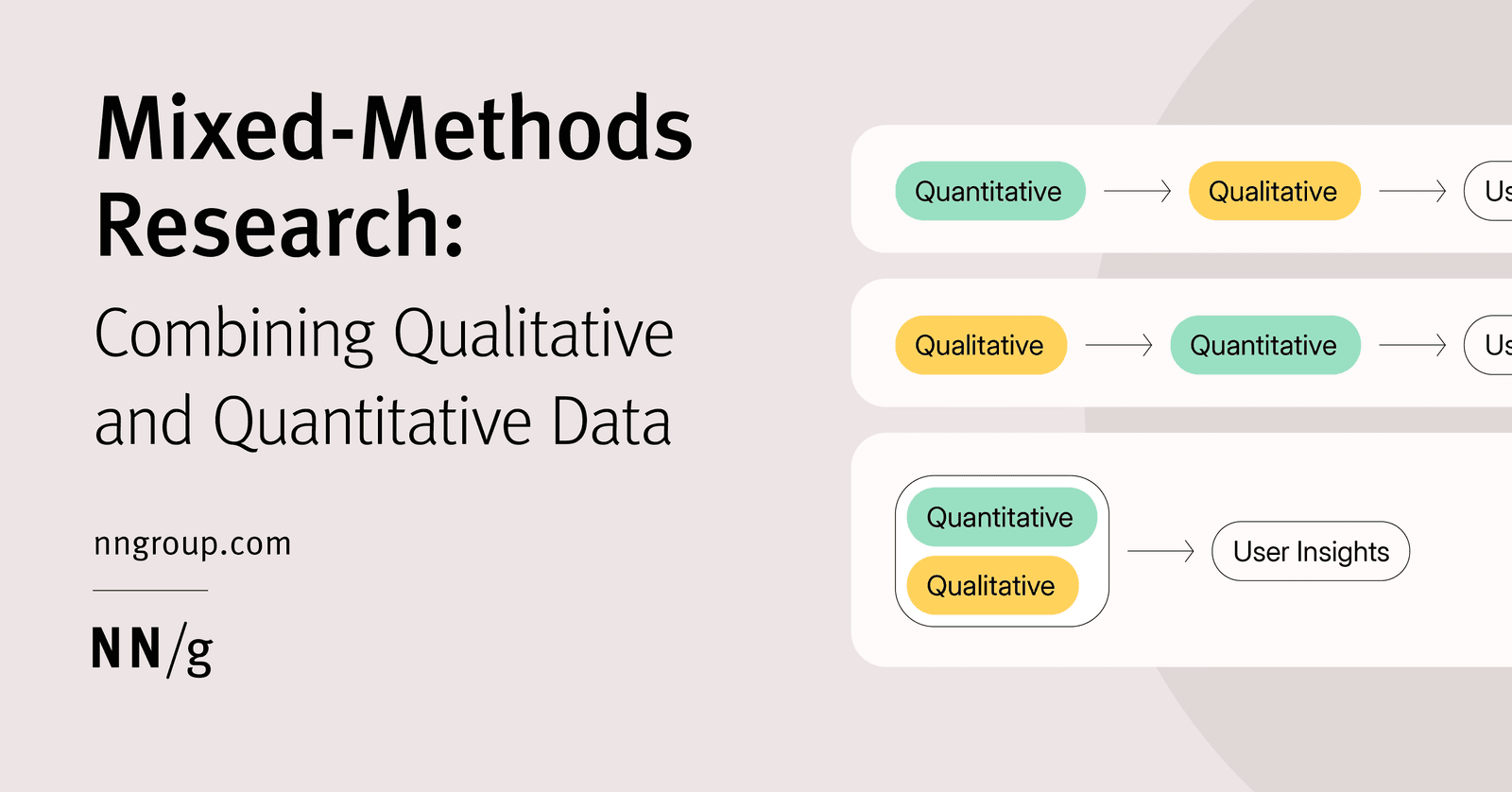
This tests mixed-methods integration. Strong answers sequence experiments: observe users in the low-engagement flow for friction, then run a higher-fidelity quantitative test with behavioral metrics tied to stated intent.
Contextual Inquiry: Watch Users in Their Habitat
Go to the user's environment to see what they *actually* do, not just what they say they do. It's used in early discovery to uncover unstated needs by observing real workflows. The footgun is 'helping' the user, which pollutes the observation.

How would you architect a system for rapid experimentation and validation?
Tests designing decoupled experimentation infrastructure that scales past 1M users. Strong answers split assignment, flags, metrics, and analysis into independent event-driven services with change data capture isolating production.
Diary Study: Capturing User Behavior Over Time
A diary study captures user habits by having them log experiences over time. It's used to understand routines or decision-making in a user's natural environment, without the high cost of a field study. The footgun is relying on self-reported data.
Measure a competitor's public performance
Synthetic audits via Lighthouse and WebPageTest, timed public-API probes, and reading response headers.

Generative vs. Evaluative Research: Define Problems vs. Judge Solutions
Generative research defines problems by asking, "What should we build?" Evaluative research judges solutions by asking, "Did we build it right?" The footgun is using evaluative methods for discovery, which just optimizes a solution for a problem nobody has.
What technical attributes or metrics would you analyze comparing authentication or search?
Concrete p99 latency, SLA, throughput QPS, security; contrast features versus resilience.
Affinity Diagramming: Finding Structure in Chaos
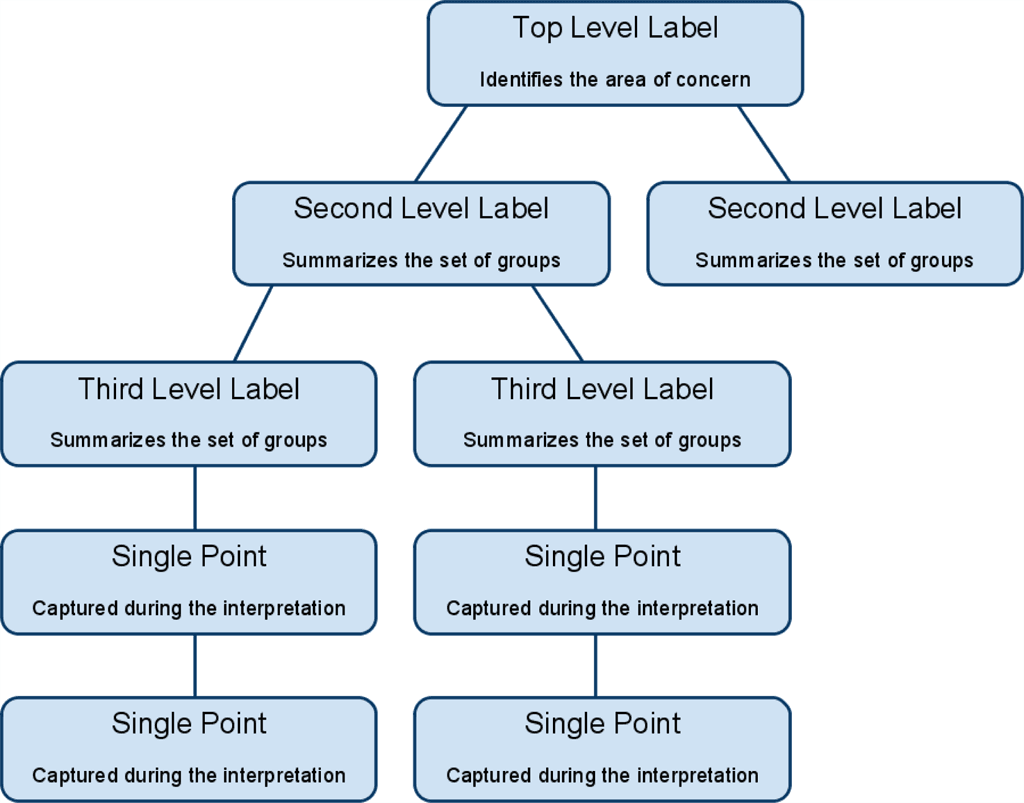
Affinity diagramming turns a pile of raw ideas into organized themes by grouping them based on natural relationships. Use it after brainstorming to find patterns. The biggest mistake is debating ideas instead of focusing on the connections between them.
What technical steps estimate effort to build a competitor's missing feature?
Tests whether you decompose unknown scope before guessing timelines. A strong answer covers: reverse-engineering the user flow, mapping integration points, sizing unknowns, and validating with a spike.

Focus Groups: Understanding the 'Why' Behind User Reactions
A focus group is a guided conversation to uncover the 'why' behind user opinions, not just what they are. It's used to gauge reactions to new products or understand shared experiences.
How would you leverage microservices to out-maneuver a monolithic competitor?
Tests turning architecture into product velocity. Exploit competitor's release cycle with independent service teams shipping features in days not months via domain boundaries. Red flag: seeing microservices as purely technical or suggesting big-bang rewrite.
Ethnography: Uncover Needs Users Can't Articulate
Ethnography uncovers user needs by observing them in their natural environment, not just asking questions. It reveals what people *do*, not just what they say. Use it for early discovery to find needs users can't articulate.
How would you out-engineer a competitor's new data-intensive feature?
This tests strategic design under competition. Strong answer maps competitor's bottleneck, applies distributed sharding or streaming, picks asymmetric edge caching, and locks in latency SLAs. Red flag: no bottleneck analysis or ignoring quantified moats.