All bites
The whole library, newest first. Filter by what you are here for, or pick a topic if you already know.
8664 bites
Page 49

How do outcome-oriented goals change implementation and testing?
Tests whether you engineer for measurable behavioral change, not just shipping. Strong answers cover baselining, telemetry, small experiments, and user-data validation. Red flag: treating the goal as a PM issue and focusing only on on-time delivery.

Van Westendorp Price Sensitivity Meter
The Van Westendorp Price Sensitivity Meter is a market research technique for determining consumer price preferences. It's used to help set product prices by surveying potential buyers about their perceived value and willingness to pay.
What questions assess strategic alignment before estimating effort?
This tests whether you validate business context before scoping. Ask: what market problem is solved, which company competency or asset is leveraged, and what metric proves success. Red flag: estimating before confirming strategic fit.

SMART Goals: From Vague Hopes to Actionable Plans
SMART goals turn fuzzy ambitions into concrete plans by forcing clarity. It's a checklist for ensuring a goal is Specific, Measurable, Assignable, Realistic, and Time-bound. Use it for project planning or performance reviews to create trackable progress.
What artifacts and processes mitigate cross-team API dependency risks?
This tests de-risking external API dependencies via contracts. A strong answer proposes an OpenAPI spec as the source of truth, mock servers for parallel work, and automated CI validation.
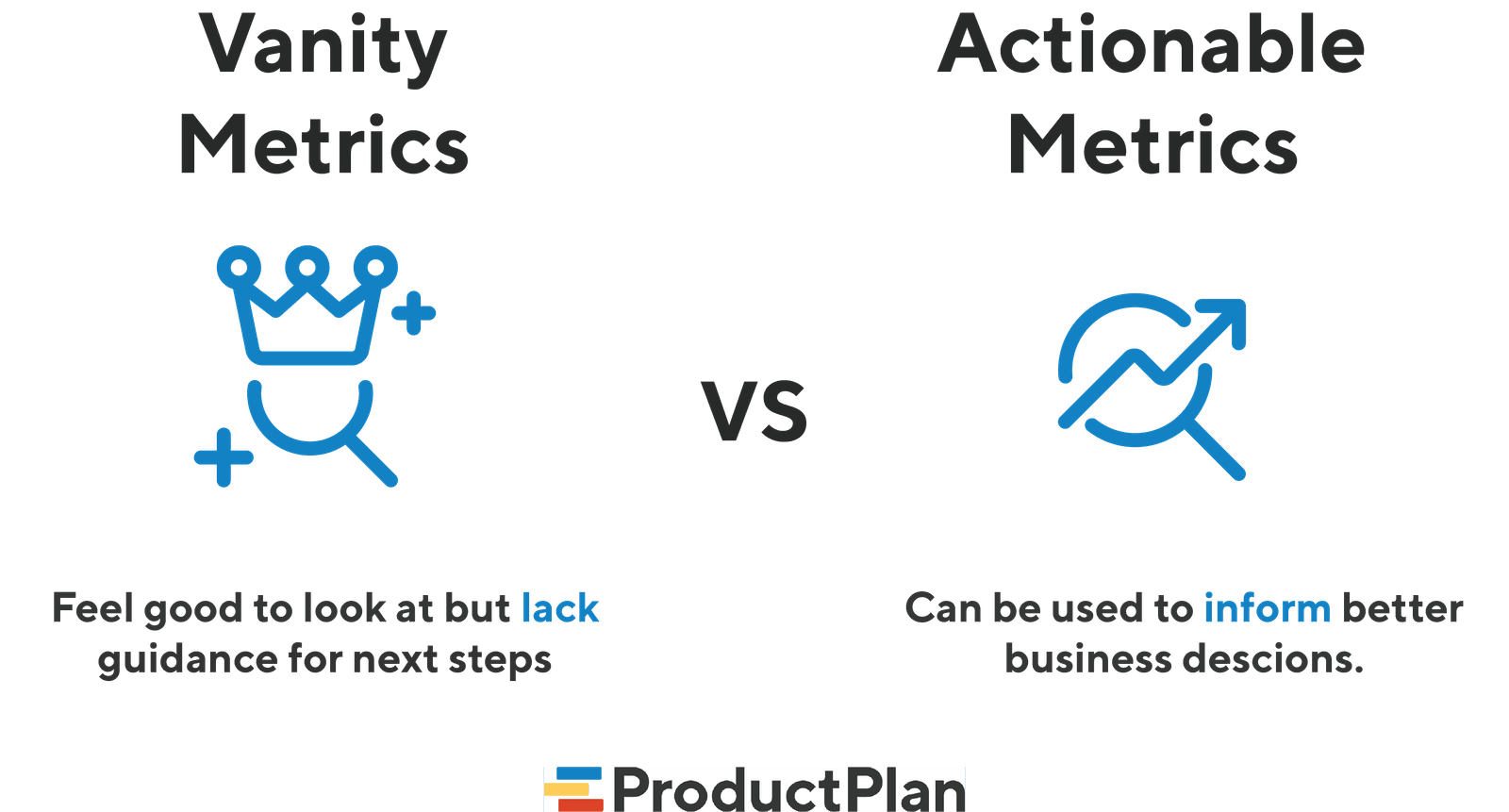
Vanity vs. Actionable Metrics: Measure What Matters
Vanity metrics look impressive but don't inform decisions (e.g., total downloads). Actionable metrics tie to business goals and guide your next move (e.g., conversion rate). This helps product teams focus on real growth, not just impressive-looking charts.
Your feature launches but engagement doesn't move. What's engineering's role in diagnosis?
Validate data, segment users, test tech and behavioral hypotheses, propose experiments.
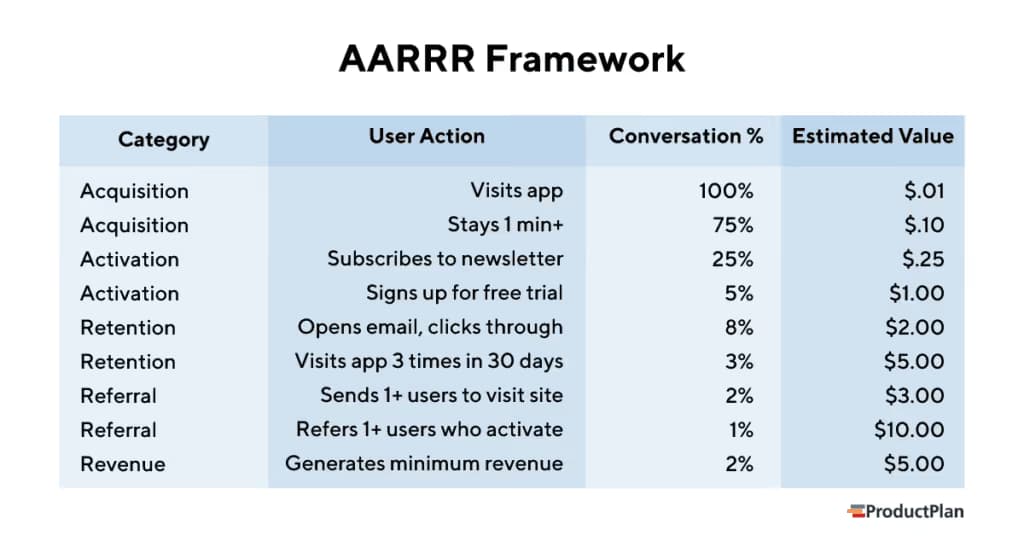
AARRR 'Pirate' Metrics: A Funnel for What Really Matters
The AARRR framework is a five-stage funnel (Acquisition, Activation, Retention, Referral, Revenue) that tracks the user journey. It helps product teams focus on metrics that directly impact business health, not vanity metrics like social media likes.

How would you structure a technical strategy parallel to the product roadmap?
Anchor on product vision; use RICE for work vs features; ship incremental milestones; validate with product.

The HEART Framework for Measuring UX
The HEART framework provides a structure for measuring user experience on large-scale web applications. It helps teams define user-centered metrics to track progress towards goals and make data-driven decisions.

What process do you initiate when a competitor disrupts your core value?
This tests strategic technical judgment under market pressure. A strong answer covers rapid threat assessment, feasibility spikes, and option analysis weighing speed versus debt, then proposes a staged plan.

Counter Metrics: Guardrails for Your Goals
Counter metrics are the guardrails for your primary goal, preventing you from optimizing one number at the expense of user experience. If you increase ad impressions for revenue, track user retention to ensure you aren't just driving users away with spam.

How would you track technical health against the strategic roadmap?
Bridging engineering health signals to roadmap decisions. Combine DORA metrics, performance budgets, and architectural fitness into a scorecard with thresholds that force roadmap negotiation when health declines. Wrong: no feedback loop into roadmap.
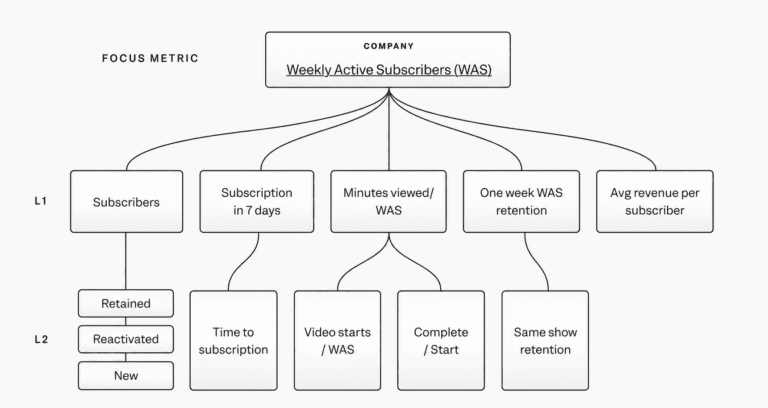
KPI Tree: Linking Product Changes to Business Outcomes
A KPI tree traces how changes ladder up to outcomes, giving metrics connective tissue. Build one when dashboards and experiments conflict and you need a defensible line from features to impact. Let it stay static and it becomes disconnected.
How would you propose an MVP for a social sharing feature?
Tests whether you can isolate the smallest releasable slice that validates user value. Propose one sprint covering auth, share creation, and a minimal feed. Avoid cutting every requirement by 30 percent or skipping observability.
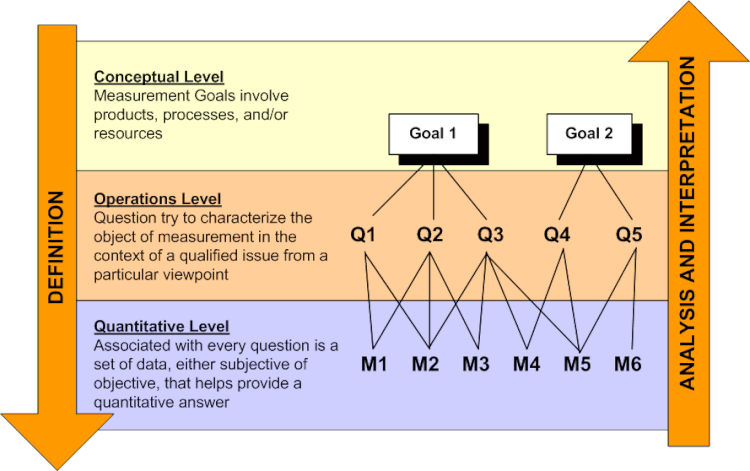
Goal-Question-Metric: Measure What Matters, Not What's Easy
GQM is a top-down framework for defining metrics. You start with a Goal, ask Questions to clarify it, then define Metrics to answer them. This avoids the common trap of collecting vanity metrics that don't reflect true software quality or business goals.

How do you prioritize a P1 bug versus a sales-driven feature request?
Use impact-effort or weighted scoring; check if the 1% crash hits paid tiers; verify deal size, probability, and stage; weigh maturity.

Product Roadmap vs. Backlog: Strategy vs. Tactics
A roadmap is your strategic travel plan showing major destinations (product goals), while the backlog is the turn-by-turn navigation for the current leg of the journey (development tasks). The footgun is cluttering the roadmap with backlog details.

How would you apply RICE scoring to prioritize these three initiatives?
This tests translating technical tradeoffs into quantified RICE scores. A strong answer maps Reach to users, Impact to latency or revenue, Confidence to data quality, and Effort to person-weeks. Red flag: uniform confidence or vague t-shirt sizing.

Thematic Roadmaps: Focus on 'Why,' Not 'What'
A thematic roadmap organizes work around strategic goals ("themes") like "Improve User Onboarding," not just a feature list. It's used to align teams on high-level objectives and persuade executives. The footgun is mistaking a feature list for a strategy.