All bites
The whole library, newest first. Filter by what you are here for, or pick a topic if you already know.
8668 bites
Page 219
Data Warehouse vs. Data Lake vs. Lakehouse
Tests your grasp of modern data architectures. A great answer defines warehouses (structured, schema-on-write) and lakes (raw, schema-on-read), then explains how a lakehouse adds ACID transactions and governance on top of a lake.
What is data partitioning in a cloud data warehouse?
Tests your grasp of physical data layout optimization. A good answer defines partitioning as dividing a table by a column (e.g., date), then explains how this enables partition pruning to improve query speed and reduce cost by scanning less data.
Handling Late-Arriving Data in a Streaming Pipeline
Tests your grasp of event time vs. processing time. A great answer defines watermarks to track completeness, uses event-time windowing to group data, and sets triggers with allowed lateness to correctly incorporate out-of-order events.
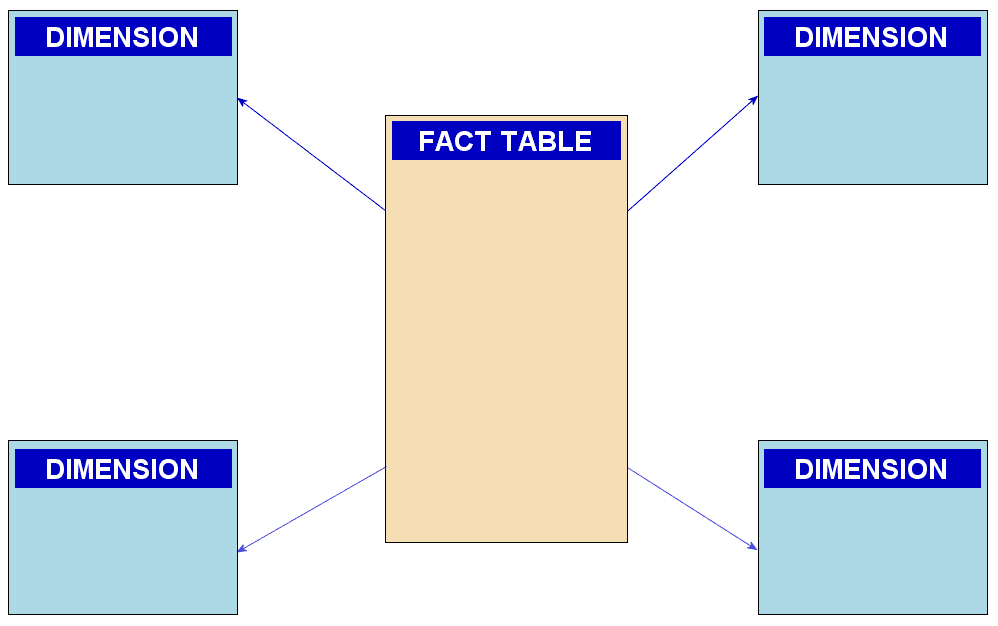
Star vs. Snowflake Schemas: Trade-offs
Tests your grasp of data warehouse design trade-offs. Define star (denormalized, fast queries) and snowflake (normalized, storage efficient) schemas. Explain the core trade-off: star's query speed vs. snowflake's storage/integrity.

What is a data warehouse vs. a transactional database?
Tests your grasp of systems optimized for different access patterns (writes vs. reads). Define OLTP for transactions and OLAP for analytics. Contrast their schema (normalized vs. denormalized), data, and workload. A red flag is calling it a 'big database'.
Build a pipeline to load a daily CSV into a database
This tests your ability to connect basic cloud services (storage, compute, database) into a simple, event-driven data pipeline. A good answer mentions an event trigger (S3), a serverless function (Lambda), and a database (RDS), plus error handling.

ETL vs. ELT: Key Differences and When to Use Each
This tests your grasp of data pipeline trade-offs. Define ETL (transform first) vs. ELT (load first), contrasting transform location and data state. A red flag is ignoring how cloud warehouses make ELT the modern default for flexibility.

Guarantee at-least-once delivery for a critical analytics event?
Tests reliable messaging patterns to avoid dual-write issues. Propose the Transactional Outbox pattern: atomically write business data and the event to a DB outbox table. A separate relay process then sends the event.

Design a Client-Side Event Batching System
Tests your grasp of client-side performance, network optimization, and data loss edge cases. A great answer batches events in memory, sends them with fetch(), and uses navigator.sendBeacon() on pagehide to reliably send the final batch.
How do you approach user identity stitching?
This tests your grasp of data architecture for analytics, not just a simple algorithm. A strong answer defines anonymous vs. known IDs, explains the backfilling/rekeying process upon authentication, and notes the need for a central event store.

Build vs. Buy: Third-Party Analytics SDK or In-House Pipeline?
This tests your grasp of the time vs. control trade-off. A great answer weighs the speed of buying against the total control of building, focusing on the hidden, long-term maintenance costs of an in-house solution.
Sudden metric drop, no recent deployments. What's the cause?
This tests your ability to debug data discrepancies beyond code, focusing on the analytics pipeline. First, distinguish data loss from misattribution. Then, check processing delays and hidden data sources. A red flag is not segmenting data first.
How do you track page views in a Single Page Application?
Tests your grasp of SPA navigation vs. traditional page loads. A great answer explains how SPA routers use the History API (pushState) and how to listen for changes to send analytics events. A red flag is suggesting polling the URL.

How would you measure the ROI of a data analytics platform?
This tests your ability to connect platform metrics to business value. A good answer defines KPIs for adoption, performance, and cost, then links them to business impact.
Design a KPI Strategy for a Two-Sided Marketplace
Tests your ability to balance a complex ecosystem. A great answer defines KPIs for liquidity (search-to-fill), transaction economics (take rate), and true health (net revenue over GMV).

Explain the North Star Metric and propose one for a product
Tests your ability to connect user value to business outcomes. A great answer defines the NSM, proposes one for a product (e.g., Spotify), and justifies how it links customer value to business success. A red flag is picking a vanity metric like DAU or revenue.

How would you diagnose why a new feature isn't being adopted?
This tests your ability to diagnose a flat KPI. A great answer outlines a funnel (awareness, activation, usage) and combines quantitative data with qualitative insights from session replays. A red flag is proposing solutions without a diagnostic plan.
Pitfalls of 'Conversion Rate' as a North Star Metric
Tests your ability to see beyond a single metric. A good answer identifies how optimizing conversion can hurt revenue or UX, and proposes guardrails like Average Order Value, support tickets, and return rates.

Translate 'increase engagement' into a technical measurement plan
This tests your ability to translate a vague business goal into a structured, measurable technical plan. Clarify the goal with the PM, define a primary metric and supporting metrics, then create an instrumentation spec.
AI Use Creates 'Cognitive Debt' in Scrum Teams
Over-relying on AI for sprint planning and backlog refinement creates "Cognitive Debt," eroding a team's problem-solving skills. While AI boosts productivity, it can eliminate the collaborative friction that builds shared understanding and critical reasoning.