Easy everything in Agile & Scrum, page 4
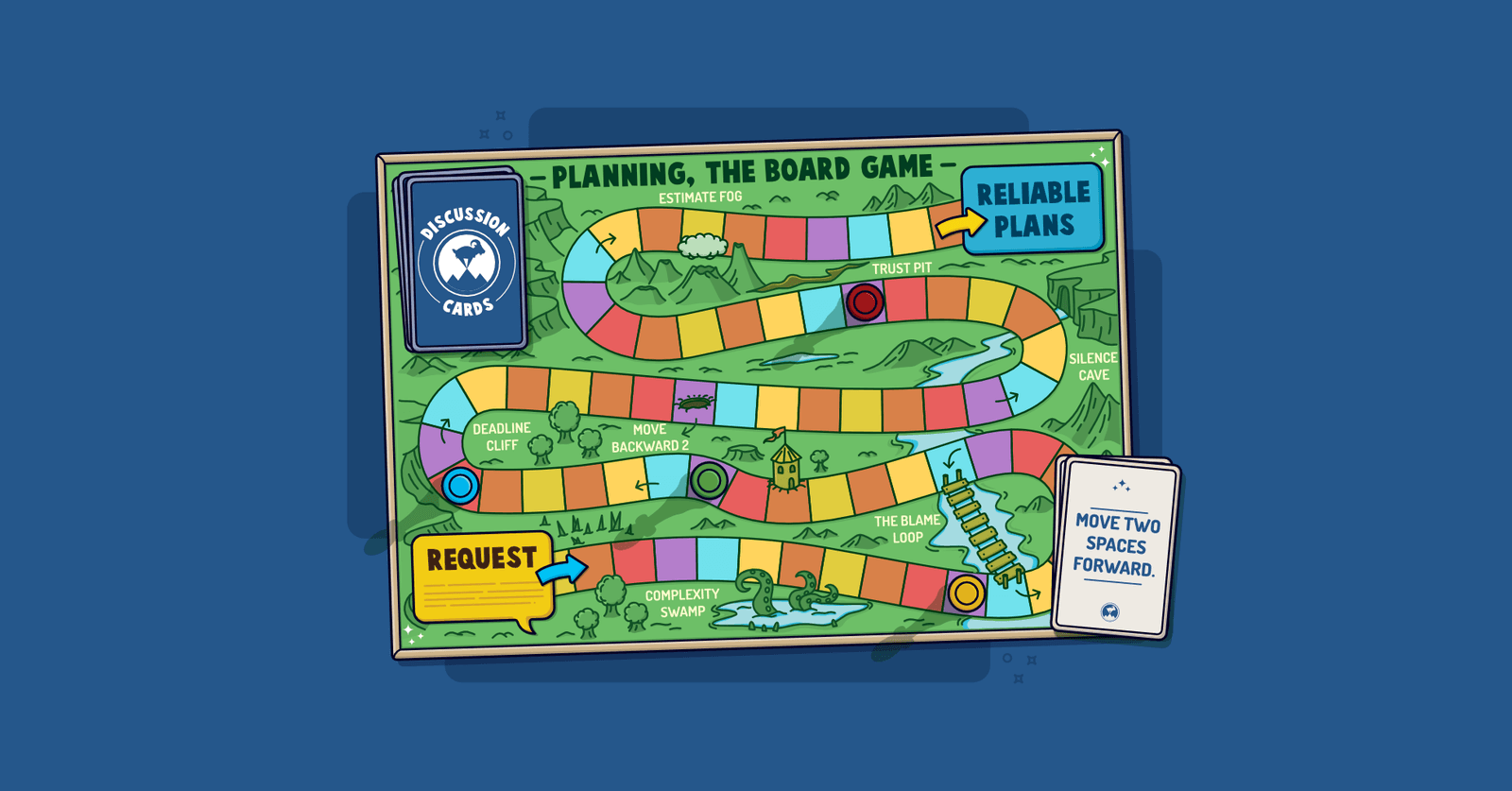
Make Agile Planning a Shared Problem
Chaotic sprints and messy backlogs often result from planning being treated as a solo task. This siloed approach leads to overcommitment and erodes stakeholder trust, making agile feel unreliable.

Mountain Goat Software Ends Public Agile, Scrum Classes
Mountain Goat Software is ending its public Agile/Scrum courses to focus on private team training. This removes a key option for individual certification, forcing engineers to find alternatives or convince managers to book a more costly private session for…
Basecamp 5 Overhauls UI, Debuts New Rails Editor
Basecamp 5 ships a new "Lexxy" editor with tables and markdown, a permanent sidebar, and full keyboard navigation. The editor, built on Meta's Lexical, will become the default for Action Text in Rails, making this a preview for Rails developers.
DHH Slams 'Luddite' AI Bans in Open Source
Open source projects like Zig and NetBSD are banning AI-assisted code. DHH calls this a 'modern Luddite movement' that betrays the core OSS mission of democratizing software, arguing it's about protecting status, not ensuring quality.
DHH: Rails & Kamal Came From Solving 'Interesting Problems'
DHH credits 37signals' success for the freedom to solve 'interesting problems,' which led to Ruby on Rails and Kamal. This founder-led R&D model shows how personal motivation can create strategic tools, bypassing committee-driven roadmaps for high-leverage…
Jira's Rovo AI Aims to Deflect 60% of Tickets
Atlassian's Rovo agents in Jira Service Management aim to deflect up to 60% of repetitive service tickets. The agents intercept requests in Slack or the help portal, providing instant answers from your docs, freeing up support staff for complex engineering…
Study: Disclosing AI use makes you seem 10x lazier
A study of ~1,000 workers found disclosing AI use makes you seem 10x lazier. Even with identical output, peers were 24% less likely to recommend you for key projects. While 94% use AI, the stigma means silence is often the safest career strategy.
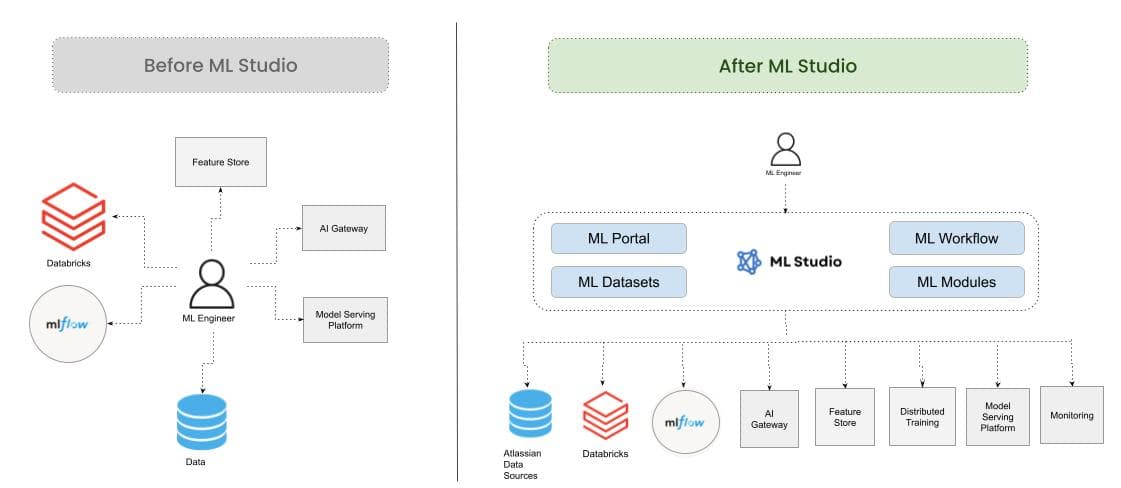
Atlassian Details its ML Studio Platform Design
Atlassian's ML Studio platform powers thousands of daily workflows for millions of Rovo users. It solves enterprise scaling issues with reusable modules, column-level data governance, and unified orchestration, offering a blueprint for building compliant…
Feature Teams vs. Component Teams: Pros and Cons
This tests your grasp of how team structure affects value delivery. A great answer defines feature (vertical slice, end-to-end) and component (horizontal, specialized) teams, then contrasts their trade-offs: speed vs. deep expertise.
How can developers support the Product Owner in backlog refinement?
Tests your proactivity and partnership beyond just executing tasks. A great answer covers proactive technical analysis, suggesting ways to split stories for incremental value, and helping the PO quantify impact.
What is a Scrum of Scrums and what's shared there?
This tests your understanding of scaling Agile. A good answer defines it as a coordination meeting for multiple teams, focusing on sharing inter-team blockers, dependencies, and integration points, not just status.

Lead Time vs. Cycle Time in Kanban
Tests your understanding of core Kanban metrics for process improvement. Define Lead Time (request to delivery) and Cycle Time (work start to completion), noting Cycle Time is a subset. A red flag is confusing the two or being imprecise about start/end points.

What initial columns would you set up on a Kanban board?
Tests your grasp of Kanban's core goal: visualizing workflow. Start with a simple board (To Do, In Progress, Done), explaining how each column represents a work state. A red flag is creating an overly complex board without justifying the need for each stage.
What is an engineer's role in story refinement?
Tests your role in translating needs to tech specs. A great answer covers clarifying questions, task breakdown, sizing, and acceptance criteria. A red flag is passively waiting for tasks instead of proactively de-risking the work.

What information do you need in a user story?
This tests your ability to connect engineering work to user value. A great answer covers the user persona (who), their motivation (why), and measurable success criteria (what), explaining how this context informs technical decisions.
Describe the TDD Red-Green-Refactor cycle
This tests your grasp of TDD's core loop and its design implications. A good answer defines Red (failing test), Green (minimal code to pass), and Refactor (improve structure).
What is the output of a Sprint Retrospective, and what happens next?
This tests if you create actionable outcomes, not just vent. The output is a plan to improve quality and effectiveness, with the most impactful items added to the next Sprint Backlog. A red flag is calling the output just 'notes' with no plan for integration.
Difference Between 'Code Complete' and 'Done'?
Tests if you grasp value delivery vs. task completion. A great answer defines 'code complete' as a dev step and 'Done' as a team-agreed state of shippable value, governed by the Definition of Done. A red flag is equating 'Done' with just 'QA passed'.
What's missing from a ticket-focused Daily Scrum?
This tests if you know the Daily Scrum is for Developers to inspect progress toward the Sprint Goal, not a status report. A great answer states this purpose, explains how it enables adapting the next day's plan, and focuses on the team.
Sprint Goal: Purpose and Influence on Sprint Planning
Tests if you understand a Sprint is about a single objective, not just a list of tasks. Define the Sprint Goal as the 'why'—a commitment providing focus and flexibility that guides PBI selection. A red flag is defining the goal as a summary of tickets.
We are hiring for this. Every open role lists the topics its interview covers, so you can prepare for the real thing rather than guessing.
See open roles