Easy everything in Agile & Scrum, page 5
What are the components of a well-written user story?
Tests your ability to translate business needs into actionable engineering work. A great answer covers the '3 Cs' (Card, Conversation, Confirmation), the INVEST criteria, and specific, testable Acceptance Criteria. A red flag is just reciting the 'As a...'
What is the Definition of Done and its impact?
Tests your grasp of Scrum's core quality mechanism and its link to predictability. Define DoD as the formal quality standard for a releasable Increment, creating transparency and ensuring all work is truly complete.
How to fix a Daily Scrum that runs over its timebox?
Tests your understanding of the Daily Scrum's purpose: inspection and adaptation, not problem-solving. A good answer re-centers the team on the Sprint Goal, uses a 'parking lot' for deep dives, and addresses the root cause offline.
How do you handle an urgent request during a Sprint?
This tests your ability to protect team focus while managing stakeholders. Acknowledge the request, explain its impact on the Sprint Goal, and redirect the stakeholder to the Product Owner, who owns the backlog. A red flag is saying 'yes' or 'no' directly.
Sprint Review vs. Sprint Retrospective: Purpose and Audience
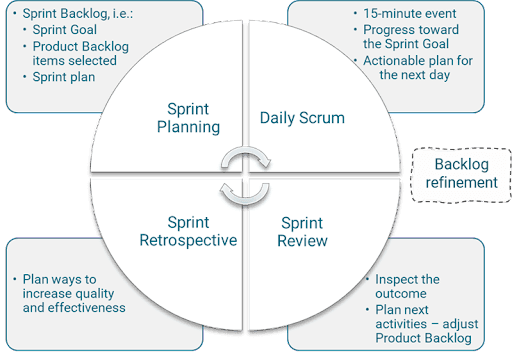
This tests your grasp of Scrum's dual feedback loops. A great answer defines Review as inspecting the *product* with stakeholders to adapt the backlog, and Retrospective as inspecting the *process* with the team to improve the next Sprint.
What is the purpose of the Daily Scrum?
This tests if you know the Daily Scrum is a planning event for Developers, not a status report. A great answer states it's a 15-min meeting for Developers to inspect progress toward the Sprint Goal and adapt their plan.
What are the three accountabilities in a Scrum Team?
Tests recall of Scrum fundamentals and separation of concerns. Name the three accountabilities (Product Owner, Scrum Master, Developers) and define their focus: PO on value, Developers on delivery, and SM on process. A red flag is adding non-Scrum roles.
Explain 'Simplicity' and how you apply it as an engineer
Tests if you see simplicity as maximizing value, not just minimizing code. A good answer defines it as avoiding unneeded work, then explains how you'd build an MVP, defer gold-plating, and validate scope with product.
What is the goal of a sprint retrospective?
Tests if you see retrospectives as actionable process improvement, not just venting. A good answer defines the retro's purpose (inspecting the sprint's people, processes, tools) and explains how it creates concrete action items for the next sprint.
Individuals and Interactions Over Processes and Tools
Tests if you can apply Agile's core human-centric value. A great answer defines the principle, then links it to concrete team structures (co-located, cross-functional) and communication methods (face-to-face). A red flag is dismissing all processes and tools.
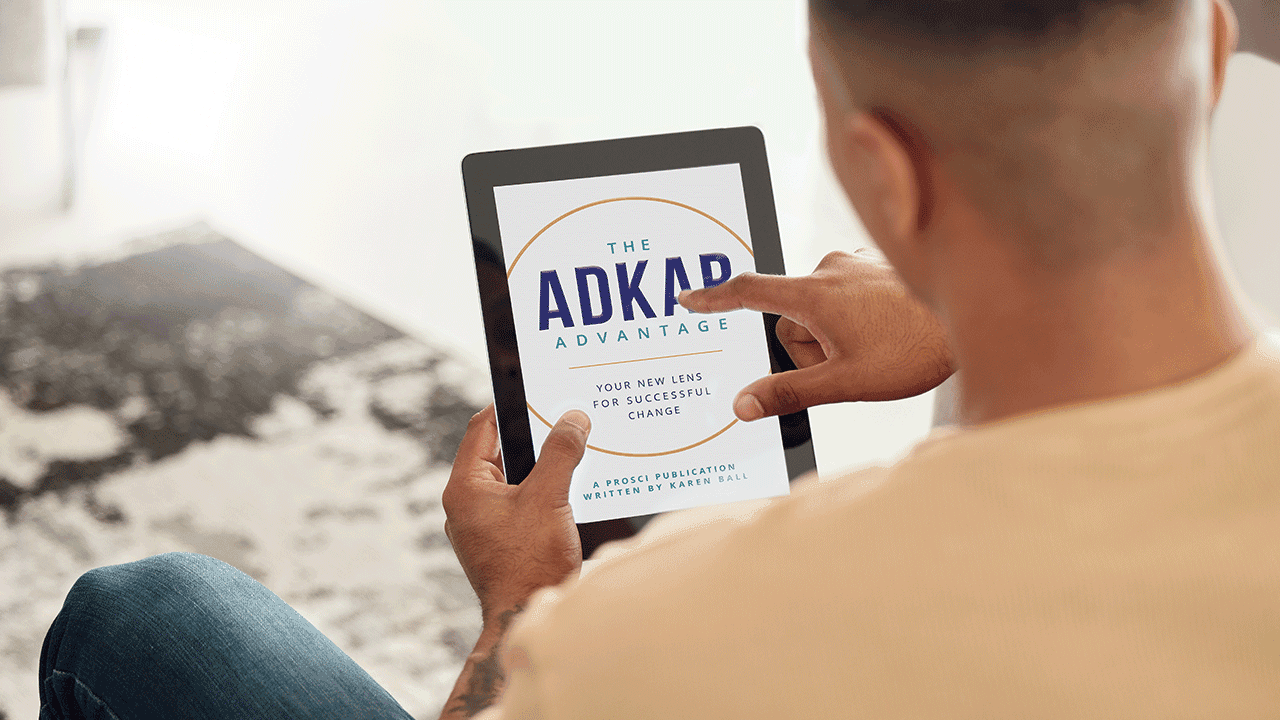
The ADKAR Model for Change Management
The ADKAR Model is a Prosci methodology for managing organizational change. It's applied during large-scale projects like ERP implementations, digital transformations, and mergers across industries like healthcare and finance.

The Satir Change Model
The Satir Change Model maps a team's emotional journey through disruption. When a new process is introduced, performance doesn't just improve; it first dips into resistance and chaos.
Moving Motivators: Uncover What Drives Your Team
Moving Motivators is a card game that reveals a person's core drivers by ranking ten motivations. Use it with a new hire or a team facing change to see how their motivation will be impacted. The footgun is judging motivators, not understanding them.
Gemba Walk: Go See Where the Work Happens
A Gemba Walk means leaving your desk to see where value is actually created. It's about observing real work, not reading reports. Managers use it to understand real bottlenecks. The footgun is observing to judge, not to understand and learn.
Delegation Poker: Making Delegation a Team Sport
Delegation isn't a binary choice. Delegation Poker is a game where teams discuss and agree on their level of authority for key decisions, moving from 'manager decides' to 'team decides'. It's used to clarify roles and empower teams.
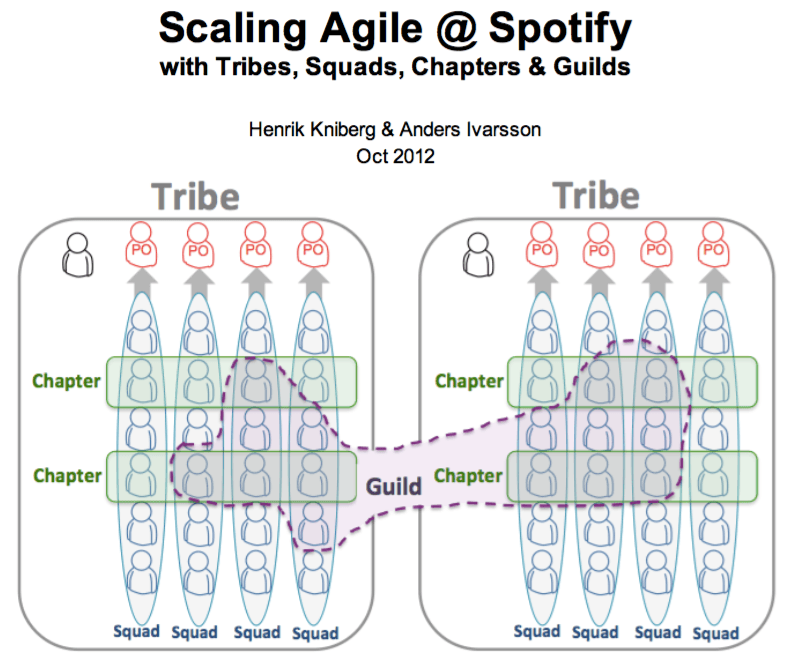
The Spotify Model: Scaling Agile with Autonomy
The Spotify Model organizes teams for autonomy and alignment, using mini-startups (Squads) and skill-based communities (Chapters). It helps scale agile in large orgs, but copying the structure without the culture of trust creates a rigid hierarchy in disguise.
Large-Scale Scrum (LeSS): Scaling Scrum by Descaling the Org
LeSS scales Scrum by simplifying the organization, not adding processes. It applies one-team Scrum principles to multiple teams working on one product. Use it when 2-8 teams need to collaborate on a single product backlog.
SAFe: Scaling Agile Beyond a Single Team
SAFe is a blueprint for applying Agile principles across large organizations, not just single teams. It coordinates many teams into 'Agile Release Trains' that plan and deliver together in fixed cycles, ensuring alignment on complex products.
Lead Time: From Customer Request to Live Code
Lead Time measures the total duration from when a feature is requested to when it's live for users—it's the customer's total waiting time. Teams use it to understand responsiveness and set predictable timelines. The footgun is confusing it with Cycle Time.

Pull System: Make Only What's Needed, When It's Needed
A pull system works like a restaurant kitchen: you only start work when the next step in the process places an order. This approach, core to lean manufacturing and Kanban, prevents overproduction. The footgun is pulling new work before finishing old tasks.
We are hiring for this. Every open role lists the topics its interview covers, so you can prepare for the real thing rather than guessing.
See open roles