Intermediate everything in Agile & Scrum, page 16

PI Planning: Aligning an Entire Agile Release Train
PI Planning gets an entire 'team of teams' (an ART) in one room to plan the next 8-12 weeks. This two-day event aligns development with business goals and identifies cross-team dependencies.
The Agile Release Train: How Multiple Teams Ship Together
An Agile Release Train (ART) is a 'team of teams' that aligns 50-125 people to ship a complex product together. It's used in SAFe to coordinate multiple Agile teams on a shared roadmap, ensuring they all pull in the same direction.
Escaped Defects Rate: Measuring What Slips to Production
Escaped Defects Rate is your quality report card from users, measuring the percentage of total bugs that your internal testing missed. Teams use it to gauge QA effectiveness. The footgun is using it to blame individuals, which just encourages hiding bugs.
Takt Time: Your Customer's Production Rhythm
Takt time is the production rhythm required to meet customer demand—a metronome for your workflow. It's used to design manufacturing lines or software sprints by setting a target pace.

Make Policies Explicit: Write Down Your Workflow's Rules
Making policies explicit turns your team's unwritten rules into a shared, improvable playbook. Use it to define what 'done' means for each stage or how to handle blocked items.
OKRs: Set Direction, Not Tasks
OKRs connect ambitious vision (Objectives) to measurable progress (Key Results). Used by companies to align quarterly efforts on high-level goals, not just a feature list.

Design Sprint: From Idea to Prototype in 5 Days
A Design Sprint fast-forwards you to see customer reactions without building a real product. In one week, your team goes from a big question to a realistic prototype and user feedback.
Jobs to be Done: Sell the Hole, Not the Drill
Jobs to be Done (JTBD) says people don't buy a drill, they buy a hole. It focuses on the customer's underlying goal, not your product. This helps uncover new opportunities, but the footgun is defining the job too narrowly, limiting innovation to your current…

Customer Journey Mapping: Walk in Your Customer's Shoes
A customer journey map is a storyboard of a user's experience, showing every interaction from their perspective. Use it to find pain points in a signup flow or support process. The biggest footgun is mapping an ideal path, not the messy reality.
Code Smells: Indicators of Deeper Problems, Not Flaws
A code smell is a surface-level hint, like a long method, that suggests a deeper design problem. It's an indicator, not a definitive flaw. The footgun is blindly "fixing" every smell; a smell is a reason to investigate, not an automatic command to refactor.
Trunk-Based Development: One Mainline to Rule Them All
Trunk-Based Development means all developers commit to a single shared branch, main or trunk. This is common in CI/CD environments for frequent updates.
SOLID Principles: Writing Maintainable Object-Oriented Code
SOLID principles are five design rules for writing maintainable object-oriented code. They guide you toward creating flexible systems that are easy to change. The footgun is treating them as rigid laws, leading to over-engineered and complex solutions.
Refactoring: Cleaning Code Without Breaking It
Refactoring is like renovating a house's internals without changing its outward appearance. It improves code design and readability without altering external behavior, making it easier to maintain or extend.
Test-Driven Development: The Red, Green, Refactor Cycle
Test-Driven Development (TDD) flips the script: you write a failing test *before* the feature code. This 'Red, Green, Refactor' cycle ensures every piece of code is testable. It's common in agile for building robust features.

The 4Ls Retrospective: Loved, Loathed, Longed For, Learned
The 4Ls retrospective is a structured way to capture a team's feelings after a project. It asks what they Loved, Loathed, Longed for, and Learned to create an action plan. A common pitfall is only focusing on negatives, missing key insights from the other Ls.
Radical Candor: Care Personally, Challenge Directly
Radical Candor is a feedback framework that combines caring personally with challenging directly. It's used to give clear, kind guidance—both praise and criticism—that helps people grow.

SMART Goals: From Vague Hopes to Actionable Plans
SMART criteria turn vague hopes into concrete plans by forcing goals to be Specific, Measurable, Achievable, Relevant, and Time-bound. It's used in project planning and performance reviews.

Fishbone Diagram: Mapping Problems to Root Causes
A fishbone diagram maps a problem to its potential root causes. It's a structured brainstorming tool used in retrospectives or post-mortems to explore *why* something happened.
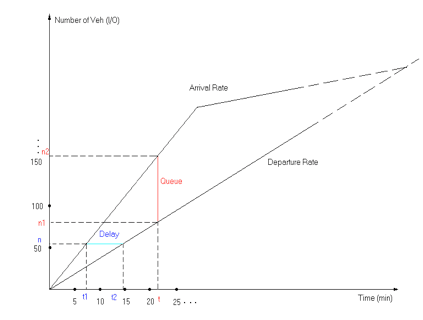
Cumulative Flow Diagrams: Spotting Workflow Bottlenecks
A Cumulative Flow Diagram is a geological cross-section of your project, showing work moving through states over time. Agile teams use it to spot bottlenecks by seeing where tasks pile up. The footgun is misinterpreting a widening band as a failure.
Feature Toggles: Decouple Deployment from Release
A feature toggle is a runtime switch that lets you ship dormant code and activate it later, decoupling deployment from release. It enables canary rollouts and A/B tests.
We are hiring for this. Every open role lists the topics its interview covers, so you can prepare for the real thing rather than guessing.
See open roles