Advanced concepts in AI & ML, page 4
Feature Selection: Making Models Better With Less Data
Feature selection improves models by giving them less data, finding signal by removing noise. Use it to speed up training, simplify models for easier interpretation, and avoid performance degradation from having too many input features.
Batch Normalization: Stabilizing Neural Network Training
Batch Normalization regulates data flow in a neural network by re-centering and re-scaling inputs to each layer. This stabilizes deep network training, allowing higher learning rates.
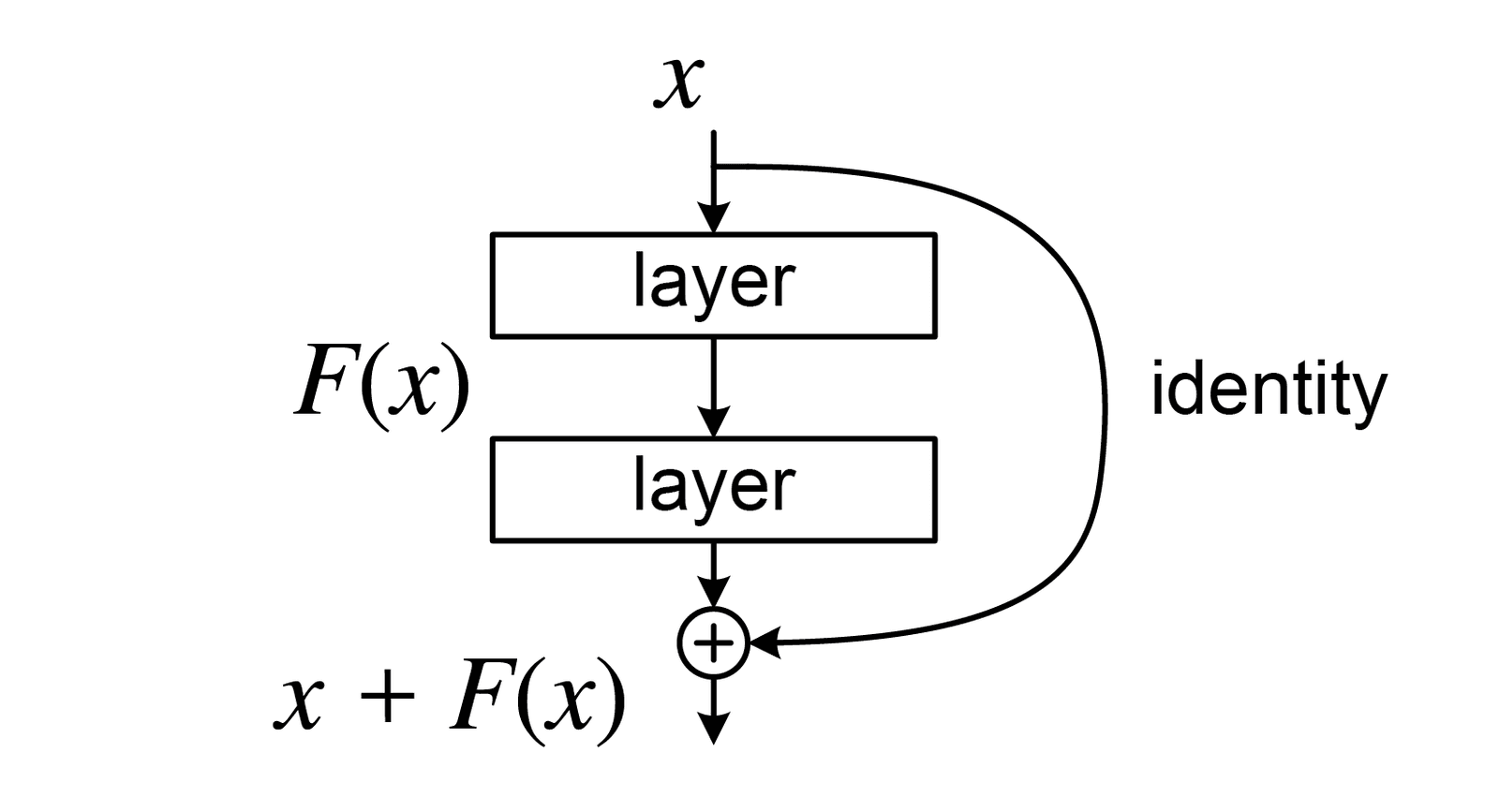
Residual Networks (ResNets): Go Deeper, Not Worse
ResNets let you train extremely deep networks by learning what to *change*, not the entire output. They use 'skip connections' to bypass layers, which helps solve accuracy degradation in deep vision models. The footgun is thinking deeper is always better.
GoogLeNet's Inception Module: Wider, Not Just Deeper
Instead of choosing one filter size, GoogLeNet's Inception module runs 1x1, 3x3, and 5x5 convolutions in parallel. This lets the network capture features at multiple scales at once. The footgun is forgetting the crucial 1x1 'bottleneck' convolutions.
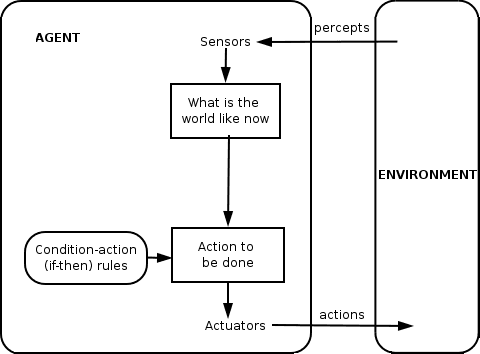
Multi-Agent Systems: A Team of AIs, Not a Monolith
Instead of one giant AI, a Multi-Agent System is a team of specialized AIs that collaborate on a complex problem. This appears in LLM-powered coding assistants and complex simulations.

Transfer Learning: Don't Train Vision Models from Scratch
Don't train a vision model from scratch. Transfer learning reuses a model trained on a huge dataset (like ImageNet) as a starting point for your specific task. This lets you achieve high accuracy on new image types with much less data and compute.

Hierarchical AI Agents: The Org Chart for AI
Think of a corporate org chart for AI. A top-level agent breaks a big goal into smaller tasks and delegates them to specialized, lower-level agents. This is used for complex problems like automating software development. The main risk is coordination overhead.
GitOps for MLOps: Your ML System as Code
GitOps for MLOps treats your entire machine learning pipeline—data, code, and models—as declarative configuration in Git. It automates ML workflows, ensuring reproducibility by making every change a reviewable commit.
Latent Diffusion Models (LDM)
Latent diffusion models denoise in a compressed latent space instead of raw pixels. A pretrained autoencoder shrinks the image first and expands it back after, cutting compute enough to make text to image generation practical on consumer hardware.
SSD: Real-Time Detection Without Region Proposals
SSD scores default boxes across multiple scales in one forward pass. It runs real-time robotics and mobile vision where two-stage detectors lag. The footgun is ignoring shallow feature maps, which destroys small object accuracy as early layers carry fine…
Facet Grid: A Visual GROUP BY for Your Data
A Facet Grid is a visual GROUP BY. It creates a matrix of plots, each showing a different subset of your data, to compare relationships across categories. The footgun is forgetting to call .map() to draw the plots; the grid is empty on its own.
Focal Loss: Forcing Models to Learn from Hard Examples
Focal Loss tells your model to ignore the easy examples during training and focus on the hard ones. This is critical for object detection, where thousands of background patches can overwhelm the few actual objects, creating a massive class imbalance.
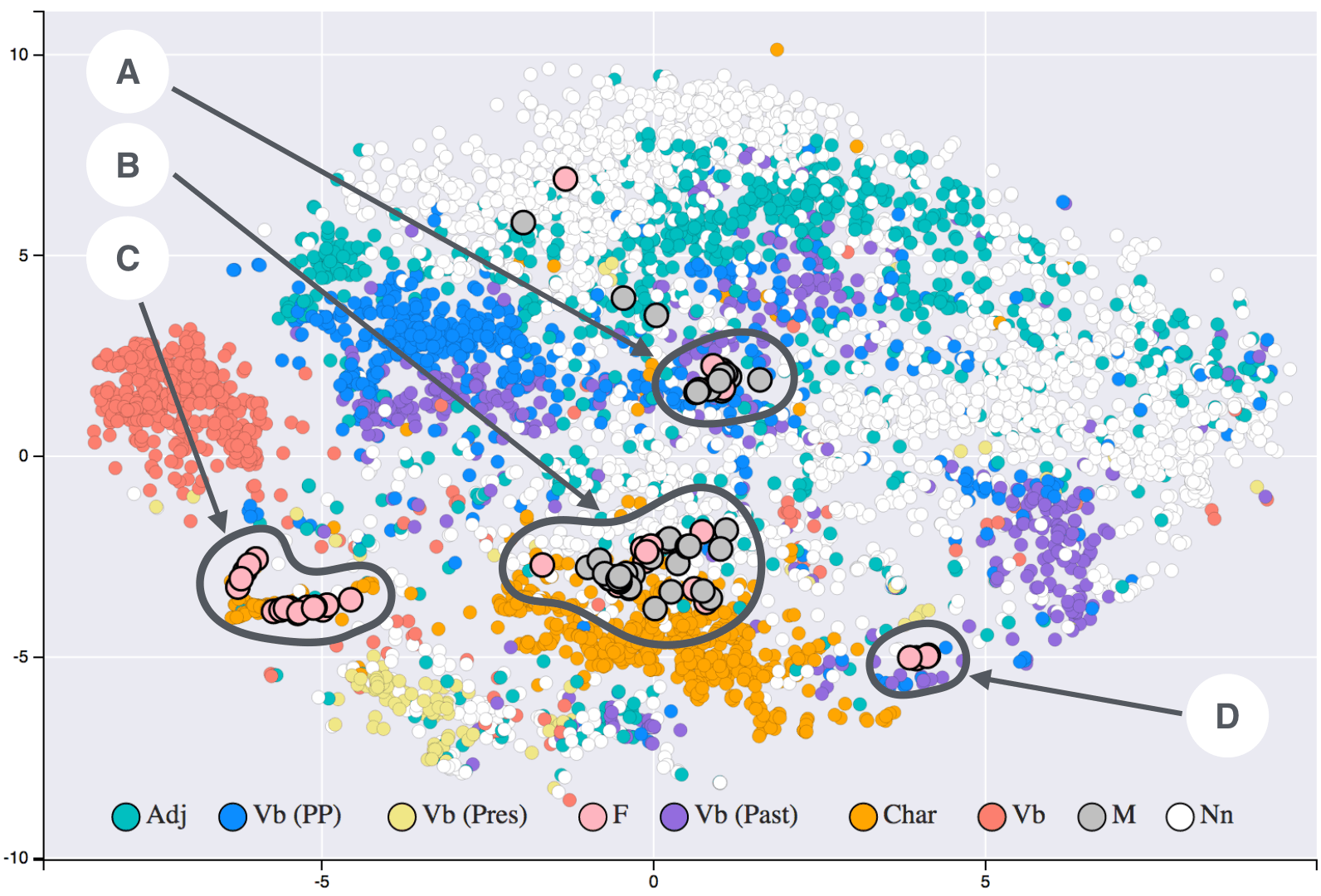
t-SNE: Map High-Dimensional Similarity to 2D
t-SNE turns high-dimensional similarity into 2D or 3D distance: similar points cluster and dissimilar points separate. Use it to visualize complex datasets on a flat map. Do not read exact distances from the plot; it preserves local probability, not geometry.
Instance Segmentation: Counting and Outlining Objects
Instance segmentation identifies and outlines each distinct object in an image, labeling 'car 1' and 'car 2' separately. It's crucial for self-driving cars tracking individual pedestrians.
UMAP: Visualizing High-Dimensional Data's Shape
UMAP projects complex data into a 2D/3D view, preserving local structure like a faithful map of a hilly landscape. Use it to visualize clusters in customer or gene data as a faster t-SNE alternative. Footgun: Cluster sizes and distances are not meaningful.
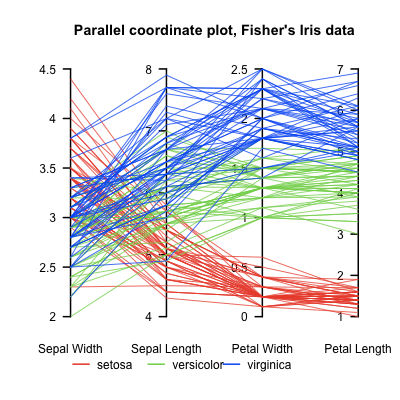
Parallel Coordinates Plot: Untangling High-Dimensional Data
A parallel coordinates plot turns high-dimensional data into a 2D image by laying axes out in parallel. Each data point becomes a line weaving across them. It helps find clusters in multivariate data, but overplotting can make it unreadable with too many…
Multi-Armed Bandits for Model Selection
Treat your candidate models like slot machines. A Multi-Armed Bandit (MAB) algorithm automatically allocates traffic to find the best one, balancing exploration of new options with exploiting the current winner.
NVIDIA Triton: A Universal AI Model Server
Triton Inference Server is like a universal remote for AI models, providing a standard API to serve models from any framework. Use it to deploy diverse models (PyTorch, ONNX) without custom serving stacks.
BLIP: Bootstrapping Better Vision-Language Models
BLIP is a pre-training framework that masters both image understanding and generation by creating its own training data. It uses a captioner and filter to generate clean image-text pairs from noisy web data.
Flamingo: Few-Shot Learning for Vision-Language Models
Flamingo is a vision-language model that learns new visual tasks from a few examples, like a child seeing a picture book before the zoo. It can tackle multiple tasks without needing massive, task-specific datasets.
We are hiring for this. Every open role lists the topics its interview covers, so you can prepare for the real thing rather than guessing.
See open roles