Intermediate concepts in AI & ML, page 14

How a SQL SELECT Query Actually Runs
A SQL SELECT query runs in a different order than you write it. It first builds the dataset with FROM/JOINs and filters it with WHERE, only then computing the final columns in SELECT. This is crucial for debugging.
HHH: The Three-Way Tug-of-War in LLMs
HHH frames LLM alignment as a three-way tug-of-war: helpful, harmless, honest. It governs RLHF reward models and safety filters, where maximizing one axis weakens the others. The footgun is optimizing helpfulness, producing sycophants or dangerous compliance.
The Big Idea: Your Presentation's Single-Sentence Core
The "Big Idea" is a single sentence distilling your presentation's core message. It must state your point of view and what's at stake, telling your audience what to know and what to do.
Python Virtual Environments
A virtual environment is an isolated Python installation with its own packages, so each project gets the exact dependency versions it needs without conflicting with other projects or the system Python.
Data Poisoning: Corrupting Models at the Source
Data poisoning is slipping lies into a textbook that a model memorizes forever. It shows up when you train on scraped web data or open fine-tuning sets. The footgun is assuming clean benchmarks mean clean weights; poison can hide until a trigger appears.
NIST AI RMF for LLM Deployment
The NIST AI RMF is a pre-flight checklist for organizational AI risk, not just code bugs. Teams use it to justify LLM deployment across legal, security, and fairness dimensions.
Vectorization: Ditch the Python Loop
Vectorization means issuing one batch command to C-backed arrays instead of looping in Python. Use it for million-row DataFrames or matrix math. The footgun is treating apply() as vectorized, or silently materializing giant temporaries that exhaust RAM.
State-Space Models Replace Quadratic Attention
State-space models replace attention with recurrent linear dynamics, scaling linearly with sequence length. They excel at long DNA, audio, and video modeling. The footgun is naive discretization, which collapses stability on long sequences.
Spark Structured Streaming: Unify Batch and Stream
Spark Structured Streaming treats a live stream as an unbounded DataFrame. It unifies batch and streaming ETL on Kafka, but the footgun is confusing event time with processing time without watermarks, which silently drops late data.
ML Model Registry: Source of Truth for Production Models
A model registry is version control for trained models, not just code. It tracks which artifact is running in production, who approved it, and how it was built. Skip it and you get untracked files in S3 with no way to reproduce a production model.

Precision vs. Recall: The Classifier's Trade-off
Precision is the quality of your positive predictions; Recall is the quantity you find. A spam filter with high precision avoids false alarms, while high recall catches most spam.
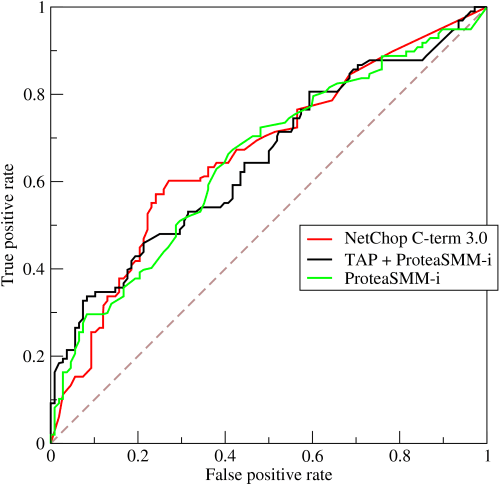
ROC Curve and AUC: Measuring Classifier Performance
An ROC curve visualizes a classifier's trade-off between catching true positives and flagging false ones across all thresholds. It's used to evaluate models like medical diagnostics or spam filters.
Model Quantization: Trading Precision for Performance
Model quantization trades numerical precision for a smaller memory footprint. It reduces model weights from high-precision types like fp32 to lower ones like int8 or int4, making large models fit on consumer hardware.
ONNX: The Universal Translator for ML Models
ONNX is a universal translator for ML models, letting you train in one framework (like PyTorch) and run in another. It's used to deploy models to diverse hardware without rewriting them.
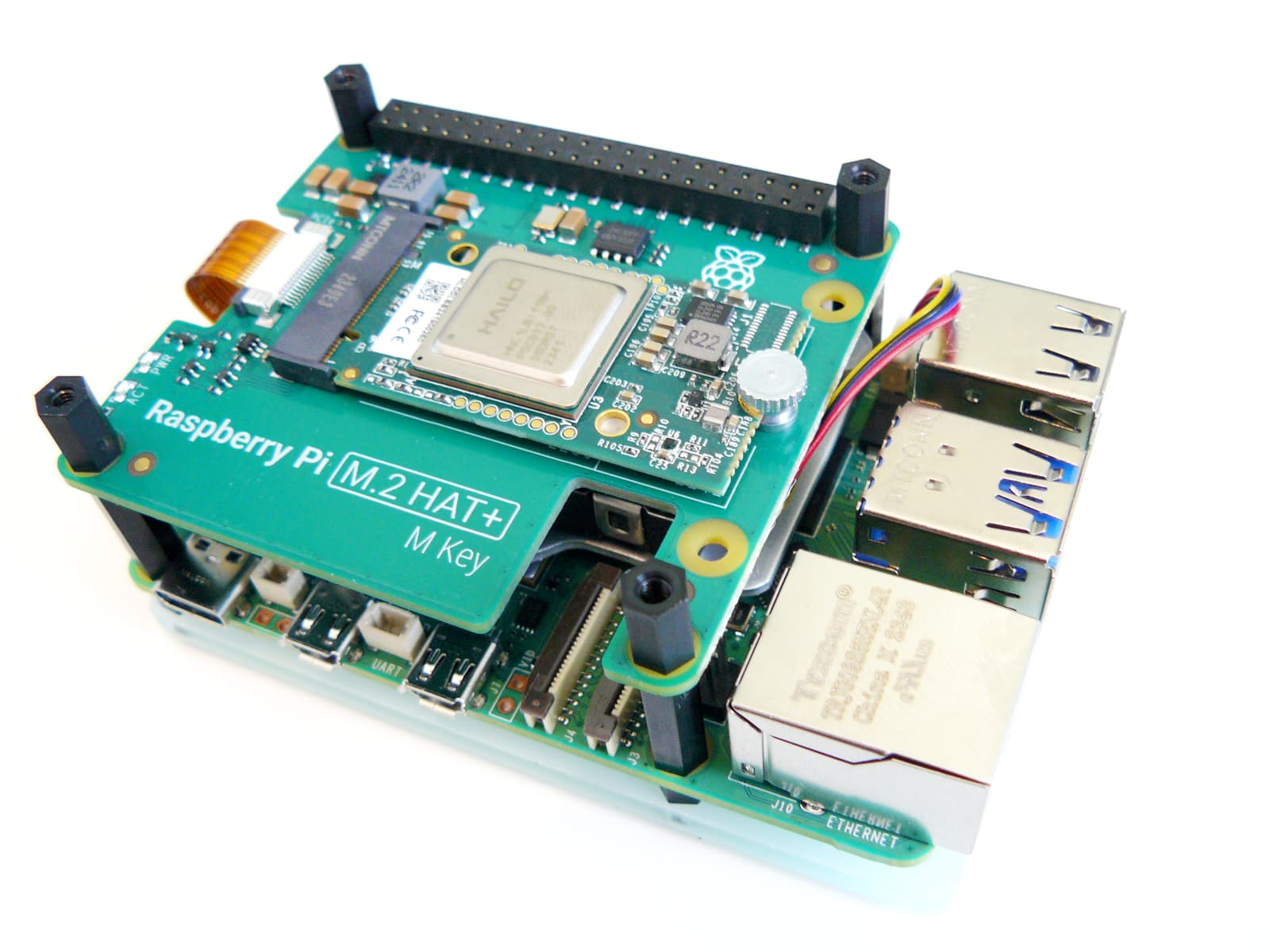
Edge AI Accelerators: Inference Without the Cloud
An Edge AI accelerator is a specialized, low-power chip that runs AI models directly on a device, skipping the cloud. It's used for real-time tasks like object detection where latency and privacy are critical.
Image Thresholding: Separating Foreground from Background
Image thresholding turns a grayscale image into black and white by setting a brightness cutoff. It's used to isolate features for analysis, like finding text on a page.

Perspective Transformation: Making 3D Look Right on a 2D Screen
Perspective transformation is like looking through a camera lens; it makes distant objects smaller to create the illusion of depth on a flat screen. It's essential for 3D games and computer vision.

BRIEF: Fast, Compact Binary Feature Descriptors
BRIEF describes image features as a compact binary string instead of a complex vector. This makes it extremely fast for real-time matching on low-power devices. The footgun: its raw form isn't rotation-invariant, trading that robustness for raw speed.
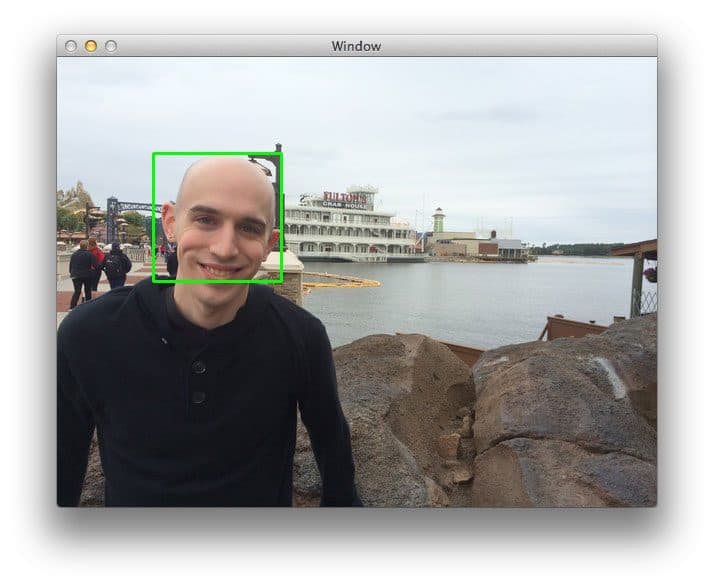
Sliding Windows: Scanning Images for Objects
A sliding window scans an image with a fixed-size box to find objects. At each location, a classifier checks the window's contents. Combined with an image pyramid, it can detect objects at various scales, localizing exactly where they are.
Anchor Boxes: Pre-defined Guesses for Object Detection
Anchor boxes are predefined 'template' boxes of various sizes and shapes. Object detection models use them as a starting point, predicting how to shift and scale these templates to fit actual objects, making detection faster.
We are hiring for this. Every open role lists the topics its interview covers, so you can prepare for the real thing rather than guessing.
See open roles