Concepts in AI & ML, page 26
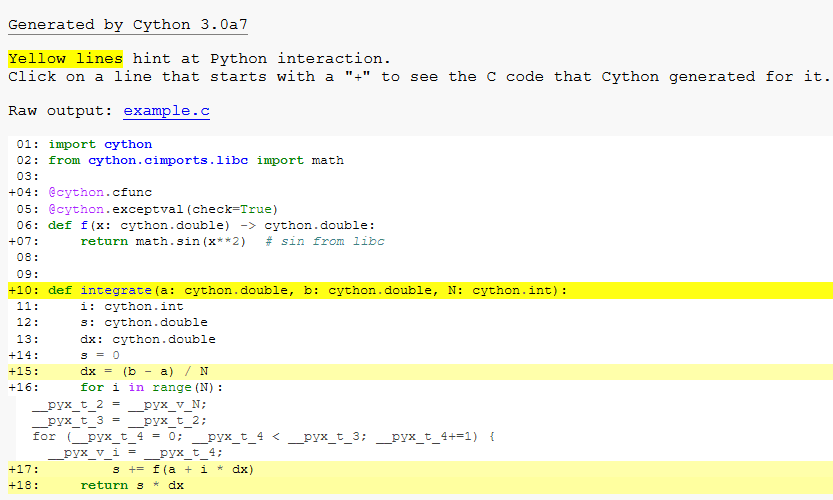
Cython: Static Typing for Faster Python
Cython speeds up Python by compiling it to C, especially when you add static types to bypass Python's dynamic overhead. Use it for CPU-bound bottlenecks like tight loops in numerical code.
MAML: Learning to Learn Quickly
MAML trains a model to be easy to fine-tune, finding an initial set of parameters that serve as a great starting point for many new tasks. It's used in few-shot learning where models must adapt with minimal data.
Inference Health Checks: Traffic Gates, Not Heartbeats
An inference server's health check is a traffic gate, not a heartbeat. Kubernetes uses it to route requests only after the model is loaded. The footgun is probing the root path, which stays green even when the model has crashed or the GPU is wedged.
Tokenization and Input Embeddings in LLMs
Tokenization splits language into tokens, and embeddings map token IDs into vectors with meaning. Every transformer does this first. The footgun is assuming one token equals one word—token counts behave unpredictably when words merge or split.
Missing Data Imputation: Filling in the Blanks
Instead of deleting rows with missing values, imputation makes an educated guess to fill the blanks, preserving your sample size. It's used in survey analysis or time-series data where dropping records would introduce bias.
High Dynamic Range (HDR): Seeing More Light
HDR captures a wider range of light and dark than standard images, preventing blown-out highlights and crushed shadows. It's used to show scenes as the human eye sees them. The footgun is thinking HDR is just 'brighter'—it's about more detail in the extremes.
Adversarial Validation: Detect Drift with a Classifier
Adversarial validation reframes drift detection as a classification problem: train a model to separate training rows from production rows. If it can tell them apart, your feature distributions have shifted.
Position-wise FFN: Each Token's Private Workshop
Think of the position-wise FFN as each token's private gym after attention: it bulks up features and stores facts, but never shares between seats. Cutting it to save parameters starves the model because attention cannot do this alone.
Log Transformation: Taming Skewed Data for Better Models
A log transform tames skewed data by compressing large values and spreading out small ones. It's used on data like income or web traffic to help it meet the assumptions of linear models. The footgun: it fails on zero or negative values.
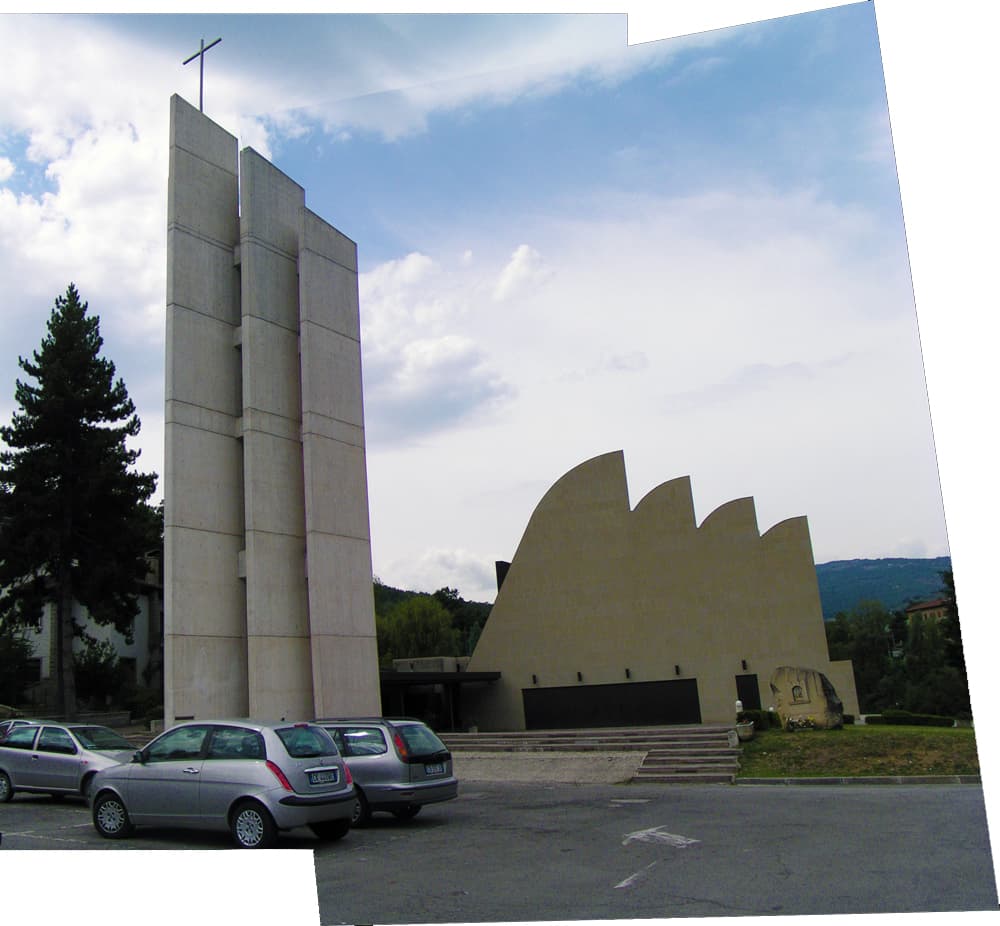
Image Stitching: Creating Panoramas from Overlapping Photos
Image stitching digitally 'tapes' together overlapping photos to create a single, wider panorama or a super-high-resolution image. It's used in phone panorama modes and for creating gigapixel photos. The main footgun is insufficient overlap between shots.
Directed Acyclic Graph (DAG) for Workflows
A DAG models a workflow as tasks (nodes) connected by dependency edges with no cycles, so a scheduler knows the valid execution order. It enables parallelism, safe retries, and idempotent reruns, and underpins orchestrators like Airflow for ML pipelines.
Transformer Encoder Block
A Transformer encoder block mixes full sequence context in parallel: every token attends to all others to refine its vector. It drives bidirectional models like BERT. The footgun is using it unmasked for generation, which leaks future information.
Idempotency: Making Data Pipelines Retry-Safe
Idempotency means an operation has the same effect whether run once or multiple times, like closing an already-closed door. It's essential for data pipelines where retries are common. The footgun is assuming retries are safe, leading to data corruption.

Focus Stacking: Combining Focal Planes for Ultimate Sharpness
Focus stacking creates an image with impossible depth of field by combining the sharpest parts of multiple photos. It's essential for macro, landscape, and microscopy where one shot can't keep everything sharp.
Parameterization: One Pipeline, Any Environment
Externalize every path, hyperparameter, and compute setting so one pipeline runs unchanged across dev, staging, and production. This enables reproducible experiments and safe CI/CD. The footgun is branch-per-environment repos that silently diverge.
Masked Multi-Head Attention in Decoders
Masked multi-head attention runs parallel detectors over past tokens only, stopping a decoder from peeking ahead. It powers autoregressive models like GPT. The footgun is using the causal mask in bidirectional encoders, which silently destroys context.
Data Pipeline Orchestration: Beyond Cron Jobs
Data pipeline orchestration is the conductor for your data workflows, ensuring tasks run in the right order with full dependency awareness. It manages complex chains, like triggering analytics only after an ETL job succeeds.

Tone Mapping: Fitting HDR Light onto LDR Screens
Tone mapping compresses a vast range of light (HDR) to fit on a standard screen (LDR). It's how HDR photos and games look good on your monitor instead of having blown-out whites or crushed blacks. The footgun is creating unnatural, "over-cooked" images.
Dynamic Fan-out/Fan-in Pipelines
Dynamic fan-out/fan-in spawns parallel tasks from runtime data, then gathers results. Use it when input counts vary, like processing a daily changing set of files. The footgun is a fan-in task that hangs waiting for branches lost to partial failure.
Masked Language Modeling: Fill-in-the-Blank Pretraining
MLM hides random tokens and trains the model to reconstruct them from context. It powers BERT-style encoders for classification and search. The catch is that it never learns left-to-right generation, so it needs extra machinery for open-ended text.
We are hiring for this. Every open role lists the topics its interview covers, so you can prepare for the real thing rather than guessing.
See open roles