Concepts in AI & ML, page 4
Data Labeling: Teaching Machines What to See
Data labeling gives raw data meaning so a machine learning model can learn. It's used to prepare datasets for tasks like object detection in images or sentiment analysis in text. The footgun: low-quality labels directly limit your model's performance.
Transformer: The Final Linear and Softmax Layers
A Transformer's final linear layer acts as a classifier, converting the decoder's output vector into raw scores (logits) for every possible word. The softmax function then turns these scores into probabilities, allowing the model to pick the most likely next…
Linear Regression: Finding the Line of Best Fit
Linear regression draws the 'line of best fit' through your data to predict outcomes. It's used to estimate continuous values, like forecasting sales based on ad spend or predicting a house's price from its size. The main footgun: correlation is not causation.

Image Scaling: Resizing Pixels Without Ruining Them
Image scaling isn't just stretching a picture; it's inventing or discarding pixel data. It's used everywhere from displaying thumbnails to making 1080p video fit a 4K screen.
ELT: Load Raw Data, Transform in Place
ELT flips the data pipeline: load raw data first, then use the data warehouse's own power to transform it. It's used in ML feature pipelines. The footgun is assuming it's ETL; with ELT, the transformation logic is coupled to the warehouse's SQL engine.

Causal Language Modeling: The Autocomplete Engine
Causal Language Modeling is like a powerful autocomplete, predicting the next word based only on what came before. It's the engine for text generation in chatbots, creative writing tools, and coding assistants. The footgun: it can't see future words.
Hypothesis Testing: A Courtroom for Your Data
Hypothesis testing is a courtroom trial for a claim. You assume 'no effect' (the null hypothesis) and see if your data is strong enough to reject it. The footgun is misreading the p-value: it only measures evidence against the null, not for your alternative.
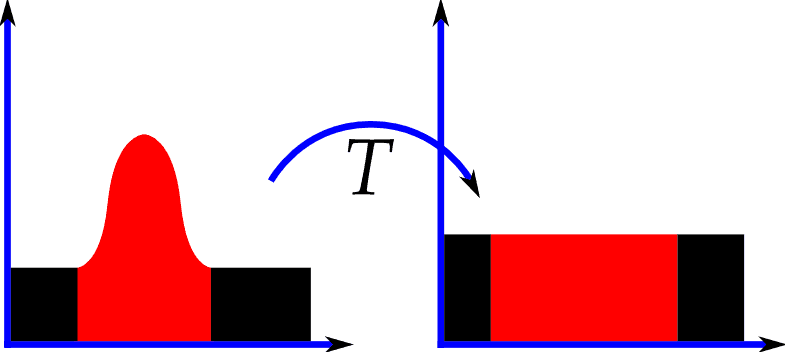
Histogram Equalization: Spreading Out Pixel Brightness
Think of histogram equalization as automatically stretching an image's contrast. It takes dark or washed-out images and spreads their pixel brightness values across the full available range, revealing hidden details. The footgun: it can amplify noise.
Data Schema Evolution: Changing Your Data's Blueprint
Schema evolution is like updating a building's blueprint while it's occupied. You must change your data's structure without breaking apps or losing data. It's key for adding features that need new DB columns.

Common Crawl: A Free Snapshot of the Entire Web
Common Crawl is a public library of the internet—a massive, free snapshot of web text and links. It's the raw material for training many LLMs and for academic research on web-scale data. The footgun: it's unfiltered, containing everything from facts to spam.

Matrices: The Language of Linear Transformations
A matrix is a grid of numbers representing a linear transformation, like stretching or rotating space. It's used in graphics to move 3D models and in machine learning to hold data. The footgun: don't just see numbers; see the transformation it encodes.

Gaussian Blur: Smoothing Images with Weighted Averages
Gaussian blur smooths an image by replacing each pixel with a weighted average of its neighbors, where closer pixels matter more. It's used to reduce noise before edge detection or for UI effects. The footgun is over-blurring, which erases important features.

Great Expectations: Unit Tests for Your Data
Great Expectations brings unit testing to your data, letting you assert what a dataset should look like. It validates data within a pipeline, preventing bad data from corrupting models or reports.
Eigenvectors and Eigenvalues: The Unchanging Directions of a Transformation
Eigenvectors are the special vectors a transformation only stretches, not rotates; the eigenvalue is the stretch factor. They're the backbone of PCA for dimensionality reduction and Google's PageRank.
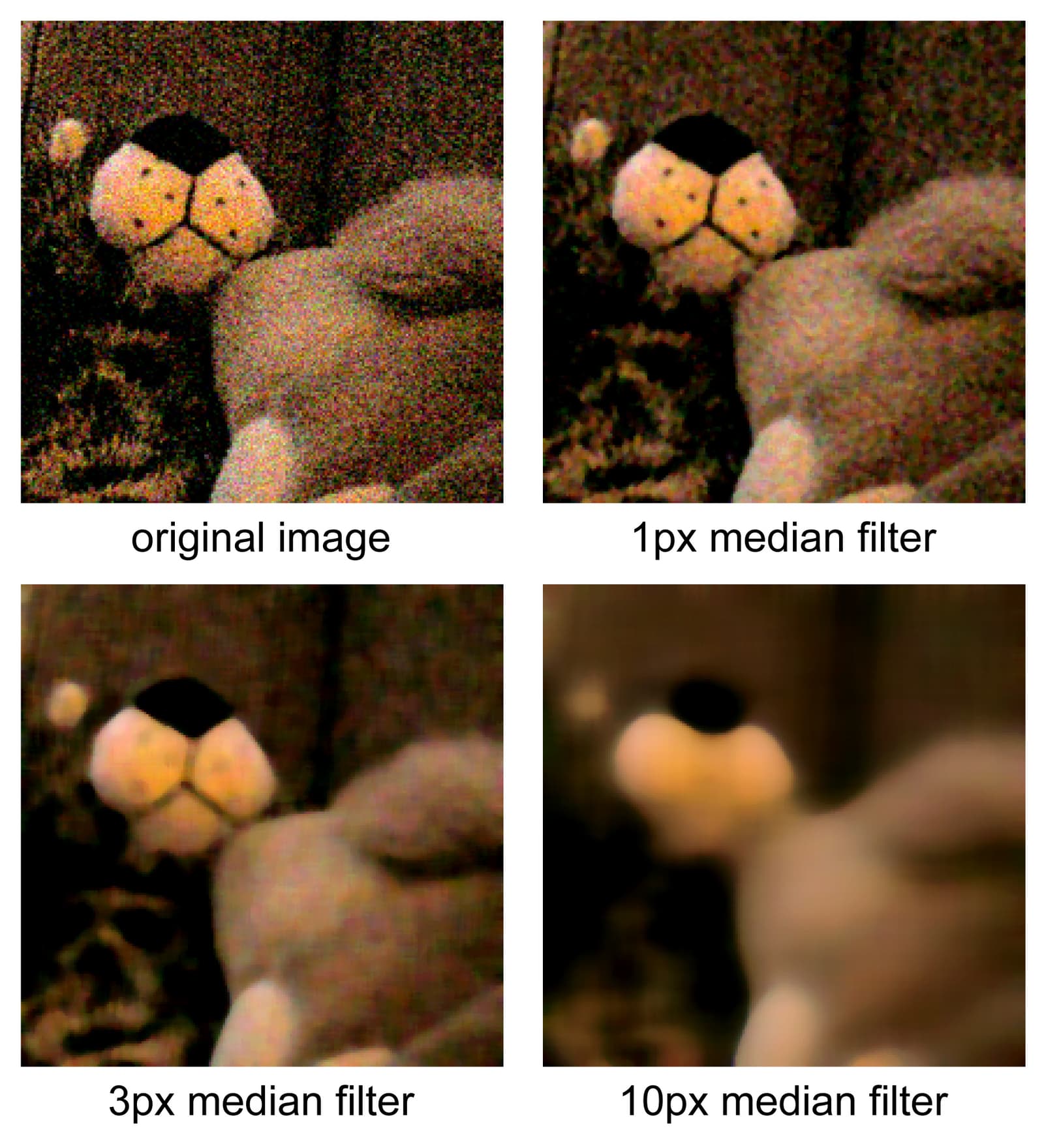
Median Filter: Smoothing Images Without Blurring Edges
A median filter cleans image noise by replacing each pixel with the median value of its neighbors, ignoring outliers. It's used to remove "salt-and-pepper" noise before object detection.

DVC: Git for Data and ML Models
DVC extends Git to version large data files and models without bloating your repo. It stores small pointer files in Git that reference large files in cloud storage.
Mixed-Precision Training: Faster Training with Less Memory
Mixed-precision training is like using rough estimates (FP16) for most math and a calculator (FP32) for critical steps. This speeds up deep learning on GPUs by cutting memory use, but naively switching can cause training to fail as small gradients vanish.
Gradient Descent: Finding the Bottom of the Hill
Think of finding the lowest point on a foggy hill by taking steps in the steepest downward direction. It's how machine learning models learn, by iteratively minimizing a cost function. The footgun is the step size: too large overshoots, too small is too slow.
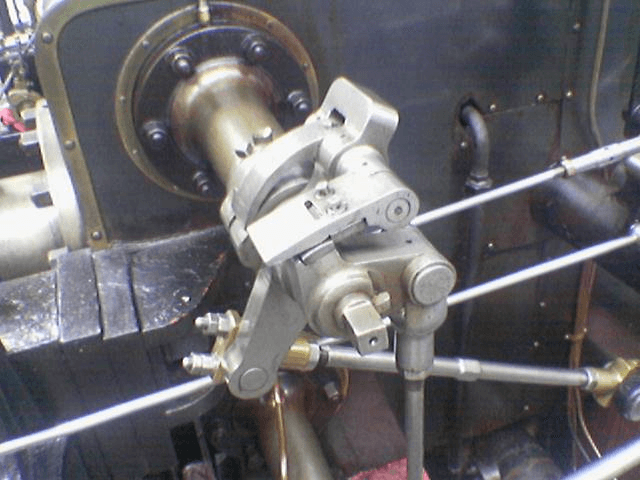
The Sobel Operator: Fast, Cheap Edge Detection
The Sobel operator finds image edges by measuring how fast pixel brightness changes horizontally and vertically. It's a fast, cheap first pass for edge detection in computer vision. The footgun is treating it as precise; it's a crude approximation.
Data Augmentation: Getting More from Your Data
Data augmentation creates 'new' training data by making small, realistic changes to your existing data. It's used to fight overfitting in ML models when a dataset is small, teaching the model to generalize rather than memorize.
We are hiring for this. Every open role lists the topics its interview covers, so you can prepare for the real thing rather than guessing.
See open roles