Intermediate everything in AI & ML, page 22
Inception Score: Judging AI Art for Quality and Variety
Inception Score judges an AI image generator on quality and variety, using a classifier to check if images are distinct and the overall set is diverse. Its main footgun is that it only measures what another AI can classify, not what a human finds appealing.
Text-to-Speech (TTS): Turning Text into Spoken Audio
Text-to-Speech (TTS) systems are digital voice actors, converting written language into artificial human speech. They are the core of any system that needs to speak text aloud.
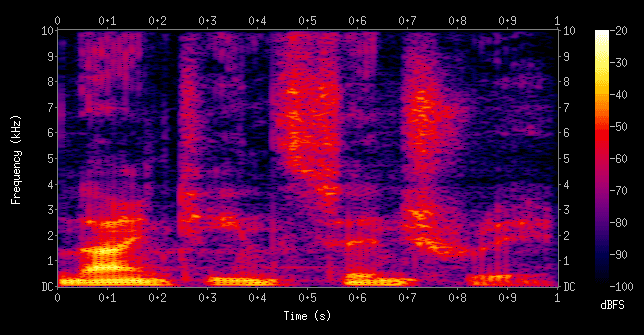
Audio Spectrograms: Turning Sound into Images for AI
A spectrogram turns sound into an image, plotting frequency against time, with color showing intensity. This lets vision-based AI models "see" audio for tasks like speech recognition or music generation. The footgun is mistaking it for a simple waveform.
Large Multimodal Models (LMMs): Beyond Text
An LMM is like a large language model that can also see and hear. It processes and connects information from multiple sources—like text, images, and audio—to perform tasks like describing a picture or answering questions about a video.
Multimodal Fusion: Combining Senses for AI
Multimodal fusion lets an AI combine data types like text, images, and audio into one understanding, much like a human brain. It's key for visual question answering or analyzing video sentiment.
Joint Embedding Space: A Rosetta Stone for AI
A joint embedding space acts like a Rosetta Stone, mapping different data types—like images and text—to a shared coordinate system where similar concepts are close together. This powers text-to-image models and cross-modal search.
Fréchet Inception Distance (FID): Grading AI Art
FID grades AI-generated images by comparing their statistical "vibe" to real ones. It uses a pre-trained network (InceptionV3) to see if a batch of generated images has similar feature distributions to a real dataset. A lower score is better.
Mode Collapse: When Your AI Gets Stuck in a Rut
Mode collapse is when a generative AI finds a “cheat” and produces the same few outputs over and over. This is a classic failure in GANs where the generator stops learning the full data distribution.

Text-to-Image Synthesis: From Prompt to Picture
Text-to-image models translate words into pixels by learning statistical links between text and images. They power creative tools like DALL-E but don't truly understand prompts, leading to errors in logic like counting or spatial arrangement.
Task Decomposition: Teaching LLMs to Plan
Task decomposition for an LLM agent is like writing a recipe: break a big goal into a checklist of small, executable steps. It's vital for complex requests like planning a trip, but a bad initial plan can cause cascading failures that doom the entire process.
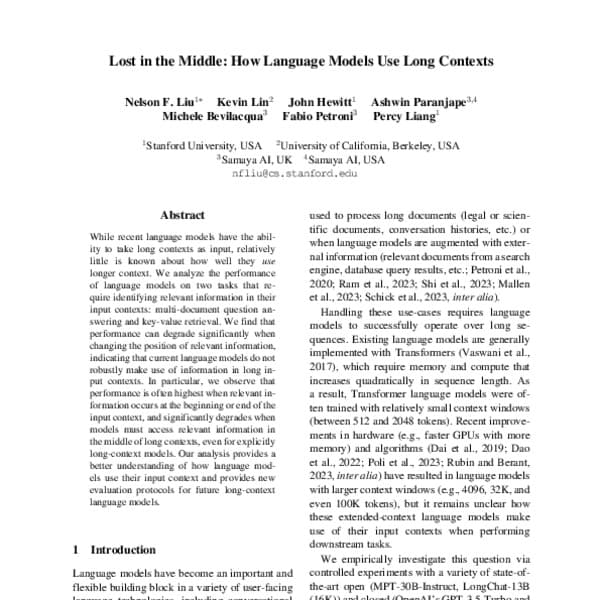
LLMs Get 'Lost in the Middle' of Long Contexts
LLMs struggle to find information buried in the middle of long prompts. Performance is highest when key facts are at the beginning or end of the context. This impacts multi-document QA and RAG.
Context Stuffing: Giving LLMs Short-Term Memory
Context stuffing adds external documents to an LLM's prompt, giving it temporary, task-specific knowledge. Use it for one-off questions on specific docs, but beware: it fails when documents exceed the model's context window limit, causing truncated data.

Hybrid Search: Combining Keyword and Vector Search
Hybrid search combines keyword precision with vector search's conceptual understanding in one query. It excels at retrieving relevant documents for RAG by finding both exact matches (like names) and similar ideas.
Dense Passage Retrieval (DPR): Semantic Search for QA
DPR finds answers by meaning, not just keywords. It converts questions and documents into vectors and finds the closest matches, forming the core of Retrieval-Augmented Generation (RAG).
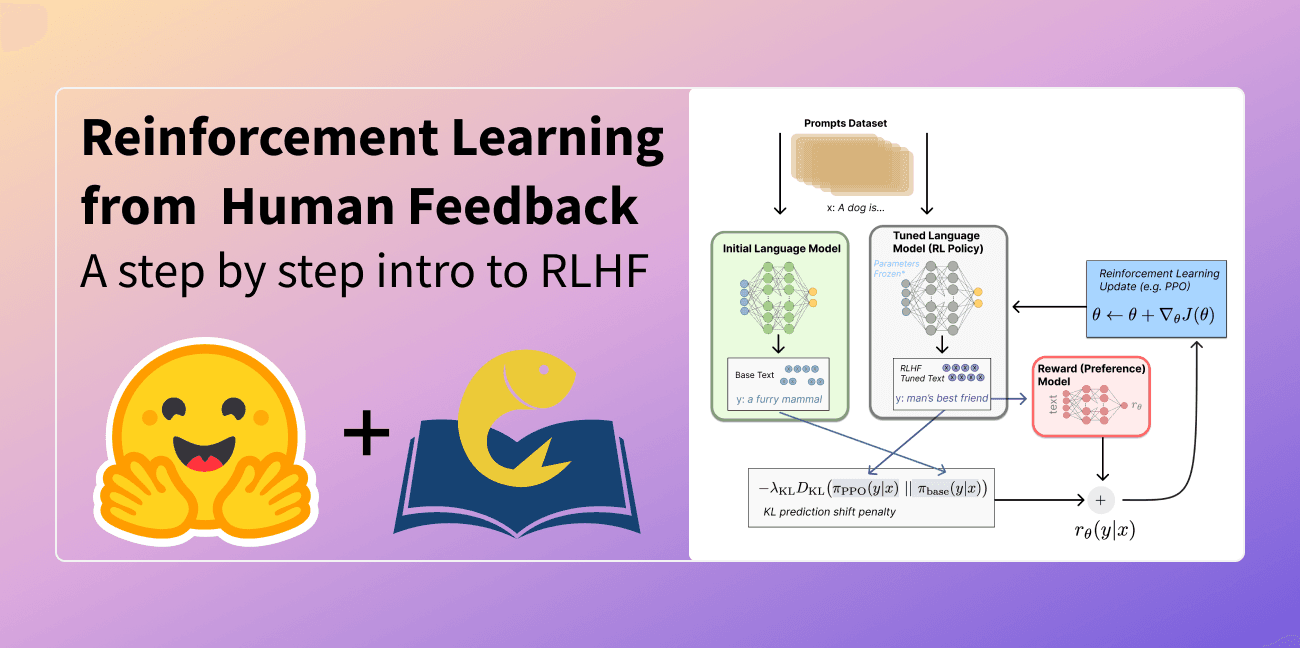
Reward Modeling: Teaching an LLM What 'Good' Means
A reward model is a judge that scores an LLM's outputs based on human preferences. It learns to assign a numerical 'goodness' score to text, turning subjective quality into an optimizable signal for training models like ChatGPT.

Instruction Fine-Tuning: Teaching LLMs to Follow Orders
Instruction fine-tuning teaches a base LLM to follow commands, not just predict the next word. It turns a raw text-completion engine into a helpful assistant, enabling it to answer questions or summarize text. The footgun: it learns style, not facts.

PEFT: Fine-Tune Large Models on a Budget
Parameter-Efficient Fine-Tuning (PEFT) adapts huge models without retraining everything. It's like adding a task-specific cheat sheet to a genius brain. Use it to specialize LLMs on consumer GPUs.
Chain-of-Thought Prompting: Making LLMs 'Show Their Work'
Chain-of-Thought (CoT) prompting gets better answers from LLMs by asking them to 'show their work.' It's best for complex reasoning like math problems or logic puzzles where breaking the problem down helps.

In-Context Learning: Teaching a GPT Without Retraining
In-context learning is like giving an LLM a cheat sheet in the prompt. You provide examples of a task, and the model follows the pattern for your new query without any permanent changes. Use it for one-off tasks like reformatting text or classifying sentiment.
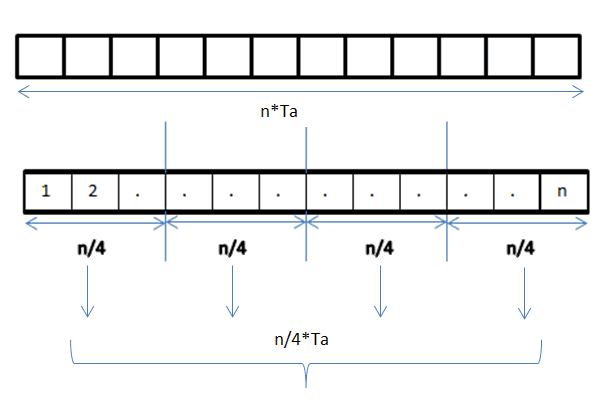
Data Parallelism: One Task, Many Data Chunks
Data parallelism splits a huge dataset across multiple processors, each running the same task on its own chunk. It's how large models are trained on massive datasets, with each GPU handling a different batch of data.
We are hiring for this. Every open role lists the topics its interview covers, so you can prepare for the real thing rather than guessing.
See open roles