More in AI & ML — page 48
Uplift Modeling: Who to Target, Not Just Who Will Convert
Uplift modeling finds who to target by predicting the *change* in behavior from an action, not just the final outcome. It's used in marketing to decide who gets a discount, optimizing spend. The footgun is confusing it with a simple conversion model.
Causal Inference: Proving Cause, Not Just Correlation
Causal inference goes beyond correlation to ask "did X *cause* Y?". It's used to prove a new feature drove engagement or a drug improved outcomes. The main footgun is mistaking association for causation, ignoring confounding variables.
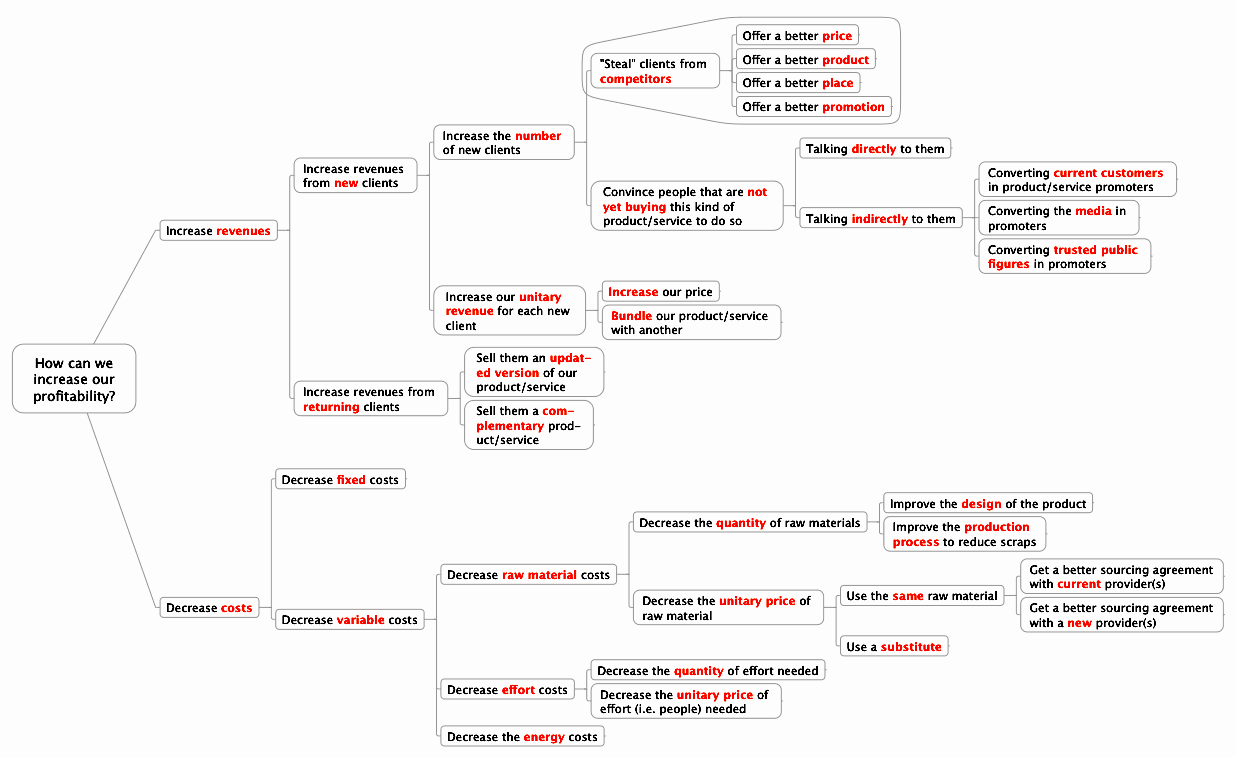
Issue Trees: Deconstruct Problems, Not Symptoms
An issue tree maps a problem's potential root causes. It's used in consulting and debugging to break down vague questions like 'Why is revenue down?' into testable hypotheses.

Leading vs. Lagging Indicators: Predict the Future or Report the Past?
Leading indicators are predictive inputs (like sales calls made) that forecast future results. Lagging indicators are outputs (like quarterly revenue) that report what already happened.

North Star Metric: Aligning Your Team With One Metric
A North Star Metric (NSM) is the single number that best captures the core value your product delivers, acting as a compass for your team. It aligns everyone on a shared goal, like Spotify using 'Time Spent Listening.' The biggest footgun is not having one.
Hypothesis-Driven Analysis: Ask First, Analyze Second
Start with a specific question, then use data to find a clear yes/no answer. This approach is perfect for A/B testing or diagnosing metric changes, but watch out for confirmation bias—seeking data that only proves your initial belief.
The MECE Principle: No Overlaps, No Gaps
The MECE principle structures analysis with 'no overlaps, no gaps.' Use it to break down problems, segment users, or plan projects. The footgun is achieving one rule (exclusive categories) but not the other (covering all cases), leading to flawed conclusions.
5 Whys: Find the Root Cause, Not the Symptom
The 5 Whys technique finds a problem's root cause by repeatedly asking "Why?" to trace a cause-and-effect chain. Use it in post-mortems to understand system failures. The footgun is blaming people instead of asking why the process allowed the error.
Stakeholder Analysis: Mapping Influence and Interest
Stakeholder analysis maps your project's human landscape, plotting who is affected (interest) and who can affect its outcome (influence). It's used to anticipate needs and align on goals.

Non-Maximum Suppression: One Box Per Object
Non-Maximum Suppression (NMS) ensures each detected object gets just one bounding box. It sorts all proposed boxes by confidence, keeps the best one, and discards others that overlap it too much.
Image Convolution: A Sliding Feature Detector
An image convolution is a sliding filter that scans an image to detect features like edges or textures. It's the core building block of modern computer vision, used in image classification and object detection.

Neural Network Pruning: Making Models Smaller and Faster
Neural network pruning makes models smaller and faster by removing unimportant connections, like trimming a bonsai tree. It's essential for deploying large models on devices with limited memory, like phones.
Meta-Learning: Learning How to Learn
Meta-learning is 'learning to learn.' Instead of training on data, it learns from the performance of other models, using metadata from experiments to improve the learning process itself. This helps algorithms become more flexible and solve new problems faster.

3D Object Detection: Seeing in Depth, Not Just Pixels
3D object detection adds depth to a 2D flat view, understanding an object's true size, distance, and orientation. It's vital for autonomous cars and robotics that need spatial awareness.
Semantic Scene Classification: Understanding Context, Not Just Objects
Scene classification tells you the context of an image ("this is a forest"), not just the objects in it ("there's a tree"). It's used by self-driving cars to identify a highway vs. a residential street and by apps to organize photos.
Autoregressive Models: Generating Images One 'Word' at a Time
Autoregressive models generate images sequentially, like writing a sentence word by word. Each new pixel or patch depends on what came before. This creates high-fidelity images but is much slower than one-shot models, a key trade-off in generative AI.
Self-Attention: How Models Weigh Word Importance
Self-attention lets a model weigh the importance of all words in a sequence simultaneously, asking "which other words are most relevant?" It's the core of Transformers, enabling parallel processing for tasks like translation, unlike sequential RNNs.
U-Net: Encoder-Decoder for Image Segmentation
U-Net segments images by first compressing them to capture context, then expanding to localize features precisely. It excels in biomedical imaging where annotated data is scarce.
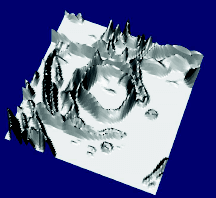
Watershed Algorithm: Segmenting by Topography
The watershed algorithm treats an image as a landscape where pixel brightness is height. It finds the 'ridges' separating distinct 'valleys,' effectively segmenting touching objects. Its main footgun is extreme sensitivity to noise, causing over-segmentation.
Anchor Boxes: Pre-defined Guesses for Object Detection
Anchor boxes are predefined 'template' boxes of various sizes and shapes. Object detection models use them as a starting point, predicting how to shift and scale these templates to fit actual objects, making detection faster.