Advanced everything in Android & Kotlin
Android Becomes an Intelligence System: I/O 2026 Recap
Google’s I/O 2026 Android recap introduced AppFunctions experiments, Gemini Nano 4 previews and tools for hybrid AI. Check each feature’s availability and device requirements before using it in production.
Kotlin 2.4.0 Ships Stable Context Parameters and UUID API
Kotlin 2.4.0 ships stable context parameters, a built-in UUID API, and Java 26 support. Context parameters replace manual dependency threading through call chains.
Android CLI 1.0 Stable Unlocks Headless CI
Android CLI 1.0 went stable at I/O, exposing project scaffolding and device management commands that run without Android Studio. The release finally lets teams script full build pipelines on headless agents and remote dev boxes.
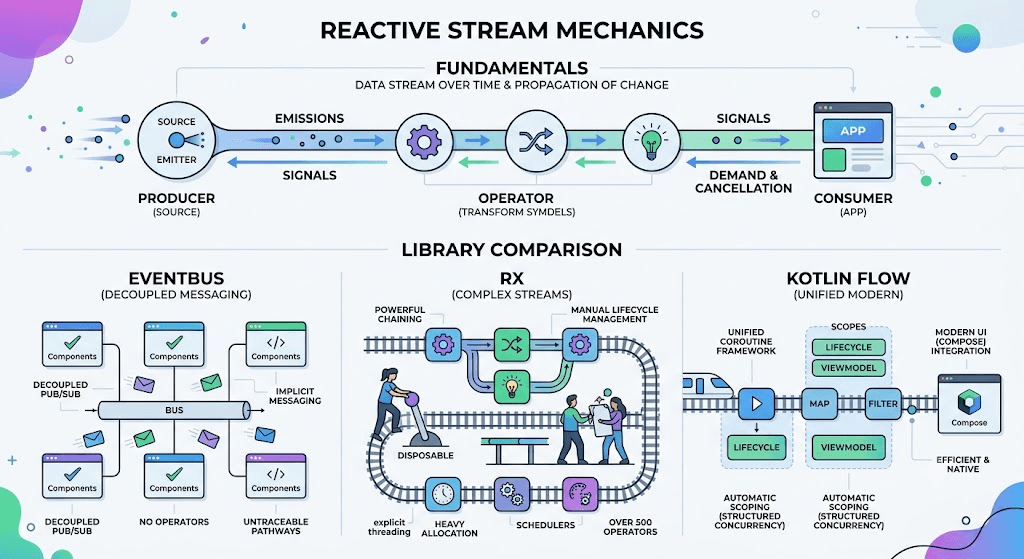
Unify Android EventBus and RxJava with Kotlin Flow
Mixing EventBus, RxJava, and Kotlin Flow in Android codebases creates memory leaks and GC pressure from stream wrapping. Operator translation and lifecycle mismatches drive engineering debt.

I/O 2026 Standardizes AI Server-Driven UI for Android
I/O 2026 made A2UI, Remote Compose, and AppFunctions first-class Android primitives, validating AI server-driven UIs. KMP plus Compose Multiplatform renders cross-platform from one codebase.

isCoreLibraryDesugaringEnabled Nears End of Life
isCoreLibraryDesugaringEnabled and desugar_jdk_libs 2.1.3 are being phased out as Google modularizes Android system updates, ending the j$ namespace workaround for java.time on legacy devices.
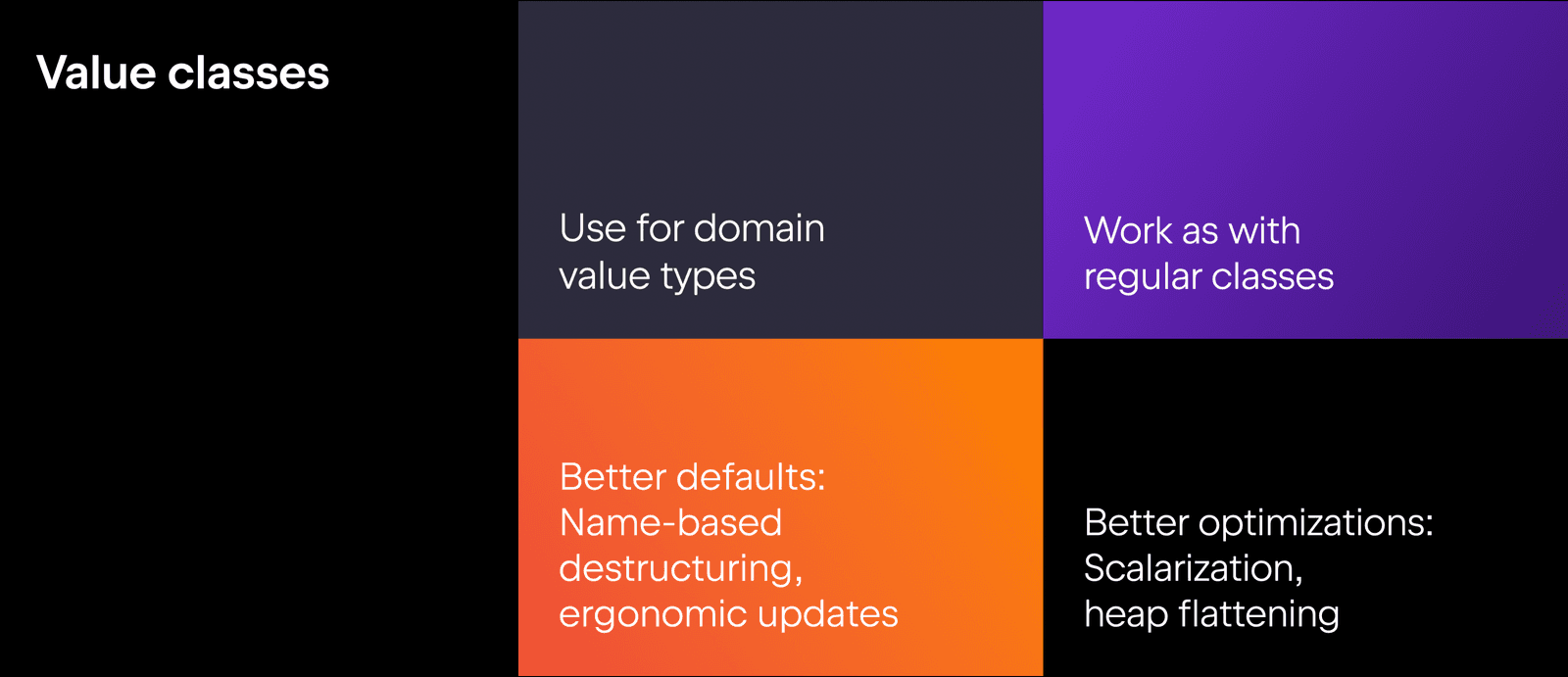
Kotlin 2.4.0 Preview, Unified Toolchain, and LSP Alpha Land
Kotlin 2.4.0 stabilizes context parameters and explicit backing fields. A new Kotlin Toolchain unifies build, test, and agent workflows under one command, while the Language Server hits Alpha.
Koog 1.0 Stabilizes Kotlin AI Agent Framework
Koog 1.0 locks APIs for one year in JetBrains' Kotlin AI agent framework, adding local Android LiteRT inference and OpenTelemetry. JVM teams can build production agents without breaking changes. Adopt stable core first, then add beta features as needed.
Kotlin 2.4.0 ships Swift package support and Java 26
Kotlin 2.4.0 adds Swift package dependencies for Native, Java 26 for JVM, and WebAssembly Component Model. Multiplatform teams can consume Swift libraries directly and target newer Java. Upgrade via IntelliJ IDEA, Android Studio, or Gradle.

How does App Bundle handle ABI splits versus multi-APK?
Tests dynamic delivery of native libs: AAB auto-generates per-ABI config splits, but multi-APK requires manual APK builds per ABI. Misconfiguration ships unused .so bloat or crashes on unsupported devices. Red flag: calling AAB a simple multi-APK zip.
Write the ProGuard keep rule to fix reflection after R8
This tests R8 dead-code removal and exact ProGuard syntax for reflective constructors. A strong answer gives -keep class com.example.T { <init>(...); } because R8 cannot trace dynamic class names. Broad -keep rules or omitting constructor are red flags.
Describe Hilt's component hierarchy and scope injection rules
Tests whether you understand Hilt's generated component tree and scoping rules. A strong answer lists the hierarchy, explains parent-outlives-child semantics, and states that ActivityScoped-into-Singleton injection fails at compile time.
Explain the difference between Gradle build types and product flavors.
If you know build types are how an app is built—debug versus release—while flavors are what is shipped, like free versus paid. Variants are the Cartesian product.
Explain R8's shrinking, obfuscation, and optimization phases and how to influence optimization
Separate dead code removal, renaming, and bytecode transformation; cite ProGuard keep rules and selective passes.

How would you use Perfetto and Trace.beginSection to find a non-obvious bottleneck?
Tests correlation beyond CPU sampling. Covers coarse Trace.beginSection to limit 1-10us overhead, recording app ATrace with CPU/scheduling tracks, and correlating slices against scheduler latency. Red flag: omitting overhead or ignoring Perfetto SQL queries.
Explain generational GC in ART and why onDraw must avoid allocations
Covers young-gen nursery, mark-sweep fallback, and why a 5-10ms GC pause misses 16ms frame deadline.

Use Android Keystore to secure a database encryption key
Tests Android Keystore key generation and hardware trust boundaries. Strong answers: KeyGenParameterSpec with AES/GCM, TEE vs StrongBox isolation, setIsStrongBoxBacked on API 28+ with fallback, wrapping the database key. Red flag: claims Keystore encrypts DBs.
What is Android Test Orchestrator and how does it isolate tests?
Tests process-level isolation in Android UI suites. A strong answer says it runs each test in its own Instrumentation process, stopping crashes or leaked state from cascading, and notes slower startup.
What is the role of TestDispatcher and runTest in coroutine testing?
This tests coroutine test infrastructure and virtual time control. A great answer says runTest installs a TestDispatcher and TestScope, skips delays automatically, and exposes advanceTimeBy to test timeouts instantly.
How would you implement and register a custom IdlingResource?
Implement the three IdlingResource methods with an atomic counter; register via IdlingRegistry in setup and unregister in teardown.
We are hiring for this. Every open role lists the topics its interview covers, so you can prepare for the real thing rather than guessing.
See open roles