Easy everything in Android & Kotlin
Android Becomes an Intelligence System: I/O 2026 Recap
Google’s I/O 2026 Android recap introduced AppFunctions experiments, Gemini Nano 4 previews and tools for hybrid AI. Check each feature’s availability and device requirements before using it in production.
Kotlin 2.4.0 Ships Stable Context Parameters and UUID API
Kotlin 2.4.0 ships stable context parameters, a built-in UUID API, and Java 26 support. Context parameters replace manual dependency threading through call chains.
Android CLI 1.0 Stable Unlocks Headless CI
Android CLI 1.0 went stable at I/O, exposing project scaffolding and device management commands that run without Android Studio. The release finally lets teams script full build pipelines on headless agents and remote dev boxes.
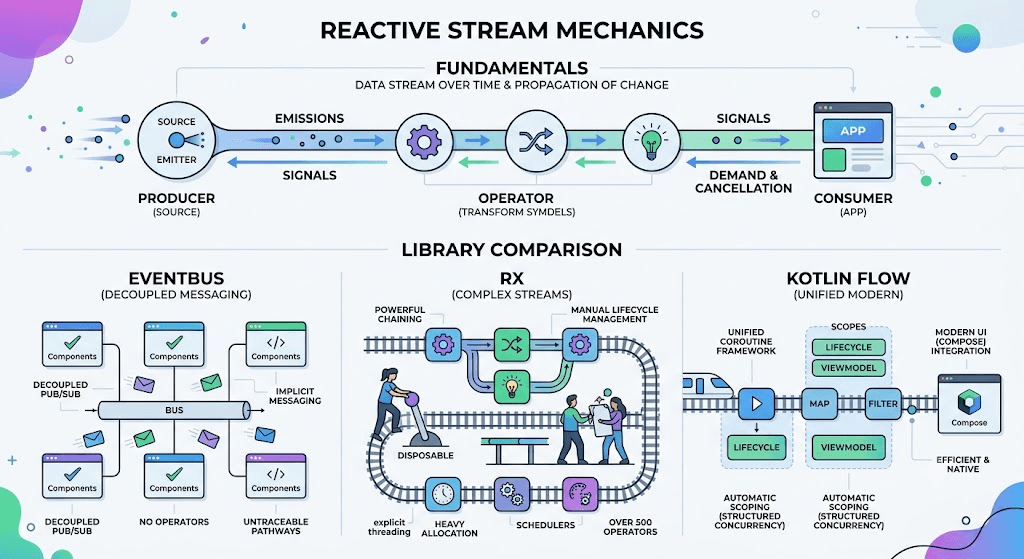
Unify Android EventBus and RxJava with Kotlin Flow
Mixing EventBus, RxJava, and Kotlin Flow in Android codebases creates memory leaks and GC pressure from stream wrapping. Operator translation and lifecycle mismatches drive engineering debt.

I/O 2026 Standardizes AI Server-Driven UI for Android
I/O 2026 made A2UI, Remote Compose, and AppFunctions first-class Android primitives, validating AI server-driven UIs. KMP plus Compose Multiplatform renders cross-platform from one codebase.

isCoreLibraryDesugaringEnabled Nears End of Life
isCoreLibraryDesugaringEnabled and desugar_jdk_libs 2.1.3 are being phased out as Google modularizes Android system updates, ending the j$ namespace workaround for java.time on legacy devices.
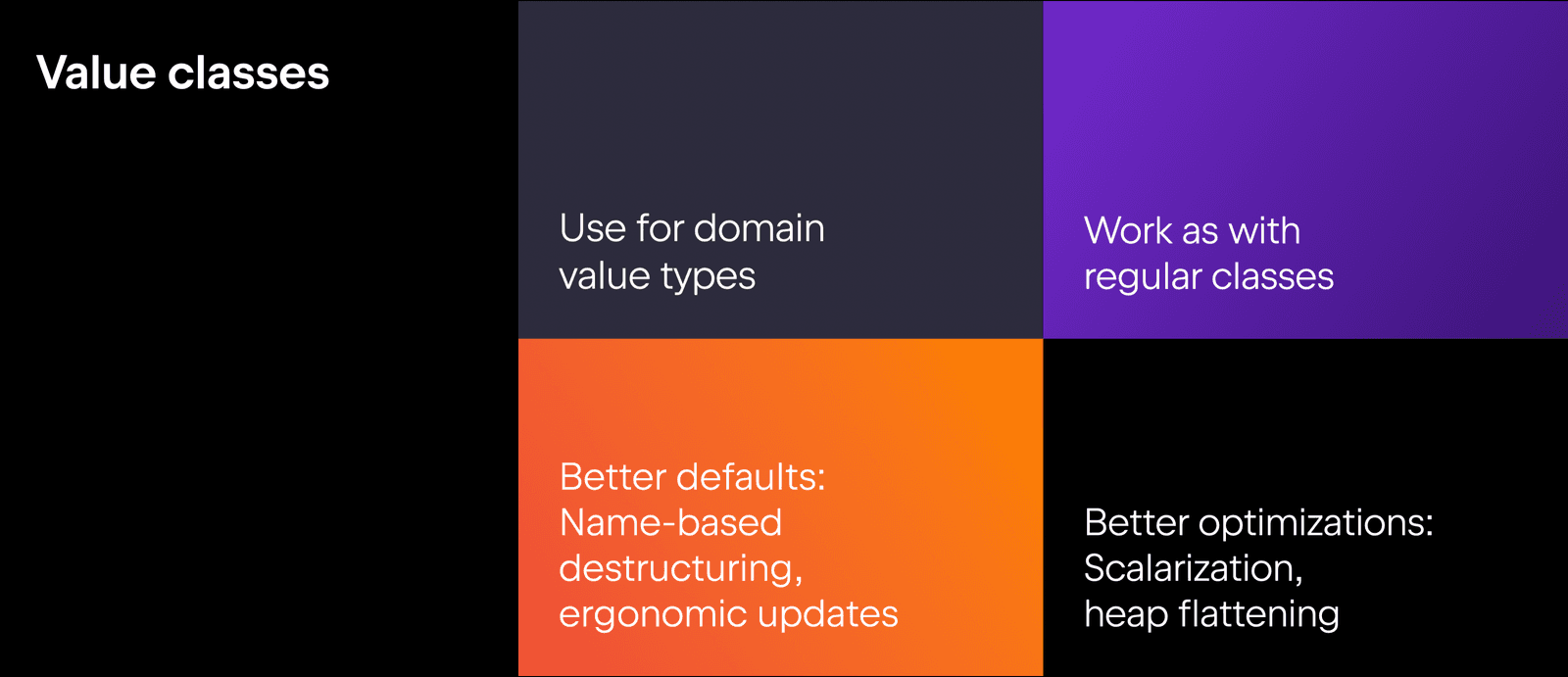
Kotlin 2.4.0 Preview, Unified Toolchain, and LSP Alpha Land
Kotlin 2.4.0 stabilizes context parameters and explicit backing fields. A new Kotlin Toolchain unifies build, test, and agent workflows under one command, while the Language Server hits Alpha.
Koog 1.0 Stabilizes Kotlin AI Agent Framework
Koog 1.0 locks APIs for one year in JetBrains' Kotlin AI agent framework, adding local Android LiteRT inference and OpenTelemetry. JVM teams can build production agents without breaking changes. Adopt stable core first, then add beta features as needed.
Kotlin 2.4.0 ships Swift package support and Java 26
Kotlin 2.4.0 adds Swift package dependencies for Native, Java 26 for JVM, and WebAssembly Component Model. Multiplatform teams can consume Swift libraries directly and target newer Java. Upgrade via IntelliJ IDEA, Android Studio, or Gradle.
How would you use Retrofit to GET /posts/{id} and key components?
This checks your understanding of Retrofit's three-layer setup. You need a data class for JSON parsing, an interface with @GET and @Path, and a Retrofit.Builder with baseUrl and a converter.

What is the difference between a started service and a bound service?
Started services run until stopped via startService with no caller interface; bound services expose an IBinder and destroy when all clients unbind.
Explain the difference between Kotlin's let, run, with, apply, and also
Group by this (apply, run, with) vs it (let, also), then by return type.
What do the safe call and Elvis operators do in Kotlin?
?. yields null if receiver is null; ?: provides the right operand when left is null; chain as val len = str?.length ?: 0.
What is an Android App Bundle and its advantages over APK?
Tests knowledge of modern Play distribution. AAB is the publishing format with all code and resources; Play generates device-specific APKs for smaller downloads and supports dynamic features. Red flag: calling it a compressed APK or ignoring dynamic delivery.
Purpose of Android app signing and keystore contents
Signing proves authorship and integrity, enables same-key updates, and binds app identity; a keystore holds private keys and certificates.
Why avoid plain SharedPreferences for secrets and what to use?
Tests data-at-rest security awareness. A strong answer notes plain SharedPreferences writes unencrypted XML that rooted users or backups expose, then names EncryptedSharedPreferences with Android Keystore.
What is overdraw in Android UI and how do you reduce it?
This tests GPU fill awareness. A strong answer defines overdraw as redrawing pixels repeatedly, names Debug GPU Overdraw's color overlay, and offers fixes: remove unnecessary backgrounds and flatten hierarchies. Red flag: confusing this with CPU layout issues.
What is an Android memory leak? Give a Context example and fix.
Tests understanding of Activity Context retention preventing GC. A strong answer defines a leak as unreachable objects, gives a static singleton example, names LeakCanary, and fixes it with Application Context. Red flag: blaming GC or suggesting System.gc().
Why mock a Repository dependency in a ViewModel unit test?
This tests your grasp of test isolation. A great answer says mocking eliminates real database or network dependencies so you can verify ViewModel state changes in isolation. A red flag is insisting on using the real Repository inside the unit test.
What is the difference between test and androidTest source sets?
Say test runs on the JVM for unit tests mocking Android classes, while androidTest runs on device for instrumented tests.
We are hiring for this. Every open role lists the topics its interview covers, so you can prepare for the real thing rather than guessing.
See open roles