More in Backend Dev — page 48
Rust's Philosophy: Documentation and Community First
Rust's philosophy is deeply tied to its learning resources and community, ensuring developers are well-supported. This is evident in its official book, which is bundled with the language installation itself.
Go's Design Philosophy: Engineering Over Novelty
Go's design philosophy is engineering over novelty, built to solve Google's problems with slow builds and complexity in massive codebases. It excels at large, networked systems where maintainability and fast compilation are critical.
Caching: Write-Through for Safety, Write-Back for Speed
Write-through caching writes to the database immediately for data safety, while write-back delays writes for speed. Use write-through for critical data and write-back for high-volume updates.

Phantom Reads: When New Rows Appear Mid-Transaction
A phantom read occurs when a transaction repeats a query and finds new rows that match its search criteria, inserted by another committed transaction. It's common in reporting jobs that need a stable set of data.
Watermarks: Defining 'Done' in Event Streams
A watermark tells a stream processor when a time window is 'complete' for unordered events. It's a timestamped signal declaring 'no more data is expected before this point,' allowing aggregations to be finalized. The key footgun is balancing lateness vs.

Multi-Region Databases: Resilience, Latency, and Compliance
A multi-region database is a strategy for resilience, low latency, and data compliance. It's used to survive region outages, keep data in-country, and serve reads close to users. The footgun is managing low-level replica placement directly, which is complex.
Synchronous vs. Asynchronous Replication: A Trade-off
Replication is a trade-off: synchronous waits for all copies to confirm a write, guaranteeing consistency but risking availability. Asynchronous lets the primary move on immediately, prioritizing speed.
Vectorized Query Execution: Processing Batches, Not Rows
Vectorized execution processes data in batches of thousands of rows, not one at a time. This lets analytical databases like ClickHouse and Snowflake scan billions of rows in seconds by keeping data in CPU cache and using SIMD instructions.

Hash-Based Aggregation: Grouping Data Without Sorting
Hash-based aggregation uses a hash table to group data for functions like COUNT or SUM, avoiding a costly sort. It's used in database query engines for GROUP BY operations, especially when distinct groups fit in memory.

Multi-Leader Replication: Enabling Writes Across Datacenters
Multi-leader replication allows multiple nodes to accept writes, avoiding a single-leader bottleneck. It's used in multi-datacenter systems for low-latency local writes and in offline apps. The main footgun is resolving write conflicts from concurrent updates.
Single-Leader Replication: One Node to Rule Them All
Think of a single source of truth. One 'leader' server takes all writes, while 'follower' servers handle read traffic. This is the default for many databases like PostgreSQL and MongoDB to scale reads.

Buffer Manager: The Database's Memory Gatekeeper
The buffer manager acts as a database's private RAM cache, deciding which data pages to keep in memory versus fetching from slow disk. It's central to query performance, as it tries to serve all data requests from this fast cache.
Optimizer Hints: Backseat Driving Your Database
An optimizer hint lets you override the database's query plan, like telling a GPS which street to take. Use it as a last resort when you know more than the optimizer, but beware: hints can become performance traps when data or schemas change.
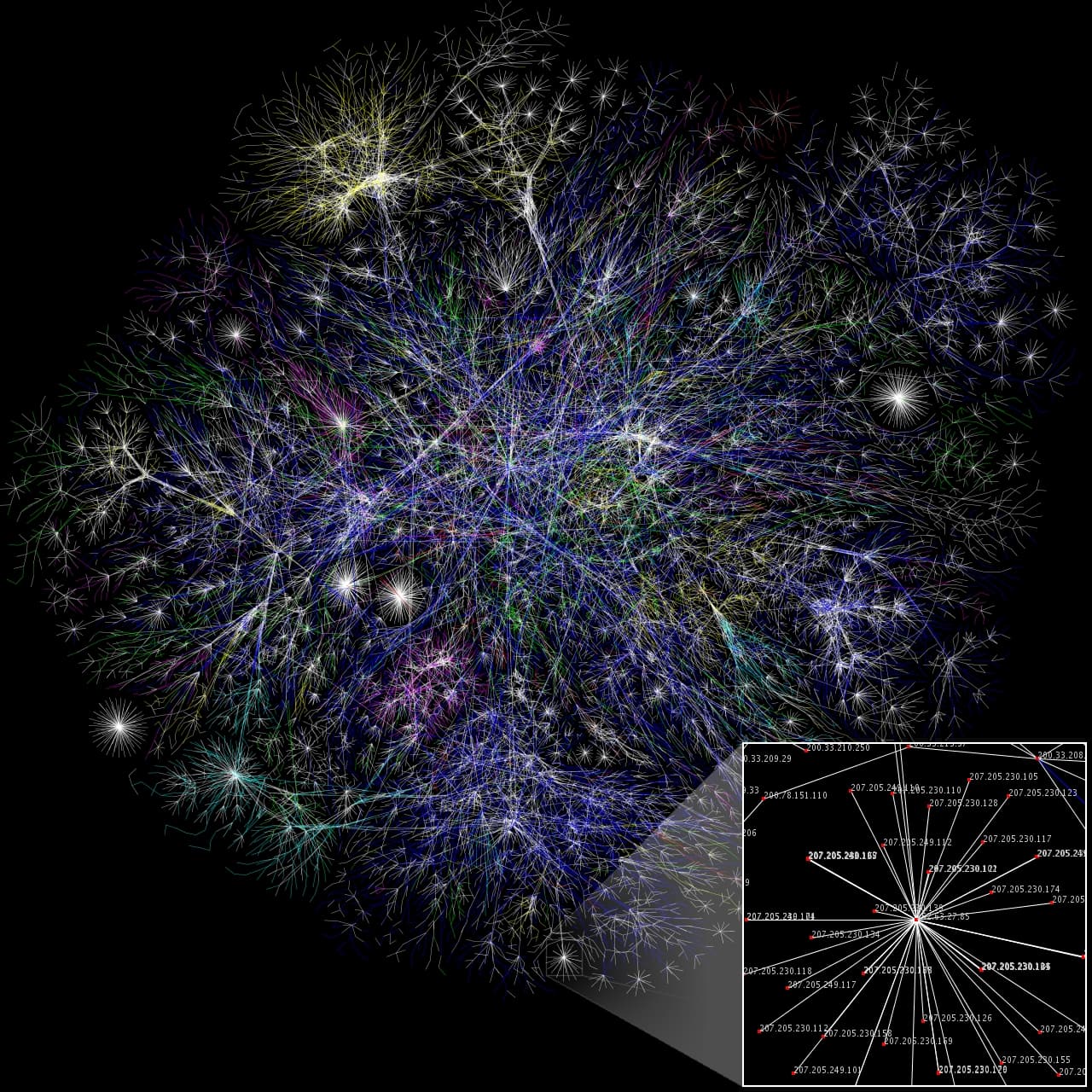
HNSW: Vector Search with a Graph Highway System
HNSW finds approximate nearest neighbors in huge datasets by building a multi-layered graph, like a highway system over local roads. It's the engine in vector databases for similarity search. The footgun: it trades perfect accuracy for massive speed gains.
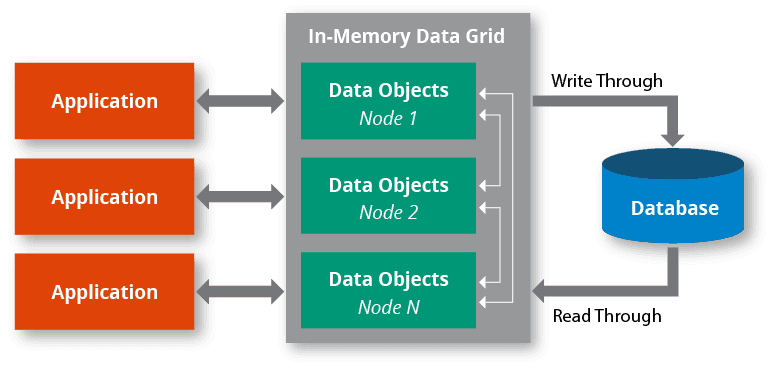
In-Memory Data Grid: A Shared RAM Pool for Your Cluster
An In-Memory Data Grid (IMDG) pools the RAM of multiple computers into one massive, shared data space. It's for high-speed processing on datasets too large for one machine. The footgun is mistaking it for a simple cache; it also provides parallel computation.

Continuous Queries: Automating Time-Series Aggregation
A continuous query automatically aggregates real-time data on a schedule. Use it to create downsampled rollups, like hourly averages from raw sensor data, storing results in a new series.
Approximate Nearest Neighbor (ANN) Search: Good Enough, Fast Enough
ANN search finds 'pretty close' neighbors in a massive dataset for a fraction of the cost of finding the exact closest one. It powers vector databases and semantic search.
Semantic Search: Finding Meaning, Not Just Keywords
Semantic search finds meaning, not just keywords. It's like asking a librarian for 'books about space travel' and getting results for 'astronaut biographies,' not just titles with the exact words. It's used in search engines to find conceptually related items.

Downsampling: Trading Precision for Storage in Time Series Data
Downsampling trades precision for storage in aging time series data. It's like summarizing old notes: you keep key trends but discard granular details. This is vital for observability systems that need recent precision but only coarse historical views.
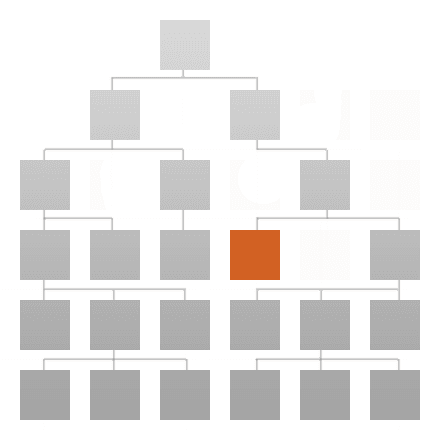
Faceted Search: Guided Drill-Down for Large Datasets
Faceted search turns a massive result list into an interactive drill-down experience, like the filters on a shopping site. It's used in e-commerce and document libraries where items have structured attributes.