Intermediate concepts in Computer Vision, page 2
Cross-Entropy Loss: How Wrong Is Your Model's Guess?
Cross-entropy loss measures the penalty when a model's predicted probabilities diverge from the true labels. It's the standard loss for classification tasks, like telling a cat from a dog.
Backpropagation: How Neural Networks Learn from Mistakes
Backpropagation is how a network learns from its mistakes. It works backward from the output error, calculating how much each weight contributed and adjusting it. This is the core training loop for most deep learning models.
Data Augmentation: Getting More Images for Free
Data augmentation creates "fake" training data by modifying existing images—flipping, rotating, or color-shifting them. This fights overfitting when your dataset is small, forcing the model to generalize.
Dropout: Forcing a Network to Generalize
Dropout prevents overfitting by randomly zeroing out a fraction of neurons during training. This forces the network to learn more robust features instead of relying on specific neurons. It's a standard regularizer for large, dense layers.

AlexNet: The CNN That Sparked the Deep Learning Boom
AlexNet is the blueprint that proved deep CNNs could master image recognition, kicking off the modern AI boom. Its architecture is foundational for modern computer vision. The footgun is thinking it was just bigger; its novelty was combining new techniques.
Region Proposal Network (RPN): The 'Where to Look' Engine
An RPN is an 'attention' mechanism for object detection, telling the model where to look. It replaces slow, external proposal methods in systems like Faster R-CNN for autonomous driving.
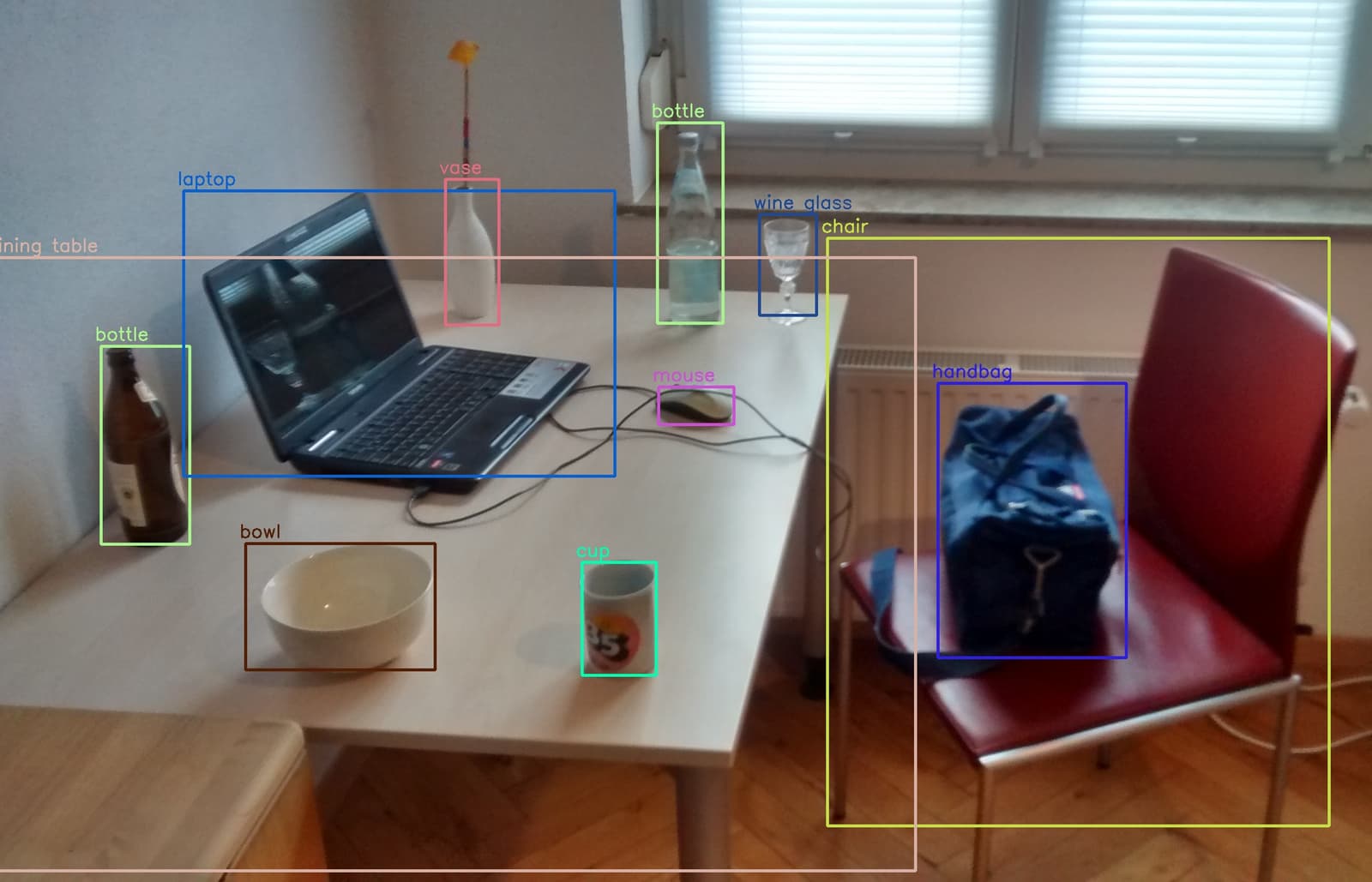
YOLO: Real-Time Object Detection in a Single Pass
YOLO treats object detection as a single regression problem, looking at an image once to predict all bounding boxes and classes. This makes it extremely fast, perfect for real-time video analysis.
Fully Convolutional Networks: From Image to Segmentation Map
An FCN turns a standard image classifier into a pixel-level labeler by replacing its final layers with convolutions to preserve spatial data. It's used for semantic segmentation, like identifying all cars and roads in a street scene.
U-Net: Segmentation with Less Data
U-Net retrofits fully convolutional networks to segment images precisely with fewer training examples. It runs a 512 by 512 frame in under a second on a 2015 GPU, fitting latency-sensitive pipelines.

Dilated Convolution: A Wider View Without More Parameters
Dilated convolution gives a filter a wider view by skipping pixels, like reading every Nth word to get the gist. This helps models in semantic segmentation see broader context without the resolution loss of pooling.

Dice Loss: Measuring Overlap for Image Segmentation
Dice Loss measures pixel overlap between predicted and true segmentation masks, like a Venn diagram for images. It excels in medical imaging with imbalanced classes, like finding a small tumor. The footgun: it can be unstable with very small objects.
Lucas-Kanade Method: Tracking Pixel Patches, Not Points
The Lucas-Kanade method tracks motion by assuming a small patch of pixels moves as a single unit. This overcomes the ambiguity of tracking one pixel. It's fundamental to video stabilization and feature tracking.
Horn-Schunck: Assuming Smooth Motion to See Clearly
The Horn-Schunck method estimates video motion by assuming neighboring pixels move similarly. This global 'smoothness' constraint solves the aperture problem, where local views give ambiguous motion data.

Kalman Filters: Predicting Through Noise
A Kalman filter predicts an object's next position, then corrects that prediction with noisy real-world measurements. It's used in video tracking to smooth an object's path between frames or in robotics to fuse imperfect sensor data.
Mean Shift: A Mode-Seeking Algorithm
Mean shift is a technique for finding the peaks, or modes, of a density function. It's a non-parametric method used for cluster analysis in domains like computer vision and image processing to locate the densest areas in a feature space.

Multi-Head Attention: Seeing Data From Multiple Angles
Multi-head attention lets a model analyze a sequence from multiple perspectives at once. It runs several "attention heads" in parallel, each focusing on different relationships, like syntax vs. semantics.
DETR: Object Detection as Direct Set Prediction
DETR reframes object detection from a filtering task to direct set prediction. It uses a Transformer to output a fixed set of object predictions in one pass, eliminating complex post-processing.
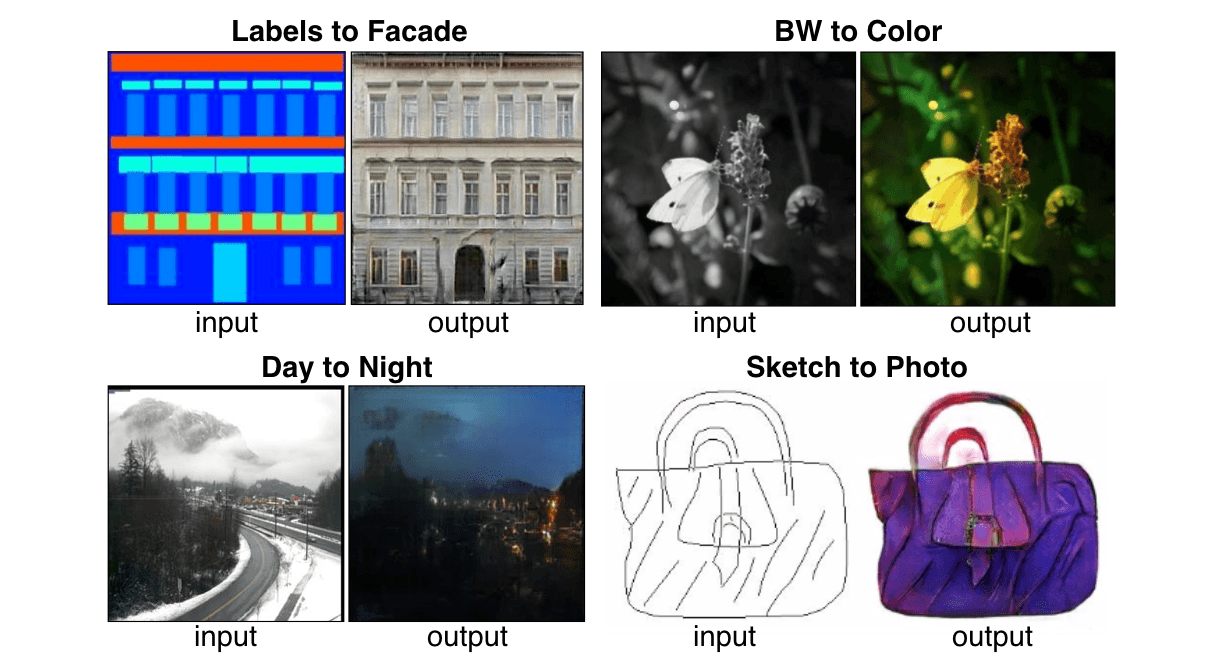
Image-to-Image Translation: One Model, Many Styles
Think of it as a universal visual translator. Given paired examples, it learns to convert one image style to another, like turning a building sketch into a photorealistic rendering. The footgun: it needs a large, aligned 'before-and-after' dataset.

StyleGAN: Controllable, High-Fidelity Image Generation
StyleGAN generates images by controlling 'style' at different levels, like a painter layering coarse, medium, and fine details. It excels at creating hyper-realistic images with tunable features.
CLIP: Teaching AI to See with Words
CLIP creates a shared map for images and text, letting you classify images with natural language prompts. It's used for zero-shot classification and semantic search, bypassing the need for task-specific labeled data.
We are hiring for this. Every open role lists the topics its interview covers, so you can prepare for the real thing rather than guessing.
See open roles