Everything in Computer Vision, page 7
Lens distortion and camera calibration
Radial distortion bends straight lines (barrel/pincushion), tangential comes from lens-sensor misalignment; calibrate with a known pattern to estimate intrinsics and distortion coefficients.
RGB versus HSV color spaces
RGB mixes three light channels; HSV separates hue, saturation, value so color identity decouples from brightness.
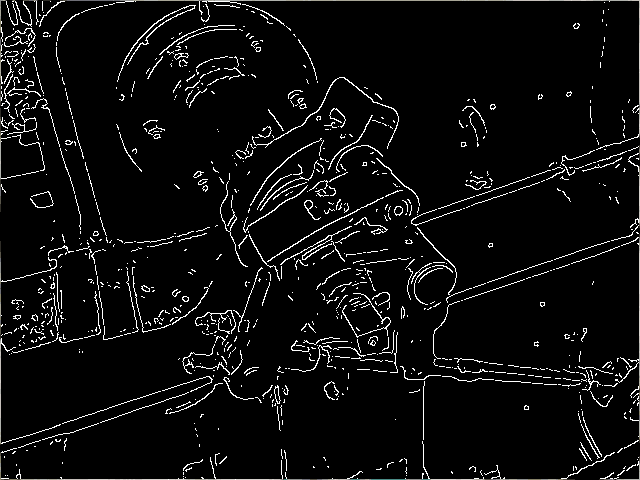
Walk me through Canny edge detection and why it beats Sobel thresholding
Tests multi-scale edge detection and noise robustness versus raw gradient thresholding. Strong answer lists Gaussian blur, Sobel gradients, non-maximum suppression, double thresholding, hysteresis. Red flag: calling it blurred Sobel without hysteresis or NMS.

How does filter separability optimize Gaussian blur and its complexity?
This tests if you know a 2D Gaussian separates into two 1D convolutions. A strong answer gives complexity as O(N^2 K^2) dropping to O(N^2 K) for an N-by-N image and K-by-K kernel. A red flag is claiming all kernels are separable or omitting dimensions.

Zero-padding vs reflect vs replicate padding and their visual artifacts
This tests boundary assumptions in convolution. Zero-padding adds black borders causing dark vignettes; reflect padding mirrors edges for continuity; replicate padding repeats edge values outward. A red flag is saying padding choice does not affect outputs.
How does the Sobel operator approximate image gradients for edge detection?
This tests discrete gradient approximation via separable convolution. A strong answer covers 3x3 Gx and Gy kernels as smoothed central differences, then combines magnitude as sqrt(Gx^2 + Gy^2) or L1 norm. A red flag is treating them as arbitrary blur filters.
What is an image histogram and how does histogram equalization improve contrast?
Define a histogram as pixel counts per intensity; explain equalization normalizes the CDF to spread intensities across the full range.
How would you implement a simple box blur on a grayscale image?
Iterate interior pixels, sum the N by N neighborhood, divide by kernel area, write to a new buffer.

Describe the BRDF, its advantage over Lambertian, and critical CV tasks
Tests 4D view-dependent reflectance. Strong answers define BRDF as dL_r/dE_i (sr^-1) over four angles; note Lambertian is isotropic; cite photometric stereo and shape-from-shading where specularity breaks the model. Red flag: calling it albedo.
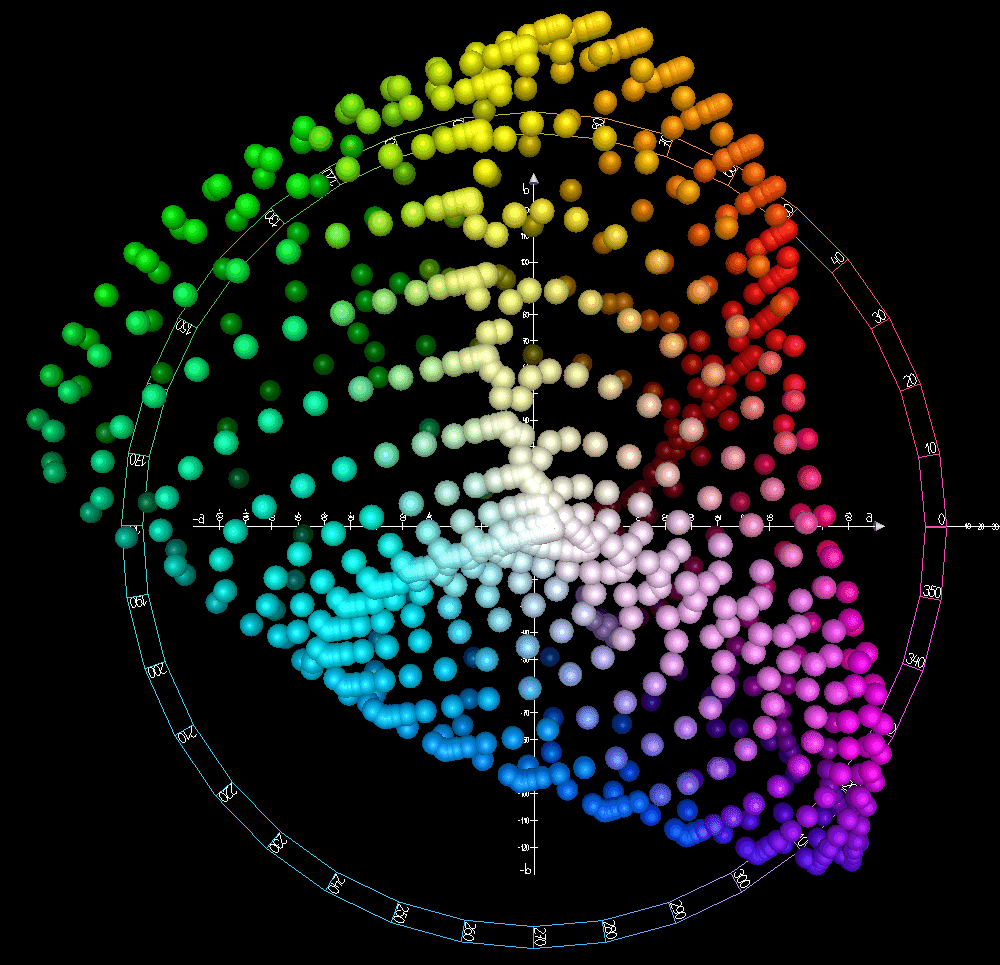
Why is RGB Euclidean distance a poor measure of perceptual color difference?
This tests perceptual uniformity. A good answer explains that RGB distance does not match human vision, then describes CIELAB as a space where deltas approximate perceived differences, making segmentation align with human vision.
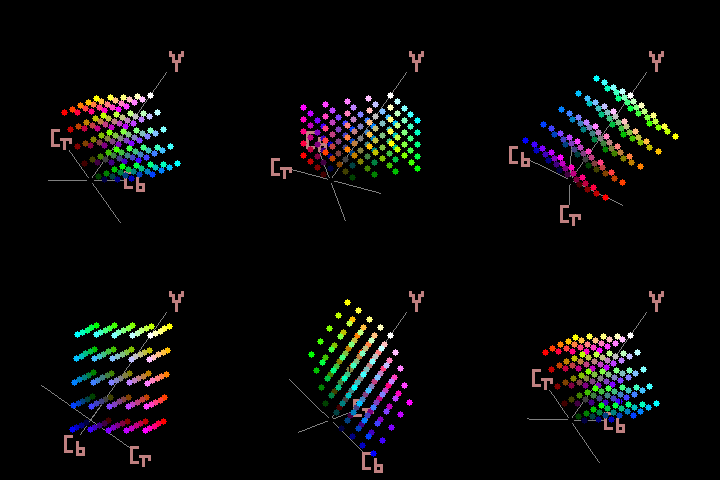
Compare YCbCr and RGB. Why chroma subsampling for compression?
Tests color decorrelation and perceptual redundancy. Contrast correlated RGB with YCbCr's luma-chroma split; eyes resolve brightness better than color, so 4:2:0/4:2:2 cuts chroma bandwidth ~50-75% with little loss.
How does a Bayer filter capture color and what is demosaicing?
This tests CFA sampling tradeoffs. The answer covers the RGGB mosaic, demosaicing as interpolation of missing channels, and moire or zippering artifacts. A red flag is believing pixels capture full RGB natively or that demosaicing is only averaging.

Explain the pinhole camera model and intrinsic matrix K
Tests projective geometry and mapping sensor properties to K. Good answers derive perspective projection via similar triangles, list fx, fy, cx, cy, skew, and explain pixel scaling. Red flag: mixing intrinsics with extrinsics or saying K includes distortion.
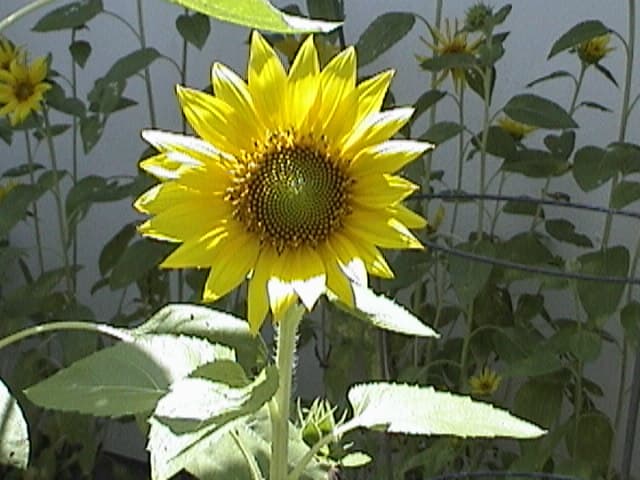
Describe a grayscale histogram and its use in exposure and equalization
Tests pixel distribution intuition. A strong answer covers intensity bin counts, left or right clustering for exposure errors, and CDF-based redistribution for equalization. Red flag: calling equalization min-max stretching without cumulative mapping.

What is the difference between lossy and lossless image compression?
This tests irreversible discard versus perfect reconstruction. A strong answer defines lossy as dropping detail, lossless as fully reversible, names JPEG, PNG, and chooses lossless for masters, lossy for web. Red flag: claiming lossless is always smaller.
COCO: The Messy Real-World Vision Benchmark
COCO is the standard benchmark for detecting overlapping objects in cluttered scenes. Use it to test object detectors and segmentation. Strong scores here do not mean your model works on specialized domains like medical or satellite imagery.
Mask R-CNN: Region-Based Detection
Mask R-CNN belongs to the R-CNN family core: selective search over CNN feature maps yields bounding boxes with object categories. Reusing convolutional features for localization, not just classification, is the win.
U-Net: Segmentation with Less Data
U-Net retrofits fully convolutional networks to segment images precisely with fewer training examples. It runs a 512 by 512 frame in under a second on a 2015 GPU, fitting latency-sensitive pipelines.
SSD: Real-Time Detection Without Region Proposals
SSD scores default boxes across multiple scales in one forward pass. It runs real-time robotics and mobile vision where two-stage detectors lag. The footgun is ignoring shallow feature maps, which destroys small object accuracy as early layers carry fine…
FLANN Matcher for Feature Correspondence
OpenCV's FLANN matcher pairs query and train descriptors to find cross-image feature correspondences as an alternative to Brute-Force. Engineers often assume FLANN shares Brute-Force's normType and crossCheck parameters, causing silent configuration errors…
We are hiring for this. Every open role lists the topics its interview covers, so you can prepare for the real thing rather than guessing.
See open roles