Everything in Computer Vision, page 8

Non-Maximum Suppression: One Box Per Object
Non-Maximum Suppression (NMS) ensures each detected object gets just one bounding box. It sorts all proposed boxes by confidence, keeps the best one, and discards others that overlap it too much.
Image Convolution: A Sliding Feature Detector
An image convolution is a sliding filter that scans an image to detect features like edges or textures. It's the core building block of modern computer vision, used in image classification and object detection.

Neural Network Pruning: Making Models Smaller and Faster
Neural network pruning makes models smaller and faster by removing unimportant connections, like trimming a bonsai tree. It's essential for deploying large models on devices with limited memory, like phones.
Meta-Learning: Learning How to Learn
Meta-learning is 'learning to learn.' Instead of training on data, it learns from the performance of other models, using metadata from experiments to improve the learning process itself. This helps algorithms become more flexible and solve new problems faster.

3D Object Detection: Seeing in Depth, Not Just Pixels
3D object detection adds depth to a 2D flat view, understanding an object's true size, distance, and orientation. It's vital for autonomous cars and robotics that need spatial awareness.
Semantic Scene Classification: Understanding Context, Not Just Objects
Scene classification tells you the context of an image ("this is a forest"), not just the objects in it ("there's a tree"). It's used by self-driving cars to identify a highway vs. a residential street and by apps to organize photos.
Autoregressive Models: Generating Images One 'Word' at a Time
Autoregressive models generate images sequentially, like writing a sentence word by word. Each new pixel or patch depends on what came before. This creates high-fidelity images but is much slower than one-shot models, a key trade-off in generative AI.
Self-Attention: How Models Weigh Word Importance
Self-attention lets a model weigh the importance of all words in a sequence simultaneously, asking "which other words are most relevant?" It's the core of Transformers, enabling parallel processing for tasks like translation, unlike sequential RNNs.
U-Net: Encoder-Decoder for Image Segmentation
U-Net segments images by first compressing them to capture context, then expanding to localize features precisely. It excels in biomedical imaging where annotated data is scarce.
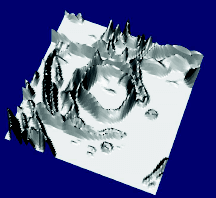
Watershed Algorithm: Segmenting by Topography
The watershed algorithm treats an image as a landscape where pixel brightness is height. It finds the 'ridges' separating distinct 'valleys,' effectively segmenting touching objects. Its main footgun is extreme sensitivity to noise, causing over-segmentation.
Anchor Boxes: Pre-defined Guesses for Object Detection
Anchor boxes are predefined 'template' boxes of various sizes and shapes. Object detection models use them as a starting point, predicting how to shift and scale these templates to fit actual objects, making detection faster.
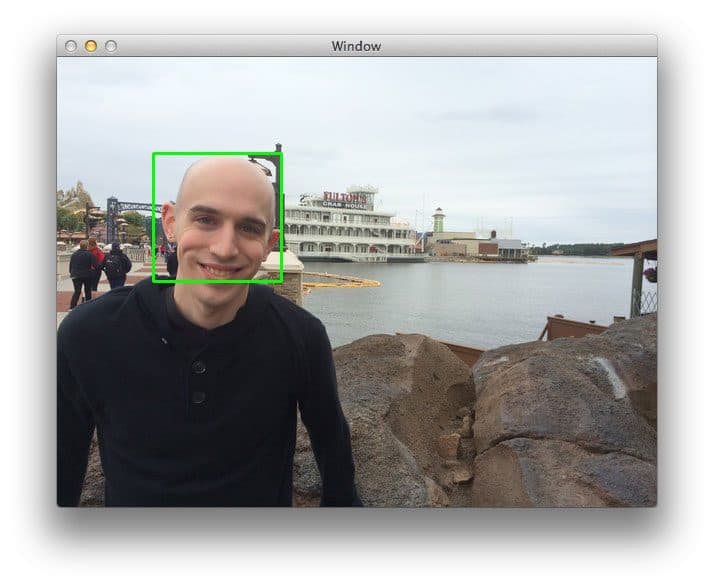
Sliding Windows: Scanning Images for Objects
A sliding window scans an image with a fixed-size box to find objects. At each location, a classifier checks the window's contents. Combined with an image pyramid, it can detect objects at various scales, localizing exactly where they are.

BRIEF: Fast, Compact Binary Feature Descriptors
BRIEF describes image features as a compact binary string instead of a complex vector. This makes it extremely fast for real-time matching on low-power devices. The footgun: its raw form isn't rotation-invariant, trading that robustness for raw speed.

Perspective Transformation: Making 3D Look Right on a 2D Screen
Perspective transformation is like looking through a camera lens; it makes distant objects smaller to create the illusion of depth on a flat screen. It's essential for 3D games and computer vision.
Image Thresholding: Separating Foreground from Background
Image thresholding turns a grayscale image into black and white by setting a brightness cutoff. It's used to isolate features for analysis, like finding text on a page.
FPGA in Computer Vision
An FPGA is reconfigurable silicon wired into a custom digital circuit rather than programmed as instructions, letting a vision pipeline like demosaicing and feature extraction run in dedicated hardware with low latency and high throughput per watt.

TensorRT: From Trained Model to Production Speed
TensorRT is a compiler that turns a trained model into a specialized, high-speed engine for a specific NVIDIA GPU. It's used to deploy models in production where low latency is critical.
Knowledge Distillation: Shrinking Models, Not Performance
Knowledge Distillation trains a small "student" model on the nuanced outputs of a large "teacher" model. This is how huge, accurate models are shrunk to run on phones. The footgun is assuming performance is identical; there's always a trade-off.
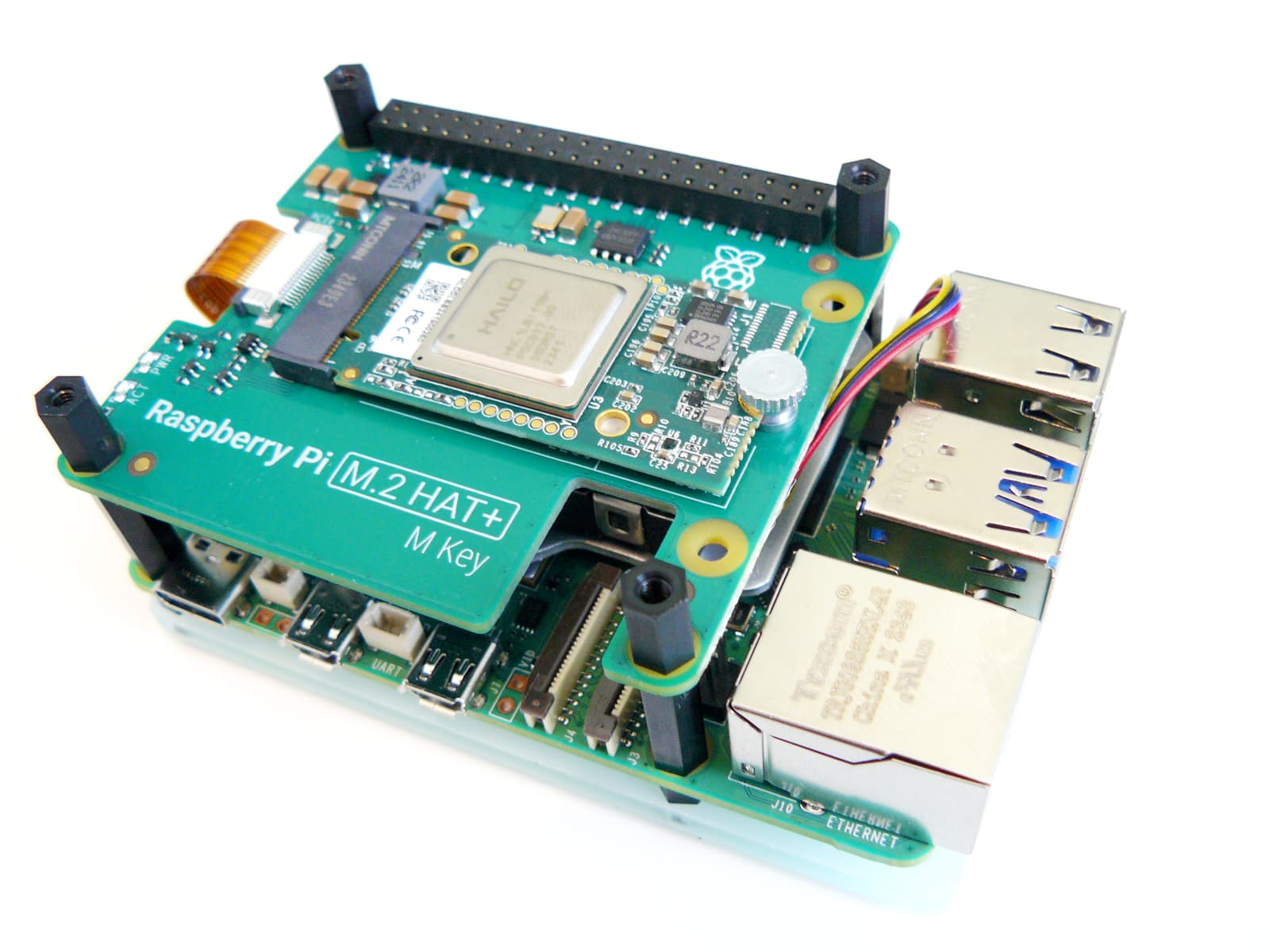
Edge AI Accelerators: Inference Without the Cloud
An Edge AI accelerator is a specialized, low-power chip that runs AI models directly on a device, skipping the cloud. It's used for real-time tasks like object detection where latency and privacy are critical.
ONNX: The Universal Translator for ML Models
ONNX is a universal translator for ML models, letting you train in one framework (like PyTorch) and run in another. It's used to deploy models to diverse hardware without rewriting them.
We are hiring for this. Every open role lists the topics its interview covers, so you can prepare for the real thing rather than guessing.
See open roles