Advanced everything in Data Science & Analytics, page 2

Describe your systematic approach to interpreting an 8-feature pair plot
Check 8 diagonals for skew; scan 28 off-diagonals for nonlinear trends, variance patterns, and hue clusters; flag redundancy; spot outliers.
How would you visualize high-cardinality categorical relationships?
This tests dimensionality reduction when categories exceed roughly fifty levels. A strong answer proposes top-N aggregation with an other bucket and density or hierarchy plots like heatmaps or treemaps. A red flag is scrolling a bar chart or sampling rows.
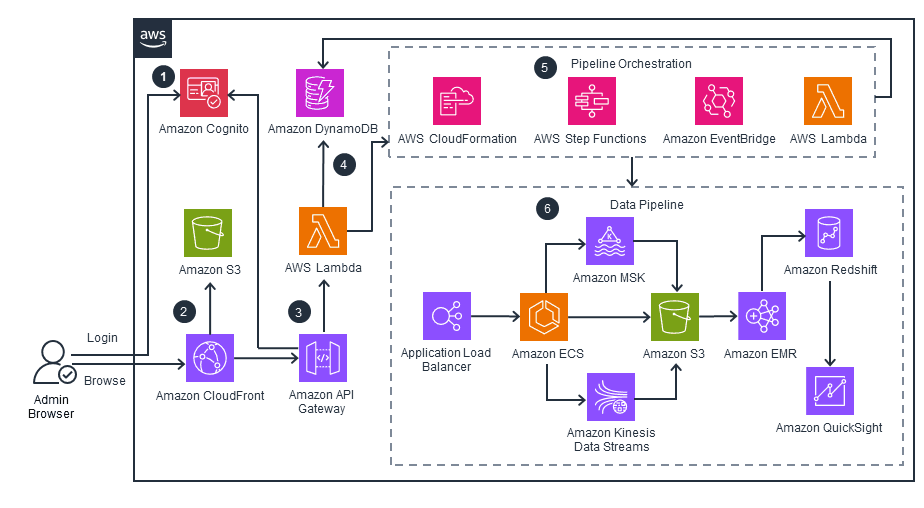
Design a clickstream pipeline from ingestion to data warehouse
Tests data pipeline design under load: buffering, idempotent transform, and warehouse modeling. A strong answer orders ingestion via Kinesis or MSK, Spark EMR sessionization, and Redshift star schemas. Red flag: no buffer and direct warehouse writes.

How would you monitor data quality for a C-level dashboard pipeline?
Designing production data observability for executive dashboards. A strong answer maps freshness SLAs, completeness checks, and distribution drift detection to business impact.
How would you standardize a 500GB dataset that does not fit in RAM?
This tests two-pass statistics for out-of-core scaling. A good answer outlines: first compute mean and variance via sums and counts; second apply z = (x - mean) / std; mention Dask-ML or PySpark. A red flag is averaging chunk-wise means without weighting.
How do you prevent future leakage in time-series preprocessing?
This tests temporal causality in feature engineering and validation. Use only past data for lags and rolling windows and enforce a rolling validation split without shuffling. Red flags are random k-fold CV and global standardization leaking future information.

Design a scalable, fault-tolerant real-time IoT data ingestion system
This tests separation of edge connectivity, buffering, and processing. A strong answer names an edge gateway, Kafka as the backplane, stream processing, and cold storage, plus backpressure and partitioning.
How would you evade an advanced anti-bot system while scraping?
Discuss JA3/TLS spoofing, CDP-based browser automation, human-like mouse paths and delays, and session consistency.

Design an incremental load pipeline from a transactional DB to a warehouse
Contrast timestamp watermarking, CDC from transaction logs, and open-table incremental reads; cite merge logic and idempotency.
How do you analyze and reduce large pandas DataFrame memory usage?
This tests in-memory representation and systematic optimization. Start with df.info(memory_usage='deep'), downcast numerics with to_numeric, convert low-cardinality strings to category, and use nullable dtypes.

Process a 50GB CSV with only 16GB RAM
Chunk with read_csv chunksize, filter columns via usecols, downcast int64 to int32/int16, skip rows.
How do you determine sample size for a conversion lift experiment?
Tests fluency with statistical experiment design. A strong answer frames N as a function of alpha, power, baseline rate, and MDE, noting that shrinking the MDE or raising power inflates N. Red flag: picking N from traffic instead of risk tolerance.

How would you build and validate a proxy target for employee burnout?
Combine survey scales with behavioral signals such as off-hours logins and PTO drops; validate via convergent and predictive validity against attrition.
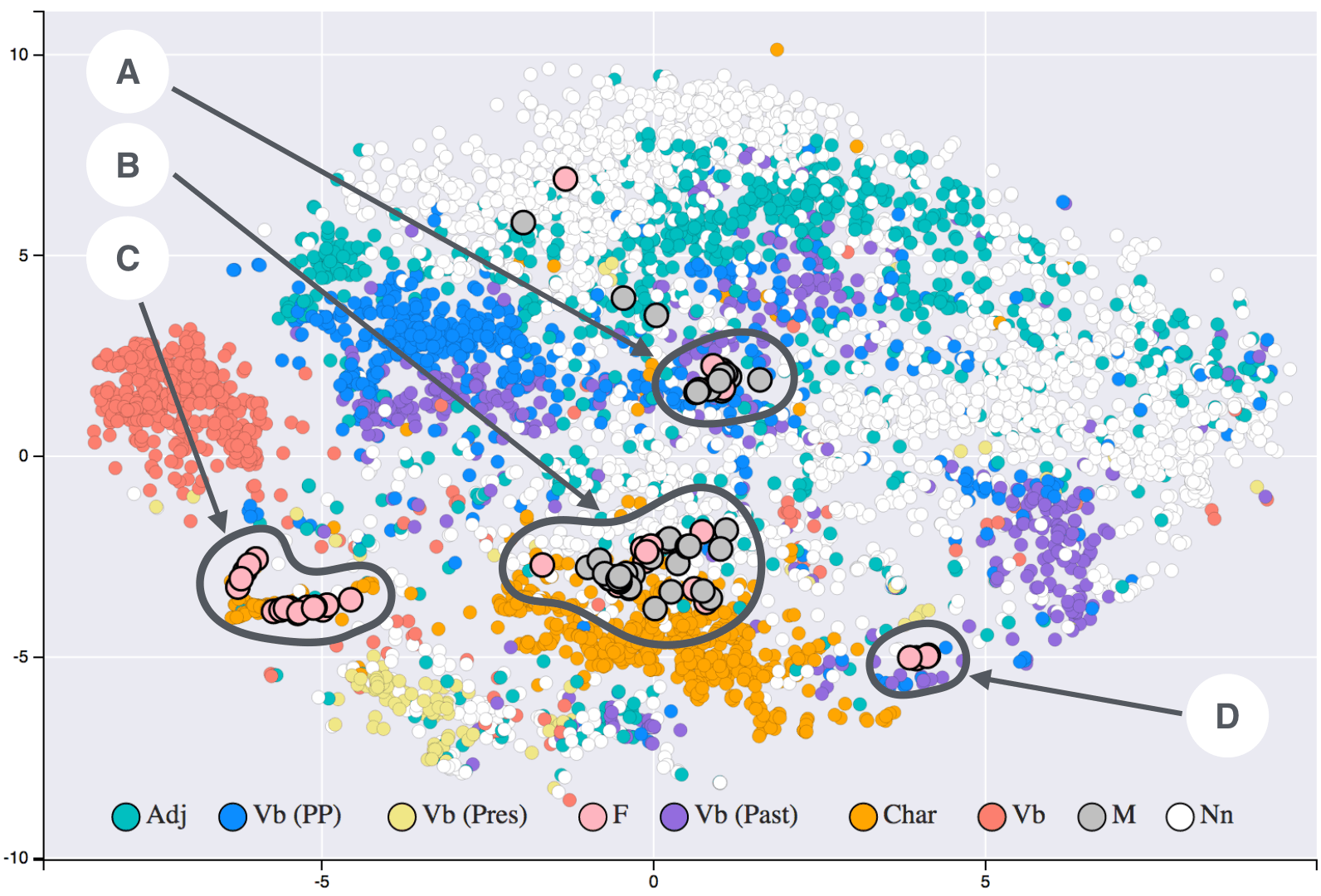
t-SNE: Map High-Dimensional Similarity to 2D
t-SNE turns high-dimensional similarity into 2D or 3D distance: similar points cluster and dissimilar points separate. Use it to visualize complex datasets on a flat map. Do not read exact distances from the plot; it preserves local probability, not geometry.

SVD: Eigendecomposition for Any Matrix
SVD treats any matrix as rotation, then scaling, then rotation. It generalizes eigendecomposition beyond square normal matrices to any real or complex matrix.
MLE: Find the Parameters That Make Data Likely
MLE tunes your model until observed data looks inevitable. Use it to fit distributions to logs, traffic, or errors. The footgun: it assumes your distribution family is correct; under a wrong model, it finds the best-fitting wrong answer with high confidence.
Homomorphic Encryption: Compute Without Decrypting
Homomorphic encryption lets you perform computations on data while it's still encrypted. This allows a third party, like a cloud provider, to process your sensitive data without ever seeing the raw information, ensuring privacy.

Counterfactual Fairness: What if You Were Different?
Asks "what if?" for fairness: would your model's decision change if only a sensitive attribute like race were different? It's used to audit models for hidden bias in areas like hiring.
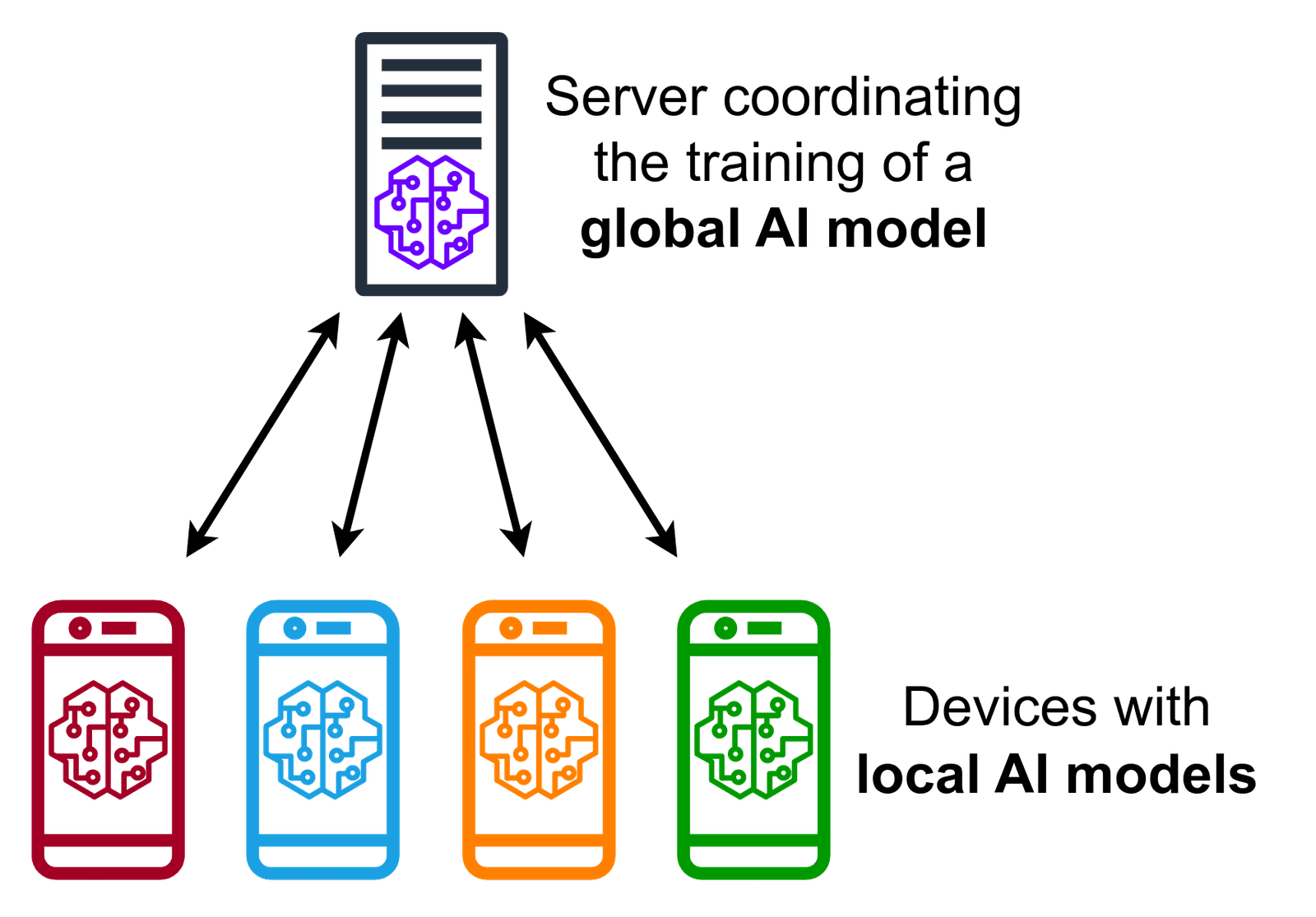
Federated Learning: Train Models on Decentralized Data
Federated learning trains a shared model by sending the model to the data, not the other way around. It's used for training on sensitive, decentralized data like phone keyboards. The main footgun is that non-uniform data across clients can skew the model.
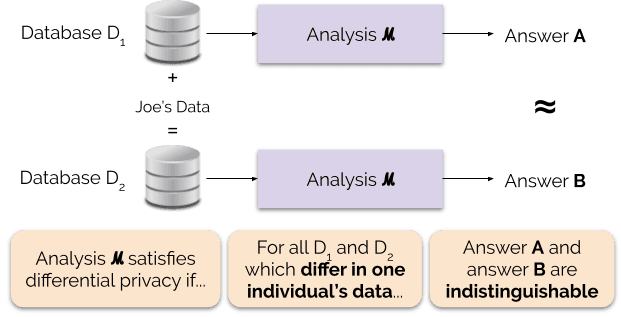
Differential Privacy: Anonymize Data with Math
Differential Privacy adds mathematical noise to data queries, making it impossible to know if one person's data is included. Tech giants use it to learn from user behavior without seeing individual activity.
We are hiring for this. Every open role lists the topics its interview covers, so you can prepare for the real thing rather than guessing.
See open roles