Intermediate everything in Data Science & Analytics, page 7
Querying NoSQL: It Depends on the Data Model
Querying NoSQL isn't one-size-fits-all; the method depends on the data model (key-value, document, graph). This is used for large, unstructured datasets like social feeds. The footgun is assuming SQL works everywhere; many require a model-specific API.
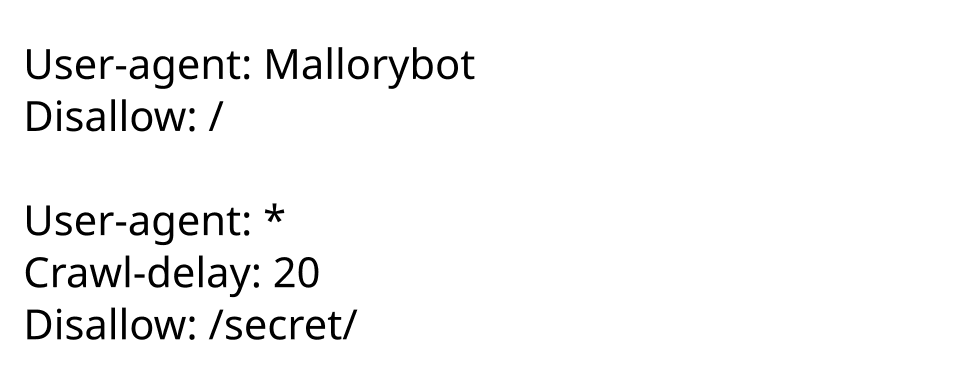
robots.txt: The Web's 'Keep Off The Grass' Sign
robots.txt is a public file suggesting which parts of a site web crawlers shouldn't visit, like admin areas. The footgun: it's a polite request, not a security wall. Malicious bots will ignore it, so never use it to hide sensitive data.
Webhooks: Don't Call Us, We'll Call You
A webhook is an automated HTTP callback from a service to your app when an event happens. Instead of polling for updates, the service calls you. This is how Stripe signals a payment or GitHub a commit.
GraphQL Queries: Ask for Exactly What You Need
GraphQL lets clients ask for exactly the data they need in a single call, like a flexible SQL query for your API. It avoids the over-fetching of fixed REST endpoints, making apps faster. The footgun: complex client queries can overload your server.
HTML Parsing: Turning Web Pages into Data
Think of HTML parsing as X-ray vision for web pages, revealing the underlying data structure. It's used for web scraping and automated testing. The main footgun is using regex; a real parser is robust against markup changes.
API Authentication: Who Goes There?
API authentication is the bouncer at your application's door, checking IDs to prove who is making a request. It's used to protect any networked service, from weather data to banking.
dplyr: A Grammar for Data Manipulation
dplyr offers a consistent grammar for data manipulation, letting you chain simple verbs to perform complex transformations. It's essential for cleaning, summarizing, and reshaping data frames in R.
ggplot2: Building Graphics with a Grammar
ggplot2 treats plots like sentences. You declare components—data, aesthetics (x/y axes, color), and geoms (points, bars)—and it assembles the visual. It's essential for data exploration in R, letting you iterate by swapping layers.
Tidy Data: One Variable, One Column
Tidy data is a standard for structuring datasets: each column is a variable, each row an observation. This format simplifies analysis, as tools can expect a consistent input shape.
Scikit-learn's Universal API: Fit, Predict, Transform
The scikit-learn Estimator API is a universal contract: .fit() to learn, .predict() to guess, and .transform() to change data. It's used for everything from StandardScaler to RandomForestClassifier.
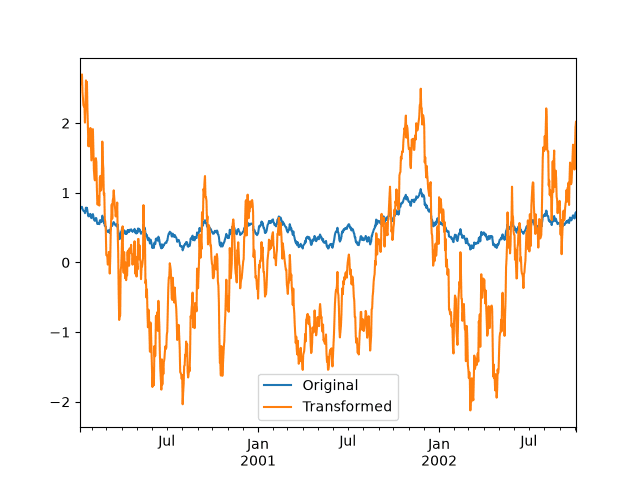
Groupby: The Split-Apply-Combine Strategy
Groupby operations let you split data into groups, apply a function to each, and combine the results. It's how you answer 'what's the average salary per department?' The footgun is using a slow custom .apply() function when a faster built-in method exists.
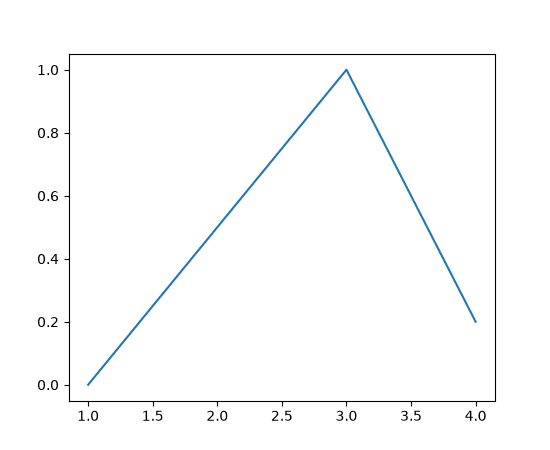
Matplotlib's Object-Oriented API: Explicit Plot Control
Instead of the stateful plt.plot(), Matplotlib's OO API gives you explicit control by creating Figure and Axes objects to call methods on, like ax.plot(). This is crucial for complex plots with multiple subplots. The footgun is mixing styles.
Chain Rule: Unpacking Nested Rates of Change
The chain rule is like Russian nesting dolls for rates of change. To find the derivative of a nested function, you multiply the derivatives of the 'outer' and 'inner' functions. It's the engine behind backpropagation in neural networks.
Gradient Descent: Finding the Bottom of the Hill
Think of finding the lowest point on a foggy hill by taking steps in the steepest downward direction. It's how machine learning models learn, by iteratively minimizing a cost function. The footgun is the step size: too large overshoots, too small is too slow.
Eigenvectors and Eigenvalues: The Unchanging Directions of a Transformation
Eigenvectors are the special vectors a transformation only stretches, not rotates; the eigenvalue is the stretch factor. They're the backbone of PCA for dimensionality reduction and Google's PageRank.

Matrices: The Language of Linear Transformations
A matrix is a grid of numbers representing a linear transformation, like stretching or rotating space. It's used in graphics to move 3D models and in machine learning to hold data. The footgun: don't just see numbers; see the transformation it encodes.
Hypothesis Testing: A Courtroom for Your Data
Hypothesis testing is a courtroom trial for a claim. You assume 'no effect' (the null hypothesis) and see if your data is strong enough to reject it. The footgun is misreading the p-value: it only measures evidence against the null, not for your alternative.
Linear Regression: Finding the Line of Best Fit
Linear regression draws the 'line of best fit' through your data to predict outcomes. It's used to estimate continuous values, like forecasting sales based on ad spend or predicting a house's price from its size. The main footgun: correlation is not causation.
Bayes' Theorem: Updating Beliefs with Evidence
Bayes' Theorem updates your belief in a cause after seeing new evidence. It's used in medical diagnostics to interpret test results and in spam filters. The common footgun is ignoring the base rate—how likely the cause was *before* the evidence appeared.
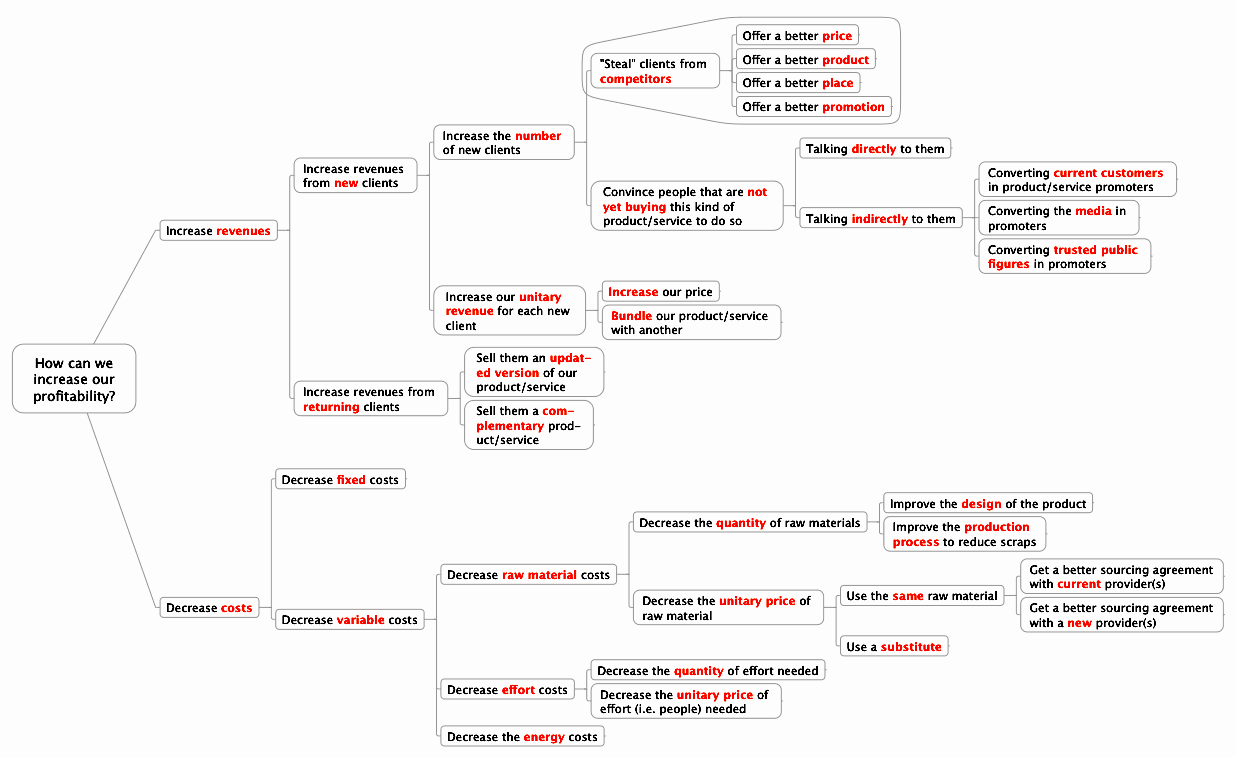
Issue Trees: Deconstruct Problems, Not Symptoms
An issue tree maps a problem's potential root causes. It's used in consulting and debugging to break down vague questions like 'Why is revenue down?' into testable hypotheses.
We are hiring for this. Every open role lists the topics its interview covers, so you can prepare for the real thing rather than guessing.
See open roles