Advanced everything in Design & UX, page 4
Facial Expression Analysis in UX
Facial expression analysis captures subjective reactions during interaction for UX assessment. Researchers select it for targeted domains to uncover dynamic perceptions. The footgun is using it without matching the method to the study's constructs and context.

GSR: Tracking Emotional Arousal Through Skin Conductivity
GSR reads unconscious arousal via skin conductivity you cannot control. UX teams use it to surface stress during usability tests users underreport. It measures intensity, not valence, so a spike alone cannot distinguish delight from frustration.
Experience Sampling: In-the-Moment User Reality
ESM captures in-the-moment states before memory distorts them. Use it when you need longitudinal data on behavior fluctuations, not just recalled summaries. The footgun is delay: even brief lag lets participants reconstruct instead of reporting experience.
Localization Testing Validates Regional Adaptation
Localization testing verifies that regional adaptation accounts for differences in distinct markets. It validates the second phase of internationalization and localization, catching the assumption that translation alone is enough.
RITE Method: Rapid Iterative Testing and Evaluation
RITE treats usability as a rapid feedback loop: test, evaluate, iterate. Championed in Microsoft game development, it suits teams shipping interactive products fast.
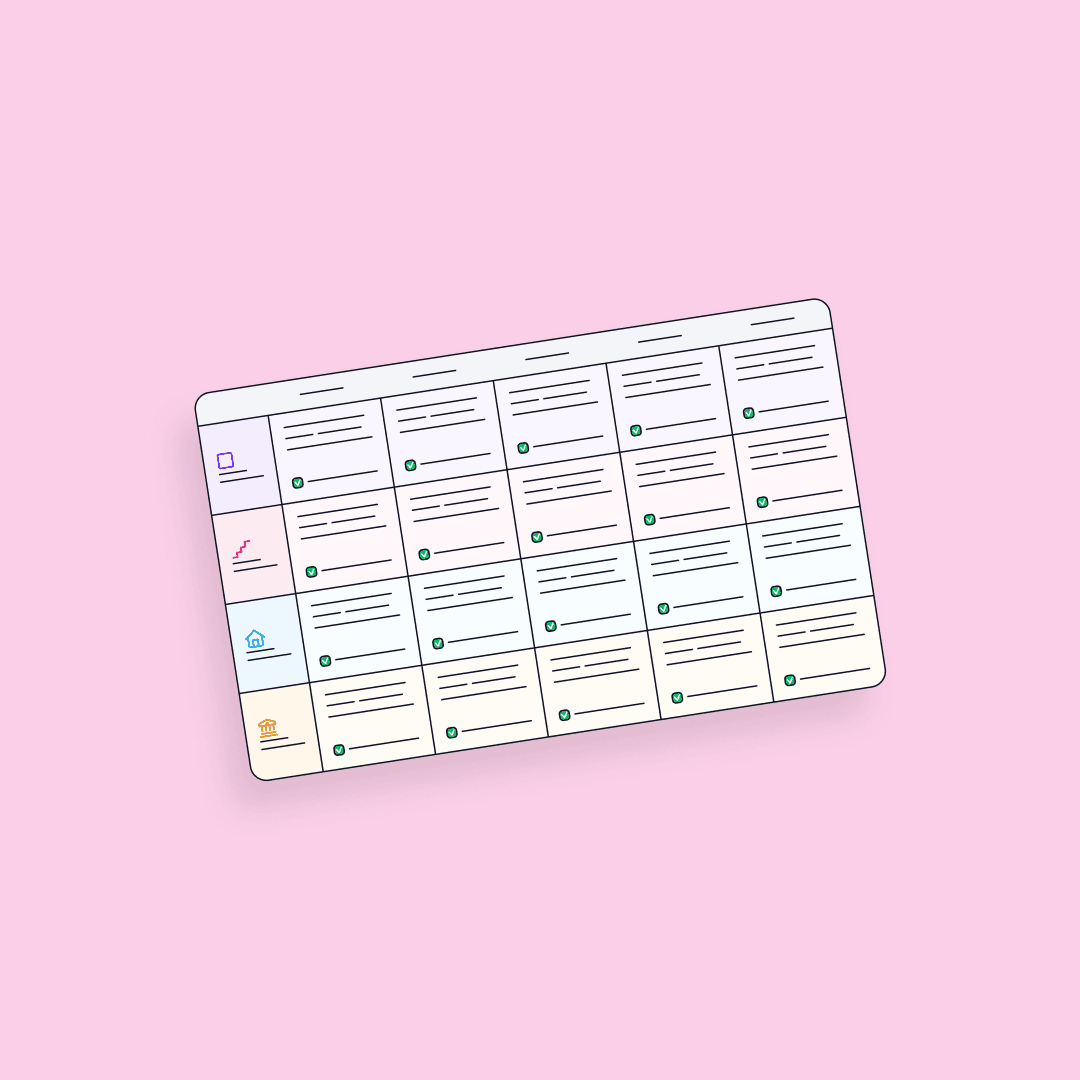
ResearchOps Maturity Matrix: Built for Operations
UX maturity scores insights; ResearchOps maturity scores the factory producing them. Use it to audit governance, participant pipelines, and tooling strategy. The mistake is judging research quality instead of operational infrastructure.

Research Democratization: Scale Without Diluting Quality
Research democratization is controlled expansion, not chaos. Non-researchers run simple interviews while pros own complex design. It helps teams move fast when researchers are scarce, but the footgun is untrained staff picking methods or running quant studies.
Effect Size: How Large Is the Difference?
Effect size measures how much a phenomenon actually matters, not just whether it exists. In UX research, it quantifies the real-world impact of a design change beyond hypothesis testing. Ignoring it leads to chasing tiny, meaningless wins.

Service Blueprint: The Wiring Diagram Behind User Journeys
A service blueprint X-rays the hidden machinery behind a customer journey. Use it for omnichannel services crossing departments. The footgun is producing generic diagrams untethered from a specific business goal like reducing redundancy.
Discourse Analysis in UX Research
Discourse analysis treats language as a design artifact, revealing how users construct meaning. Apply it to interviews and support logs to find unstated needs. Footgun: mining for confirming quotes rather than analyzing how the narrative is built.
Grounded Theory: Build Theory from Raw Data
Grounded theory builds hypotheses from data, not from prior assumptions. UX researchers reach for it when exploring messy human behavior without existing models. The footgun: forcing early categories onto data instead of letting patterns emerge inductively.

UX Roadmap: Strategic Alignment for Research Teams
A UX roadmap trades plans for alignment, mapping work across Now, Next, and Future horizons so teams share one North Star. Use it to justify research spend and prevent silos. The footgun is treating it as a static handoff instead of a living ritual.
Shopify's 0% to 100% Fix: Design Dialects Over Rigidity
Shopify Polaris hit 0% completion for gloved warehouse pickers until a dialect with 90px targets and dark UI hit 100%, cutting onboarding from three weeks to one shift. Atlassian formalized this into a three-tier Flexibility Framework. Rigid systems break.
Vienna Circle Café Culture Holds Web Civility Lessons
Vienna Circle's 1928-34 meetings kept Gödel and Wittgenstein productive despite vicious feuds. Leader Moritz Schlick and lingering-friendly cafés turned conflict into collaboration.
8 Free Personas Spot Accessibility Issues in Design
8 free accessibility personas shift designer burden from memorizing WCAG to recognizing exclusion during work. Applying Nielsen's heuristic #6 to creators means fewer bad websites from good designers. Add them to your design critiques this sprint.
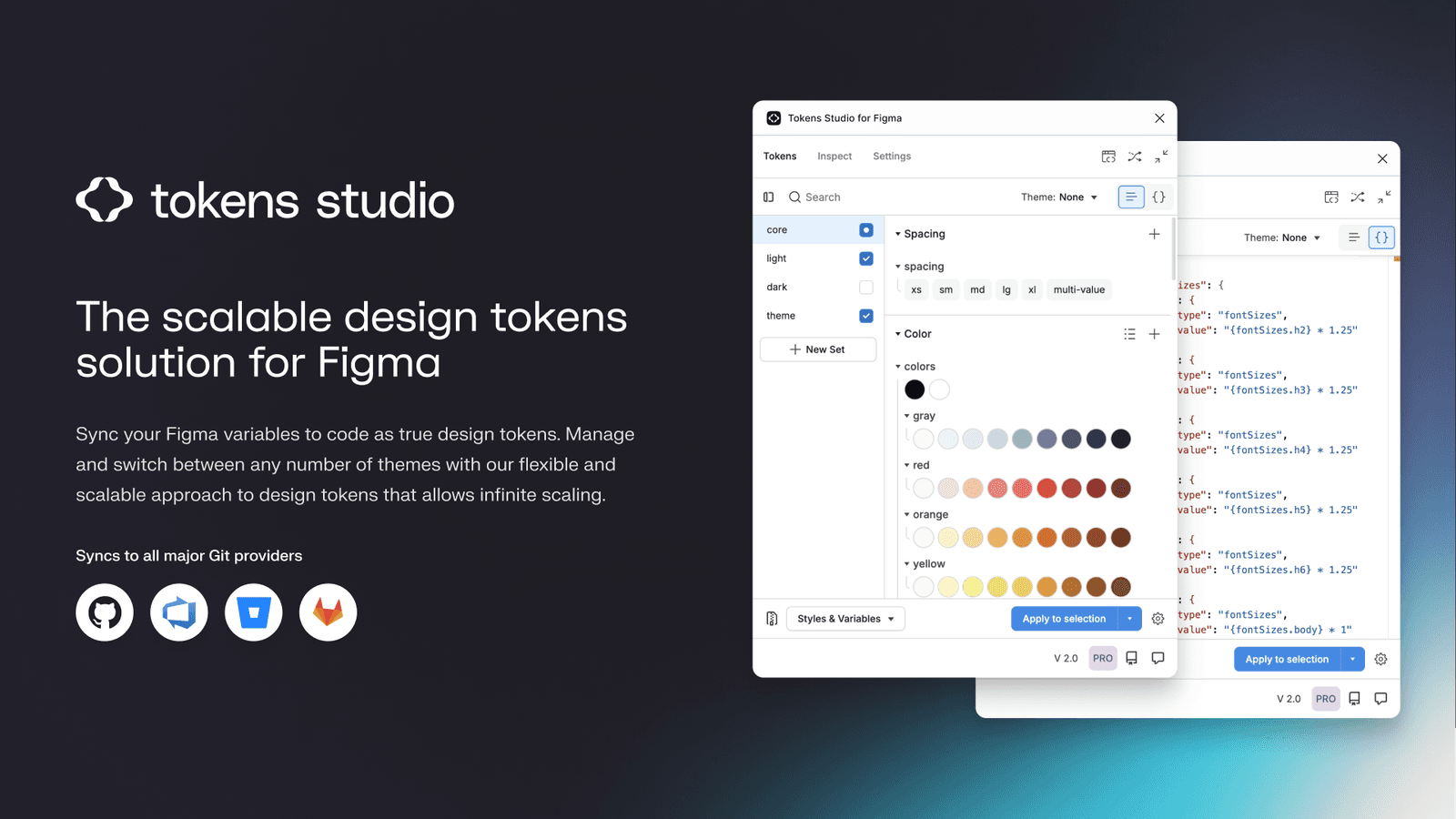
How would you establish design tokens in Figma and sync with production?
Tests design-to-code architecture. A strong answer outlines primitive-to-semantic tokens in Tokens Studio, W3C DTCG JSON synced to Git, and Style Dictionary transforms in CI/CD. Red flag: manual exports or treating Figma styles as the source of truth.

How would you automatically audit WCAG AA contrast in Figma?
This tests Figma plugin vs REST API color extraction limits. Good answers contrast live traversal with export-based analysis, cite WCAG AA ratios of 4.5:1 and 3:1, and note opacity. A red flag is assuming the REST API can sample pixels without image export.
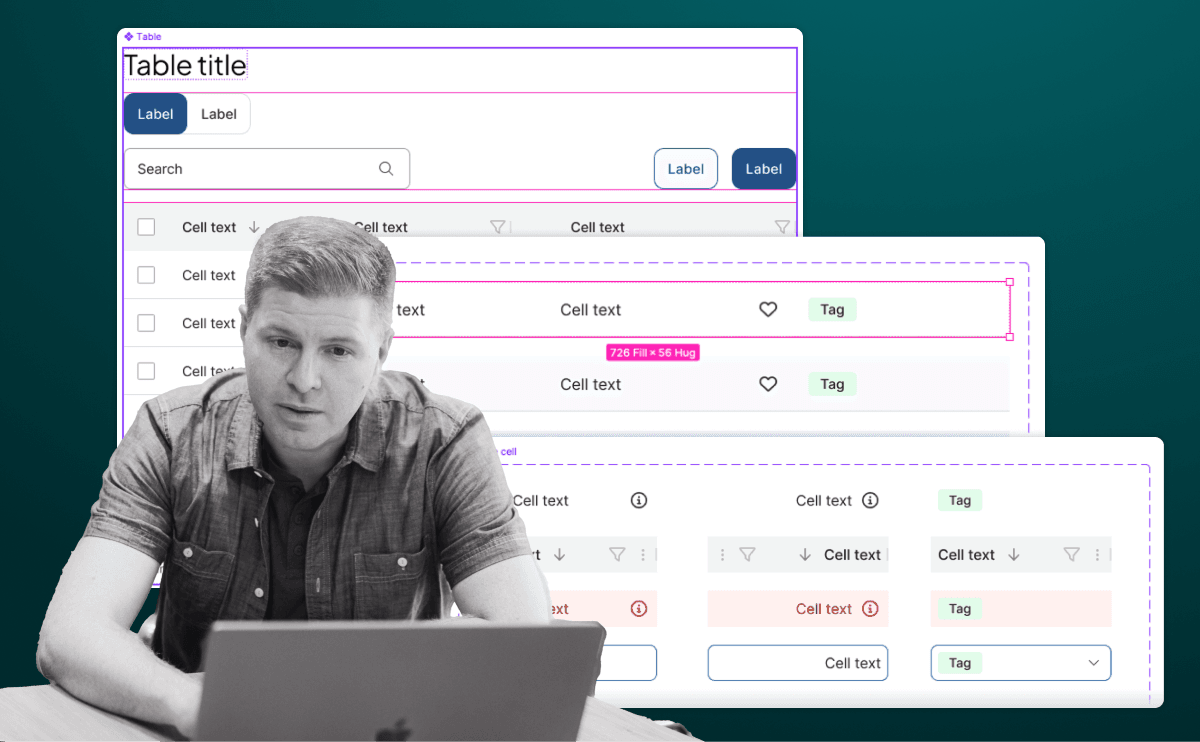
Design a flexible Table component in Figma with slots
Tests Figma Slots to avoid variant bloat. Answer: Cell variants; Row as a horizontal Slot with zero padding for dividers/hover; Table as a vertical Slot for rows plus a header Slot; componentize the configured row for bulk edits.

Describe a workflow to sync Figma tokens to front-end code
Tests if you see tokens as version-controlled code. Strong answer: Tokens Studio pushes W3C DTCG JSON to Git; CI runs Style Dictionary to emit CSS or JS. Red flag: saying the artifact is a Figma file or manual spec sheet.
How would you extract Figma Variables via REST API for Style Dictionary?
Tests Figma Variables to Style Dictionary architecture. Outline: paginate REST endpoint, map modes/aliases to W3C draft JSON, then run Style Dictionary in CI from tokens folder. Red flag: raw API payloads without type normalization or alias resolution.
We are hiring for this. Every open role lists the topics its interview covers, so you can prepare for the real thing rather than guessing.
See open roles