Easy concepts in LLMs & Generative AI
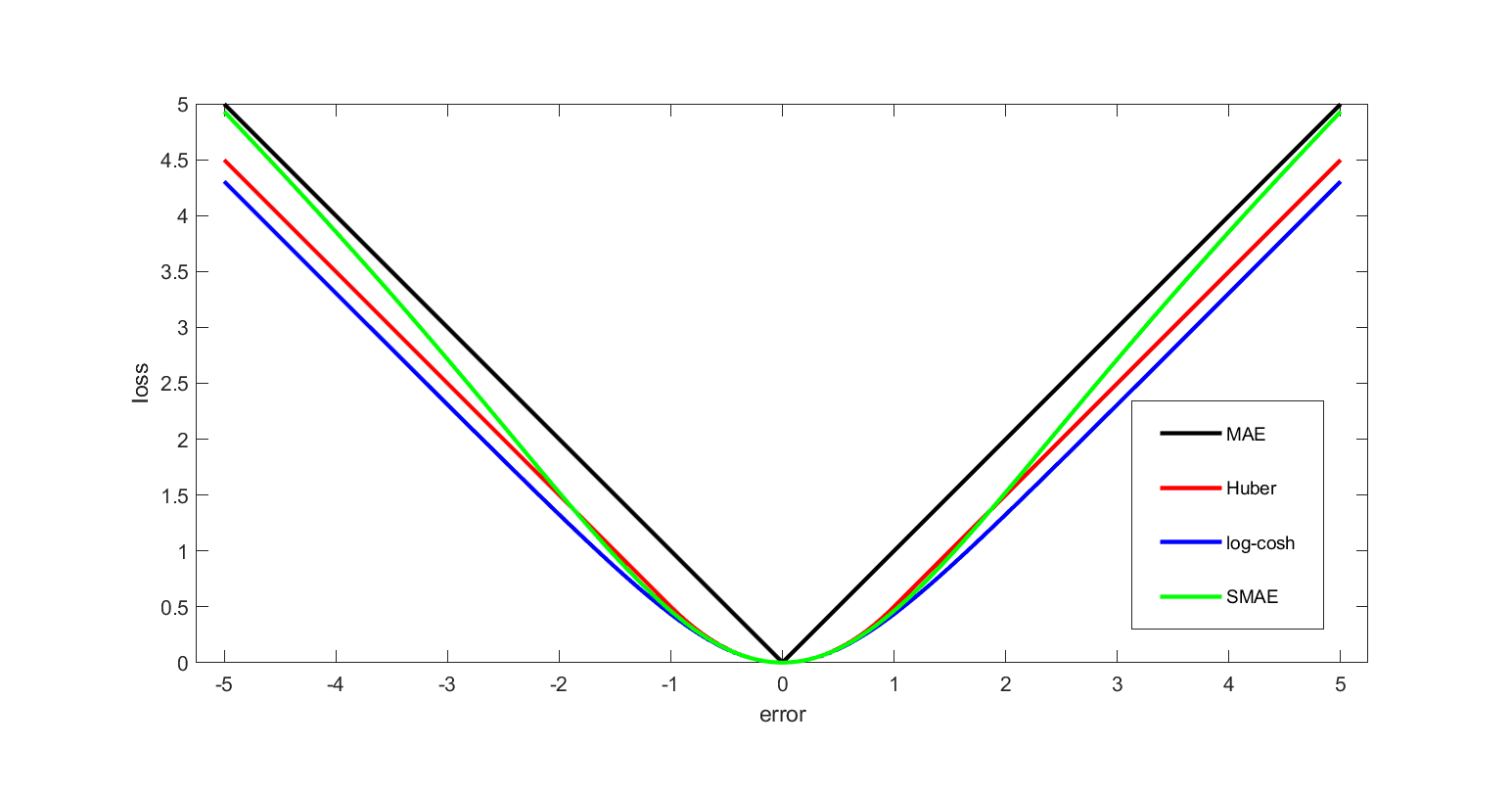
Loss Function: Quantifying 'How Wrong' a Model Is
A loss function is a score that tells a machine learning model how wrong its predictions are. The lower the score, the better. It's the engine of training, guiding the model to adjust its parameters to get closer to the correct answers.

Activation Functions: Making Neural Networks Nonlinear
An activation function acts as a gatekeeper for a neuron, deciding what signal to pass on. It introduces non-linearity, allowing networks to learn complex patterns. A network with only linear activations collapses into a simple, less powerful model.
Transformer: The Final Linear and Softmax Layers
A Transformer's final linear layer acts as a classifier, converting the decoder's output vector into raw scores (logits) for every possible word. The softmax function then turns these scores into probabilities, allowing the model to pick the most likely next…

Causal Language Modeling: The Autocomplete Engine
Causal Language Modeling is like a powerful autocomplete, predicting the next word based only on what came before. It's the engine for text generation in chatbots, creative writing tools, and coding assistants. The footgun: it can't see future words.

Common Crawl: A Free Snapshot of the Entire Web
Common Crawl is a public library of the internet—a massive, free snapshot of web text and links. It's the raw material for training many LLMs and for academic research on web-scale data. The footgun: it's unfiltered, containing everything from facts to spam.
Prompt Engineering: Guiding LLMs to Better Answers
Prompt engineering means structuring instructions, context, constraints, and examples to make a model's output more useful for a task. For example, asking for JSON with a schema and one valid example can improve format consistency, but prompting alone cannot guarantee accuracy.
Zero-Shot Prompting: Ask, Don't Show
Zero-shot prompting is asking an LLM to do a task without examples, relying on its pre-existing knowledge. Use it for simple tasks like basic translation or sentiment analysis where instructions are self-explanatory, but expect it to fail on complex tasks.

Supervised Fine-Tuning (SFT): Teaching a Model to Chat
Supervised Fine-Tuning (SFT) teaches a general LLM to be a helpful assistant by training it on high-quality conversations. This turns a base model into an instruction-following chatbot.
Catastrophic Forgetting: The AI's Amnesia Problem
Catastrophic forgetting is when an AI, trained on new information, abruptly forgets what it previously knew. It's like overwriting a file instead of appending to it. This happens when fine-tuning a model on a narrow dataset, erasing its general knowledge.
Embedding Models: The 'Retrieval' in RAG
An embedding model acts like a librarian for your data, converting text into numerical vectors so similar concepts are grouped together. In RAG, it finds relevant documents to feed an LLM, but using the wrong model type will yield poor retrieval results.
LLM Agents: Giving Models Tools and a Plan
An LLM agent can choose a tool, inspect its result, and decide what to do next. Retrieval supplies information; an agent may use it while carrying out a task. A separate planning or memory module is not mandatory.
Generative Inpainting: Filling in the Blanks with AI
Generative inpainting is like Photoshop's 'Content-Aware Fill' on steroids. It uses AI to reconstruct missing or unwanted parts of an image, perfect for removing objects or repairing old photos.
Multimodal Models: Beyond Just Text
A multimodal model understands the world by connecting different data types, like images and text, instead of just one. It's how AI generates images from descriptions or answers questions about a photo. The footgun is assuming more data types always helps.
Speech-to-Text (ASR): Turning Spoken Words into Data
Speech-to-Text (ASR) is a digital stenographer, turning spoken language into machine-readable text. It's the engine behind voice assistants, automated call routing, and video captioning.

Human Evaluation: Judging AI When Metrics Aren't Enough
Human evaluation is the ultimate reality check for AI, using people to judge qualities like fluency and coherence that automated scores can't capture. It's essential for tasks like summarization but is too slow and costly to use for everything.
The AI Alignment Problem
AI alignment is about making sure an AI pursues our intended goals, not just the literal instructions. It's critical for autonomous systems in medicine or finance. The footgun is assuming a clear objective prevents unintended, harmful outcomes.

Model Cards: The 'Nutrition Label' for AI Models
A model card is the nutrition label for an AI model, summarizing its ingredients, intended use, and risks. Found in model repos, it details training data, performance, and ethical guardrails.

KV Cache: Don't Recompute, Just Remember
KV Cache speeds up LLM text generation by storing intermediate calculations (Key/Value vectors) instead of recomputing them for every new token. It's a standard optimization in inference engines.

Google TPU: Built for Matrix Math
A TPU is a specialist ASIC, not a faster GPU; it trades graphics flexibility for matrix-math throughput per watt. Google deploys them for TensorFlow, JAX, and PyTorch at scale. They excel at CNNs but can lag on tasks needing rasterization or recurrent logic.

Data Bias: When AI Inherits Our Flaws
Generative AI learns patterns from its training data. Data bias occurs when this data contains skewed perspectives or stereotypes, which the model then reproduces and amplifies. This is why an image generator might default to stereotypes.
We are hiring for this. Every open role lists the topics its interview covers, so you can prepare for the real thing rather than guessing.
See open roles