Everything in LLMs & Generative AI, page 7
Explain Chain-of-Thought prompting, its reasoning mechanism, and ideal use cases
This tests reasoning scaffolding. A good answer says CoT makes the model emit intermediate steps before the final answer, excelling at multi-step math and logic versus direct instructions.
How would you construct zero-shot and few-shot prompts for feedback classification?
Tests knowledge of zero-shot versus few-shot prompt structure. Zero-shot gives instructions, labels, and format without examples; few-shot prepends 2-4 labeled demonstrations before the target input. Red flag: calling an example-containing prompt zero-shot.
How does pre-training dataset composition influence capabilities and biases?
This probes whether you link data mix to capabilities and bias. Answer: code strengthens reasoning, web text adds noise; for science, use domain-adaptive pretraining on filtered literature, instruction tuning, and reasoning distillation, validating via…

What causes sudden loss spikes in long pre-training runs?
Name gradient explosions, LR mismatch, FP16 overflow, and poison batches; propose norm checks, rollback, and LR cuts.

Explain data, tensor, and pipeline parallelism and hybrid training strategy
Tests communication and memory tradeoffs of core distributed training strategies. Strong answers contrast data parallelism (shard batch), tensor parallelism (shard layers, all-reduce), and pipeline parallelism (shard stages, p2p), then propose a 3D hybrid…
How did Chinchilla change compute allocation between model size and data size?
This tests whether you know prior scaling fixed data while growing parameters, but Chinchilla showed parameters and tokens must scale equally. A good answer: double both together, so train smaller models on more data. Red flag: huge models, fixed data.

Why is self-attention O(n^2) and what are the implications?
Tests the attention matrix bottleneck. Strong answers note QK^T yields an N×N matrix, creating quadratic compute and memory that blocks long documents and high-res images. Red flag: confusing model size with activation memory.
What is masked in decoder self-attention and why?
Future positions are masked so token i attends only to prior tokens. This prevents cheating during parallel teacher-forced training when the full target is visible.
Explain Q, K, and V matrices in self-attention
This tests the information-retrieval intuition behind self-attention. Cover that Q, K, V are linear projections of one input; Q requests, K indexes, V supplies content; scores weight a sum of V.
Explain positional encodings in Transformers and their necessity
Explain encodings inject order into embeddings; cite sinusoidal or learned vectors.
Explain BPTT and its computational and memory challenges for long sequences
Tests whether you see RNNs as deep unrolled graphs. Good answers define BPTT as backprop over T steps, flag O(T) memory from hidden states, and note vanishing or exploding gradients. Red flag: calling memory constant or confusing BPTT with online updates.
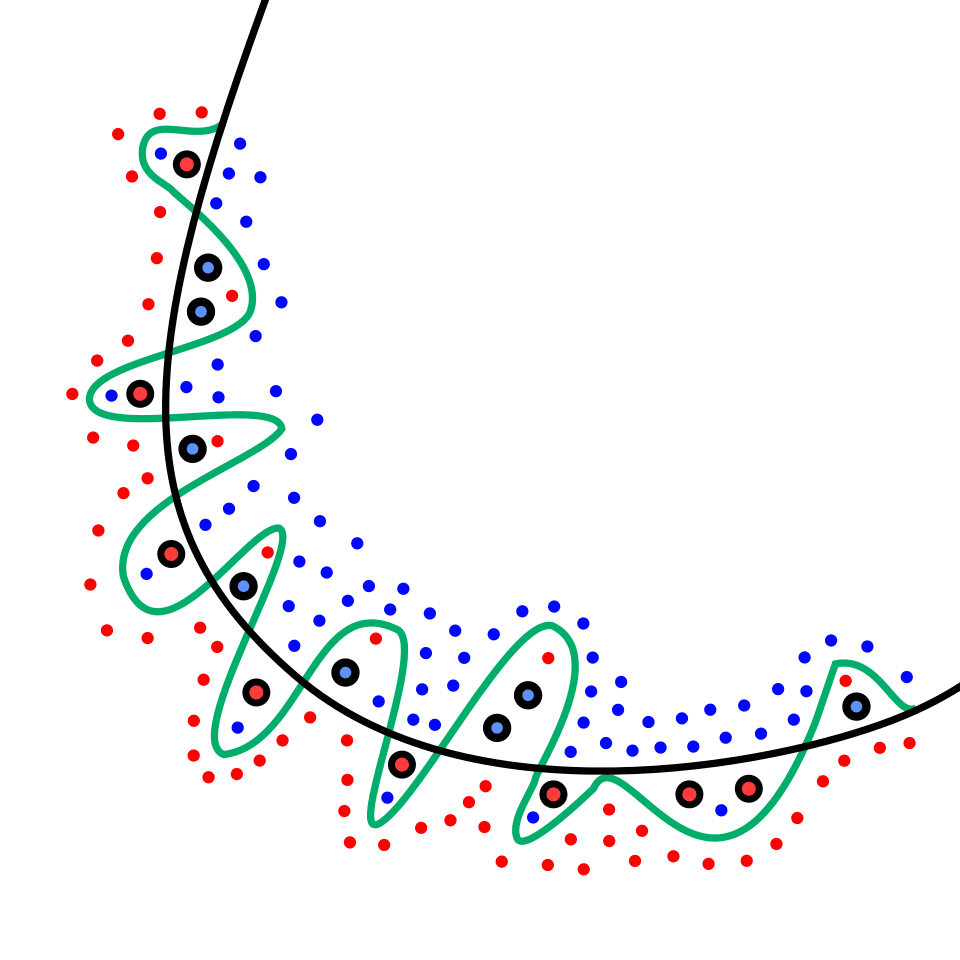
Validation loss increases while training loss decreases: what is this?
This tests recognition of overfitting and regularization. A strong answer names it, offers early stopping, dropout or weight decay, and data augmentation or more data. A red flag is suggesting longer training or more parameters without fixing generalization.

Explain word embeddings and why they beat one-hot encoding for large vocabularies
Embeddings cluster similar meanings in low-dimensional space, while one-hot vectors are orthogonal, huge, and semantically blank.
State-Space Models Replace Quadratic Attention
State-space models replace attention with recurrent linear dynamics, scaling linearly with sequence length. They excel at long DNA, audio, and video modeling. The footgun is naive discretization, which collapses stability on long sequences.
NIST AI RMF for LLM Deployment
The NIST AI RMF is a pre-flight checklist for organizational AI risk, not just code bugs. Teams use it to justify LLM deployment across legal, security, and fairness dimensions.
Data Poisoning: Corrupting Models at the Source
Data poisoning is slipping lies into a textbook that a model memorizes forever. It shows up when you train on scraped web data or open fine-tuning sets. The footgun is assuming clean benchmarks mean clean weights; poison can hide until a trigger appears.
HHH: The Three-Way Tug-of-War in LLMs
HHH frames LLM alignment as a three-way tug-of-war: helpful, harmless, honest. It governs RLHF reward models and safety filters, where maximizing one axis weakens the others. The footgun is optimizing helpfulness, producing sycophants or dangerous compliance.
ROUGE Score: Recall Overlap for Generation
ROUGE measures text generation recall by counting overlapping words and phrases against a reference. It is the default metric for summarization benchmarks. Perfect paraphrases score poorly while keyword-stuffed nonsense can score high.
Tool Definition Schema: Contracts for LLM Actions
A tool schema is JSON that tells an LLM what actions it can take. Use it when you want the model to call APIs instead of just chatting. The model only emits arguments; it never runs the tool, and vague descriptions cause silent failures.
Function Calling: LLMs Using Tools
Function calling turns an LLM into an API translator: it reads input and emits JSON telling your code which tool to run. Use it when the model needs live data it cannot store in weights. The model never executes the call and can hallucinate arguments.
We are hiring for this. Every open role lists the topics its interview covers, so you can prepare for the real thing rather than guessing.
See open roles